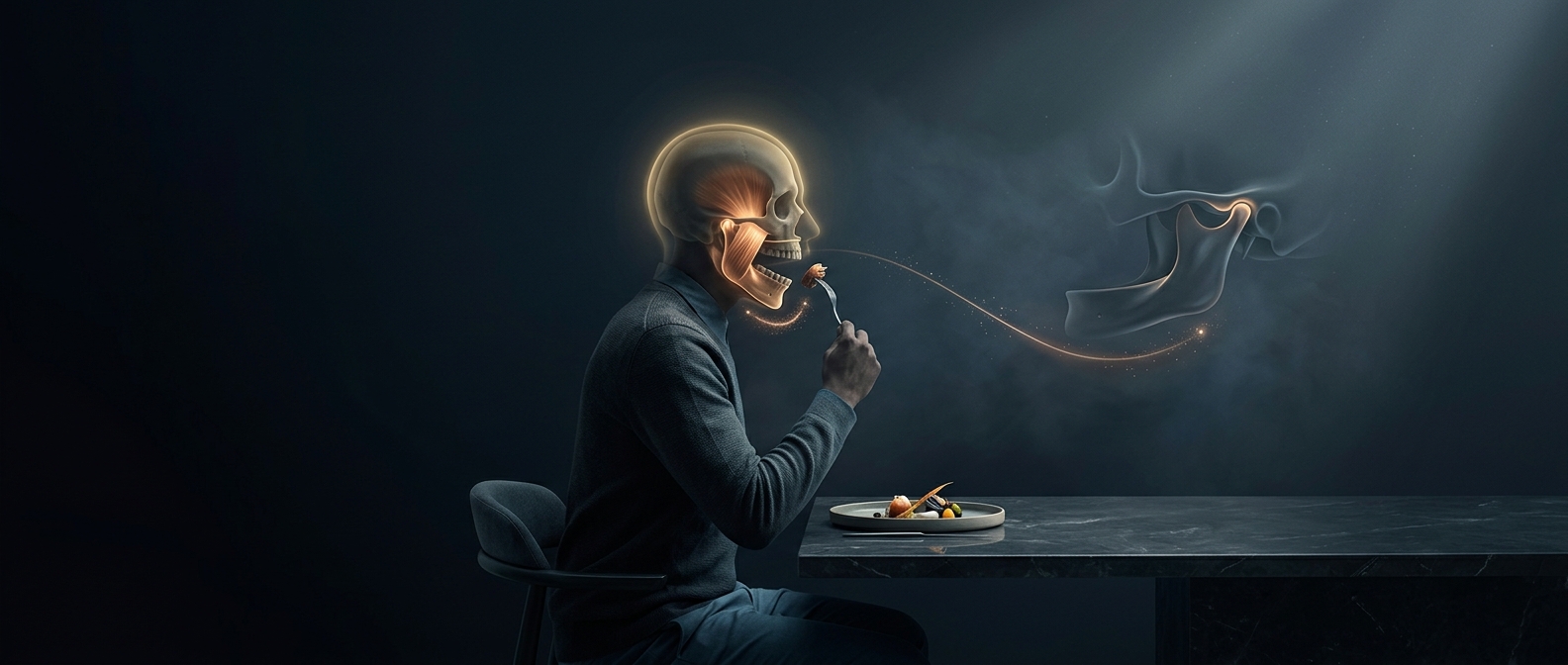
How the Jaw Makes a Chewing Stroke
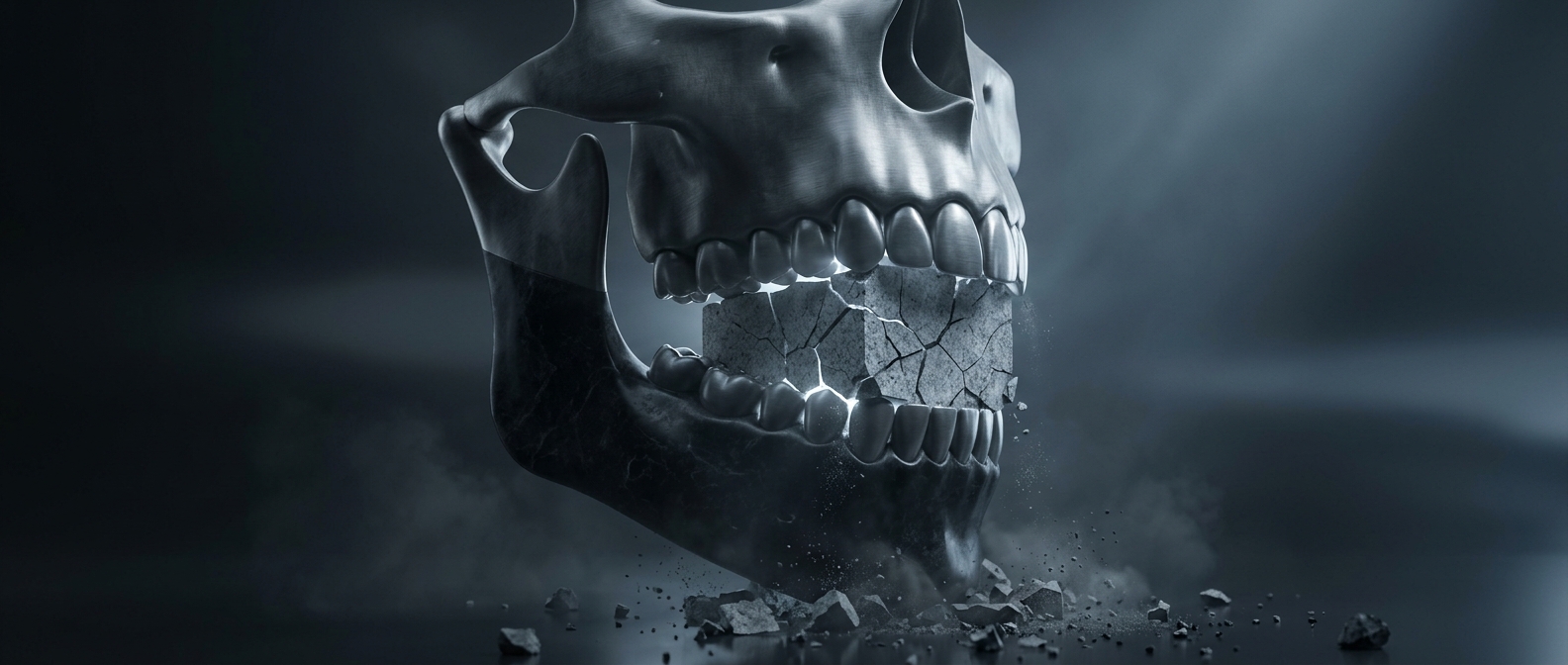
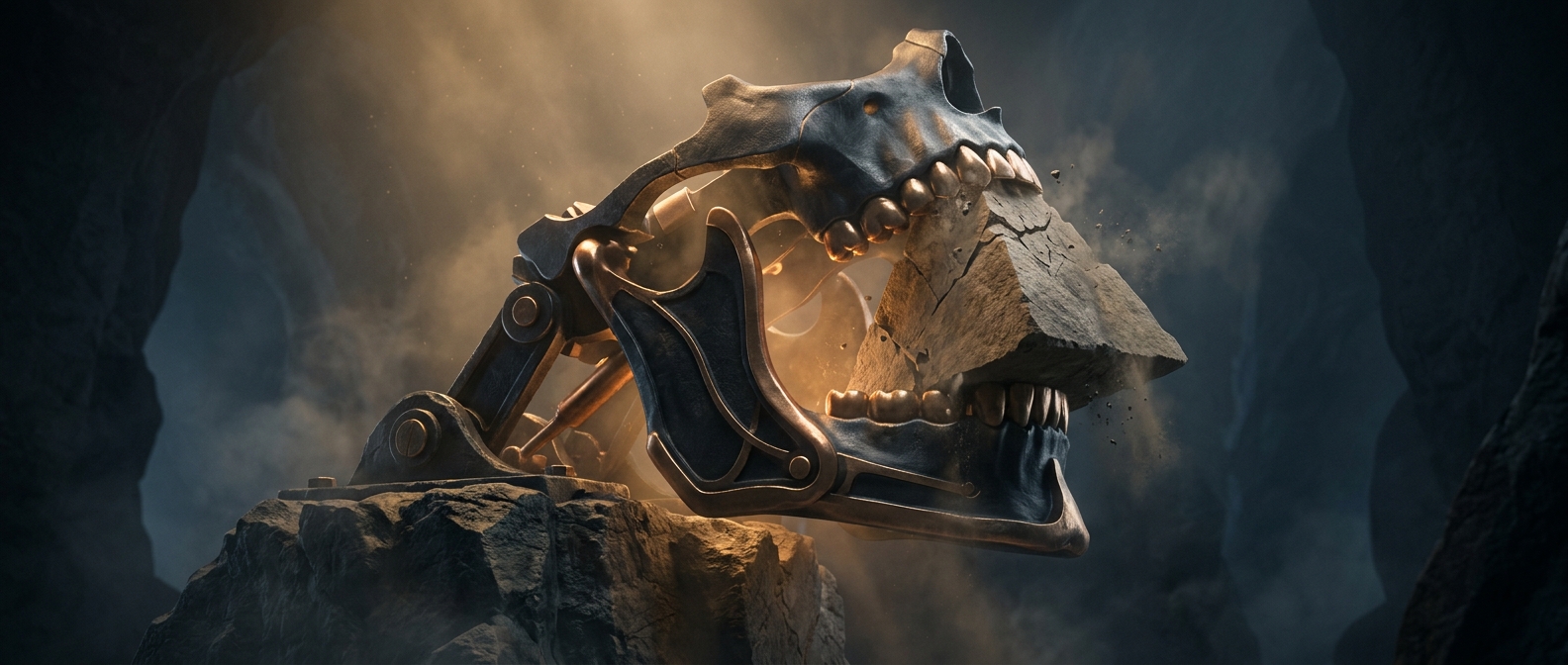
Chewing can feel as though both sides of your mouth are working, but the upper jaw is part of the skull and does not swing with each bite. The lower jaw, or mandible, is the mobile part. It connects to the skull at two joints just in front of the ears, called the temporomandibular joints.
Muscles attached to the jaw and skull control its movement. Some lift the mandible to close the teeth; others help lower it. A coordinated shift to the side lets the back teeth press and shear food rather than merely meet it straight on. The upper teeth provide a stable surface for that work.
Why the Motion Matters
The jaw joints allow more than a simple hinge-like opening and closing. As you open wide, the rounded ends of the mandible move forward as well as rotate; during chewing, smaller, repeated movements help position food between the molars. The tongue and cheeks keep the food from slipping away while the teeth break it into pieces small enough to swallow.
Because the upper jaw stays fixed, the lower jaw’s movement supplies the force and direction of each chewing stroke. That stable-versus-mobile arrangement gives the teeth opposing surfaces to cut and crush food—much like pressing something against a firm board rather than trying to grind it between two moving plates.