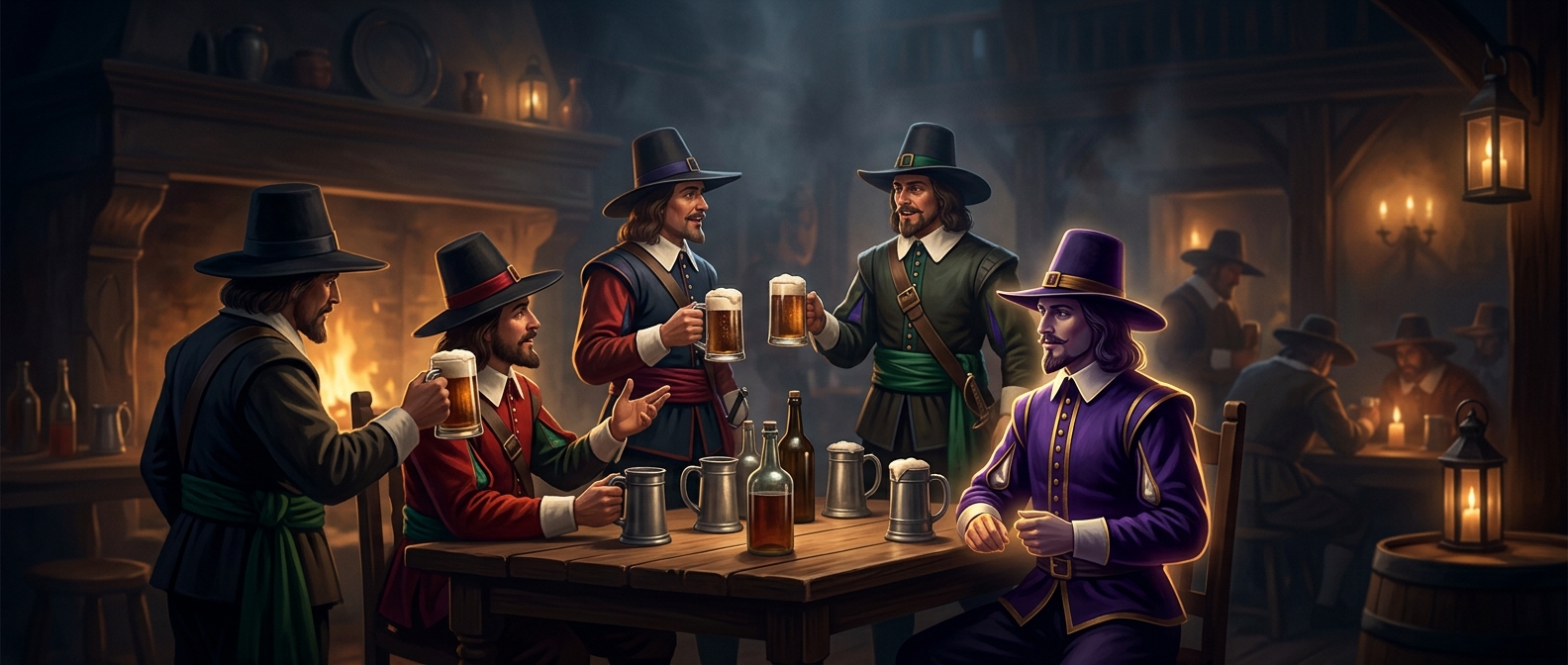
Why Puritans Weren’t Always Dressed in Black
The familiar image of Puritans in head-to-toe black is misleading. In 16th- and 17th-century England and New England, people wore color when they could afford it. Puritan communities included vivid reds and blues, though clothing varied with wealth, occupation, and local rules. Black was costly to dye well, so it was not the default uniform of ordinary people.
The association with severe black clothing grew later, helped along by portraits and popular depictions that turned a varied society into a visual shorthand for solemnity. Puritanism did emphasize religious discipline, but that did not mean every believer rejected color or dressed alike.
Beer and Cider Were Everyday Drinks
Puritans also drank beer and cider. In a time before modern water treatment, a household could not assume that water from a well, river, or town source was clean. Fermentation offered a practical alternative: brewing and cider-making produced drinks that could be stored, while beer was also a source of calories. These beverages were not necessarily strong; many were made weak enough for regular consumption.
That did not mean people avoided water entirely, or that every water source was dangerous. Rather, dependable clean water was difficult to guarantee. Beer and cider fit into ordinary meals because families could make them from available ingredients and keep them on hand.
The contrast is what makes the stereotype so durable—and so incomplete: a person could be devout without wearing a black uniform, and could drink beer not as an act of indulgence but as part of daily life.