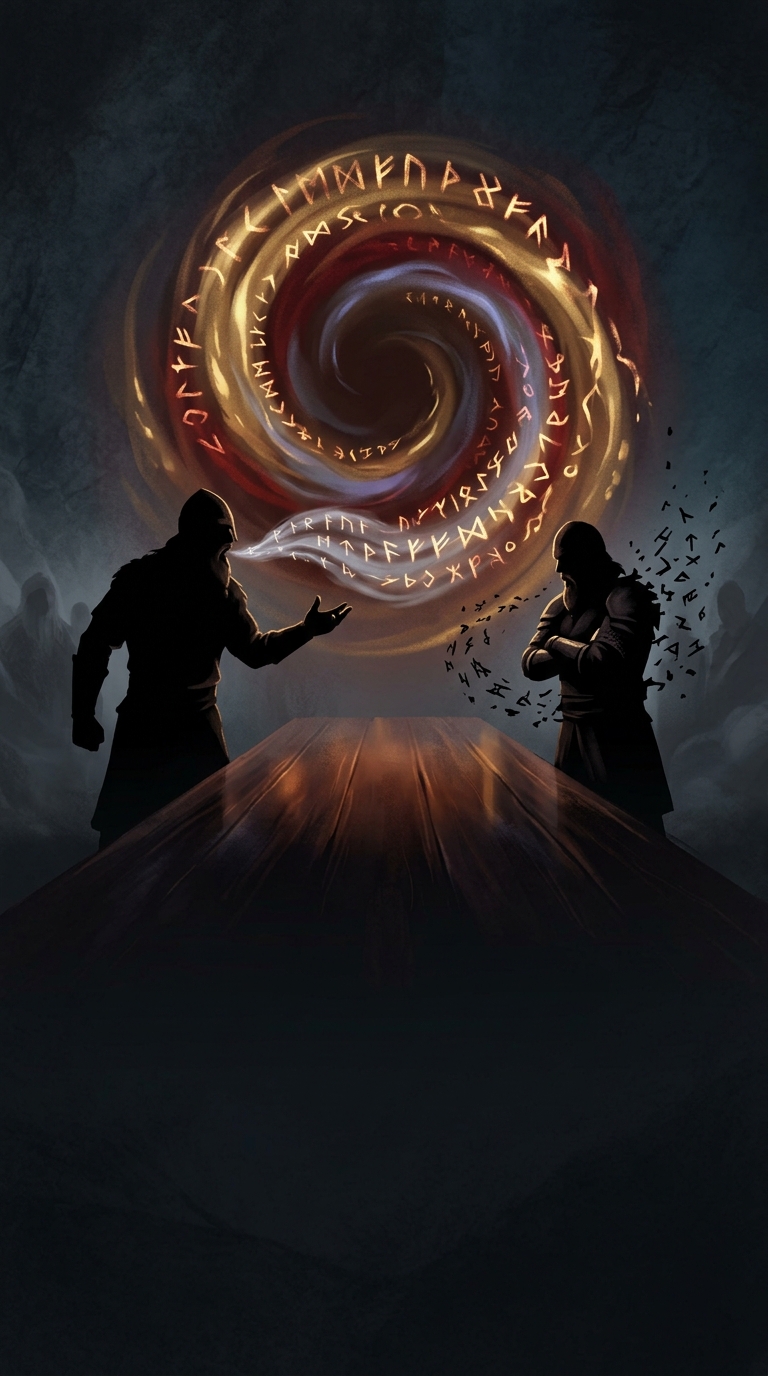
Why an insult had to be clever
In Norse society, reputation was a practical asset: it could affect a person’s standing, alliances, and ability to command respect. A public verbal challenge therefore did more than entertain. It put an opponent on the spot, daring them to answer without seeming weak. The audience mattered because listeners carried the story—and the winner’s version of events—beyond the gathering.
The contest also tested poetic skill. Old Norse verse relied on sound patterns, especially alliteration, in which stressed words begin with the same sound. A successful taunt had to land as an insult and as a memorable line. Quick wit could turn an accusation back on its speaker; a clumsy reply risked making the target look guilty or outmatched.
Loki’s banquet as a mythic showdown
The poem Lokasenna, whose title means “Loki’s flyting,” stages this kind of verbal combat at a feast among the gods. Loki enters the hall and trades accusations with the assembled deities, attacking their conduct and reputation. The scene makes the banquet itself part of the drama: a shared gathering becomes an arena where status is tested in front of witnesses.
The poem is myth, not a record of an actual divine dinner. Its force comes from making familiar social pressures cosmic: even gods have to defend their names when challenged in public. That is why the insults are more than comic abuse—the audience’s judgment is the prize.