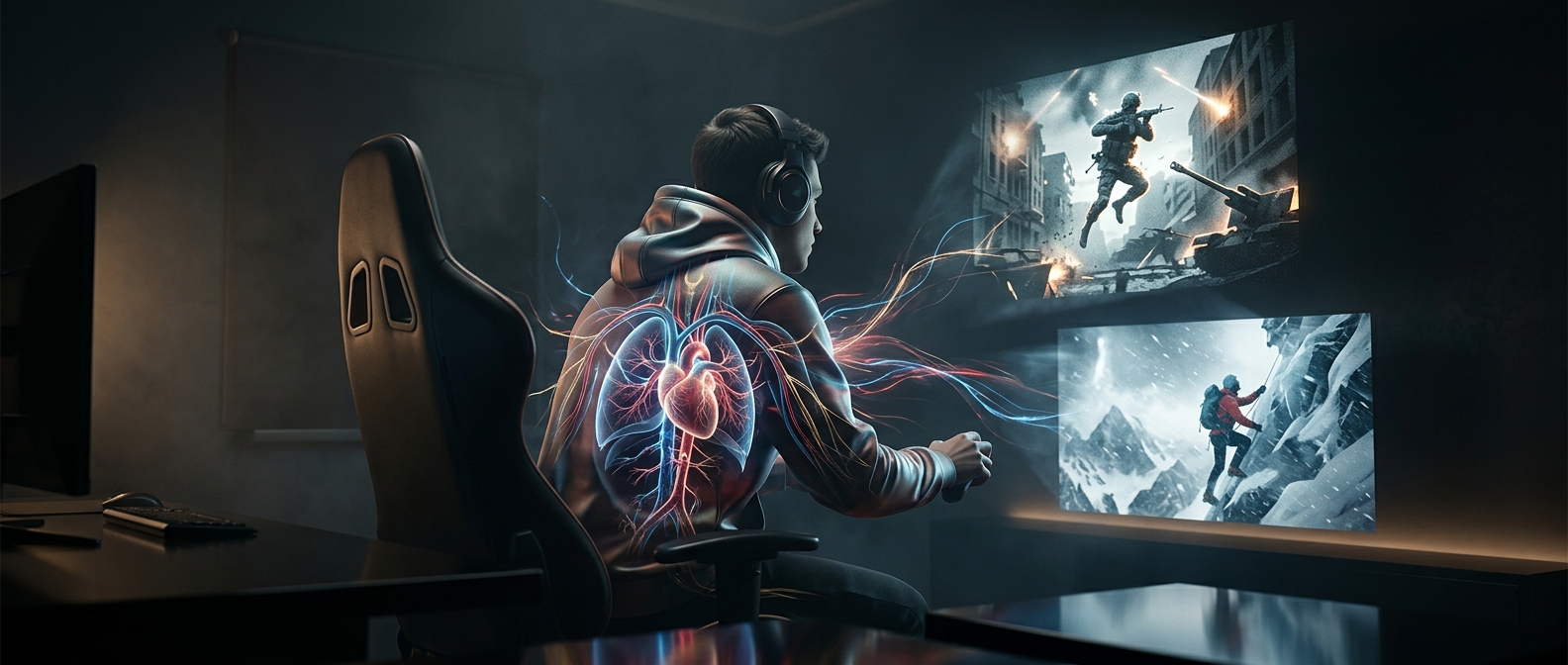
How a virtual threat recruits the body
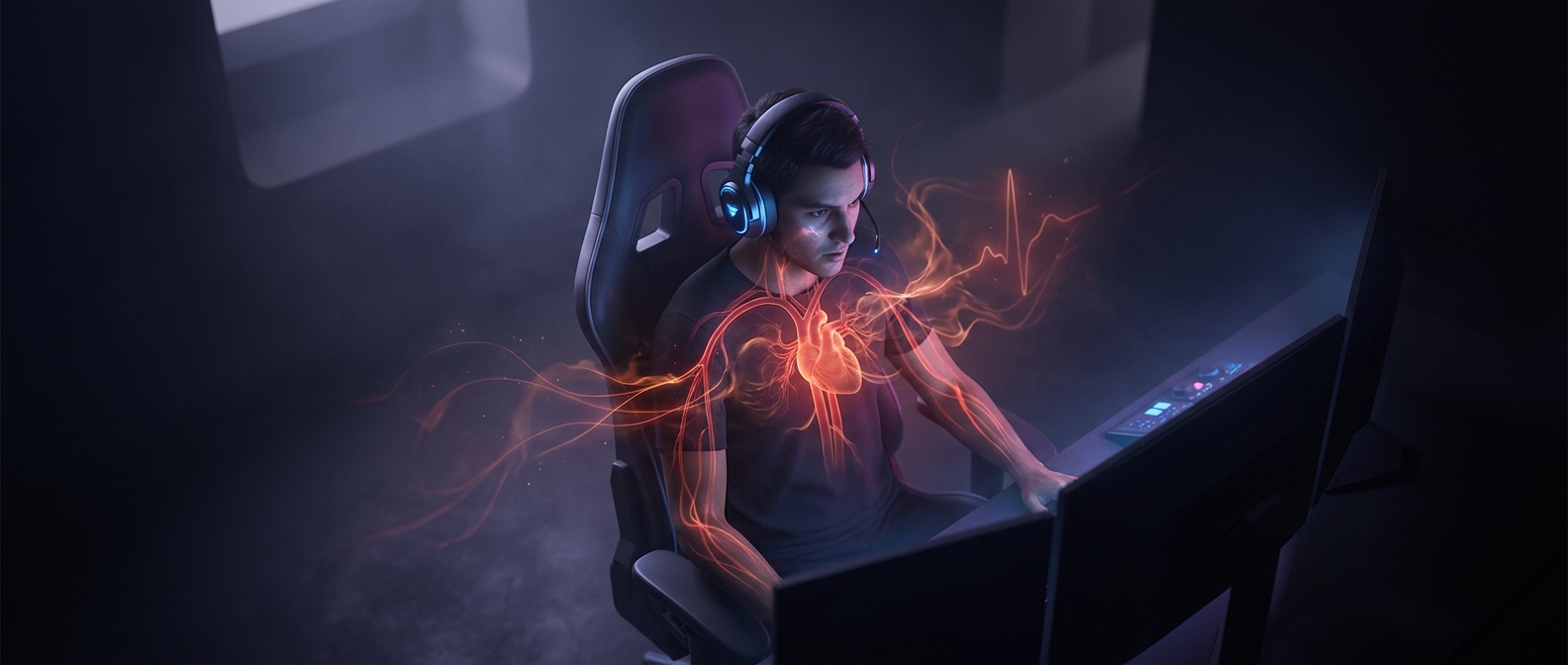
A sudden ambush, a countdown, or the sound of an unseen opponent can make a game feel physically urgent. The brain does not need an actual attacker to start preparing for action: it responds to cues it interprets as danger, uncertainty, or high stakes.
That appraisal activates the sympathetic nervous system, the body’s rapid “get ready” network. Signals prompt the adrenal glands, which sit above the kidneys, to release adrenaline. The hormone helps mobilize energy and can quicken the heartbeat, sharpen attention, and make breathing feel faster. A slower stress pathway can also raise cortisol, which helps keep the body supplied with energy when the pressure continues.
Why sitting still doesn’t stop the response
The body prepares to move whether or not movement is possible. During a tense game, muscles may tighten and palms may sweat even as the player remains in a chair. The response is driven by the brain’s reading of the situation—not by a requirement that the danger be physical.
Games can make that reading especially compelling by combining uncertainty with immediate consequences: a threat may appear without warning, and a small mistake may cost a round or undo progress. The resulting stress is real, even though the danger is simulated. When the tense moment passes, the body still needs time to settle back down.