Turning a spider gene into a milk ingredient
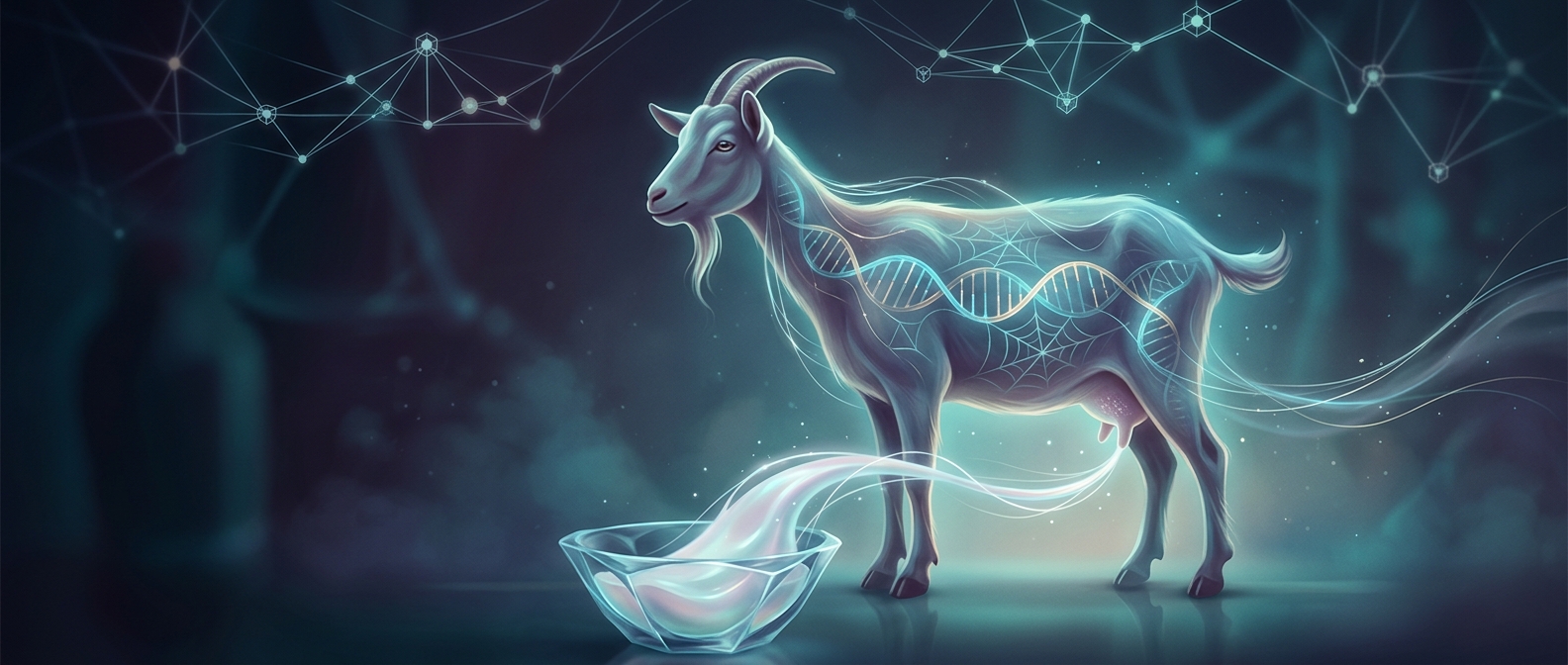
A goat does not make silk in the way a spider does. Instead, researchers introduce DNA instructions for a spider’s silk protein into the goat’s cells, along with genetic controls that direct production mainly to the mammary gland. The animal then secretes the protein into its milk, where it can be collected without trying to harvest silk from the goat itself.
The target is a protein, not a ready-made thread. In a spider, silk-making glands concentrate and organize proteins into a fiber as the spider spins. A goat’s mammary gland provides a different biological setting: it can produce the protein, but it does not reproduce the spider’s spinning process.
From milk to fiber
After milking, the silk protein must be separated from the rest of the milk and purified. Then it has to be turned into fibers through a controlled manufacturing process. That step matters because a fiber’s performance depends not only on the protein’s ingredients but also on how its molecules line up and join together.
This is why the approach is often described as using goats as biological production systems, rather than as animals that produce finished spider silk. The goats supply a potentially useful raw material; engineers still have to make it behave like a thread.
Why use goats at all?
Spiders are poor candidates for ordinary livestock-style farming: they are territorial, and keeping large numbers together is difficult. A goat, by contrast, can produce substantial quantities of milk and can be bred in controlled herds. Using an animal to manufacture a protein is a form of biotechnology called biopharming—raising genetically modified animals to produce a useful substance.
The memorable twist is that the silk-making step happens after the milking. The animal supplies the molecular material; the factory has to supply the spider’s missing spinning machinery.