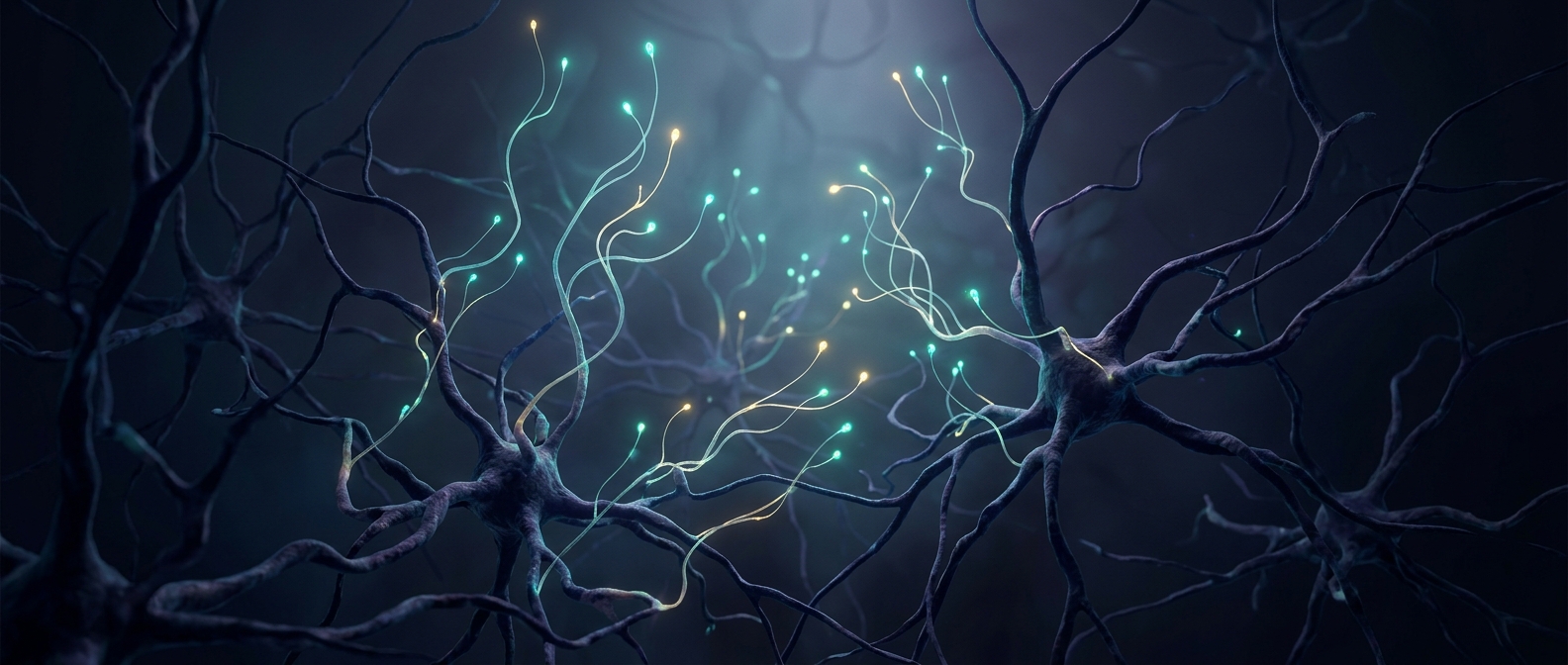
How New Neurons Could Join the Adult Hippocampus
The hippocampus, a structure deep in the brain, helps form memories and supports navigation. In some animals, neural stem cells—cells that can produce new brain cells—remain active there after maturity. Their descendants can develop into neurons, the cells that communicate through electrical and chemical signals, and may become part of local circuits.
That process is called adult neurogenesis. It offers one possible way the brain could add flexibility to circuits involved in learning. But making a neuron is only the first step: the cell must mature, connect with other neurons, and function within the network.
Why the Human Evidence Is Hard to Read
To test whether this happens in adult people, researchers examine brain tissue for signs of newly formed or immature neurons. Those signs are not simple age labels. A cell can lose the markers researchers look for as it matures, while some markers can be difficult to distinguish from features of older cells. Tissue preservation and the methods used to analyze it can also affect what is detectable.
As a result, studies have not agreed on how much, if any, new-neuron production continues in the human hippocampus during adulthood or old age. Findings in other animals show that adult neurogenesis is biologically possible, but they cannot settle what happens in people.
What the Uncertainty Means
The debate is not about whether the adult brain can change: existing neurons can alter their connections. It is specifically about whether the human hippocampus also keeps adding neurons, and at what stages of life. That distinction matters because a claim about new cells is more specific than a claim about the brain’s broader capacity to adapt.
For now, adult neurogenesis is a well-established feature in some animals and a continuing question in humans. The striking possibility is that a tiny population of new cells could join a memory-related circuit—but detecting those cells reliably is what makes the human answer difficult.