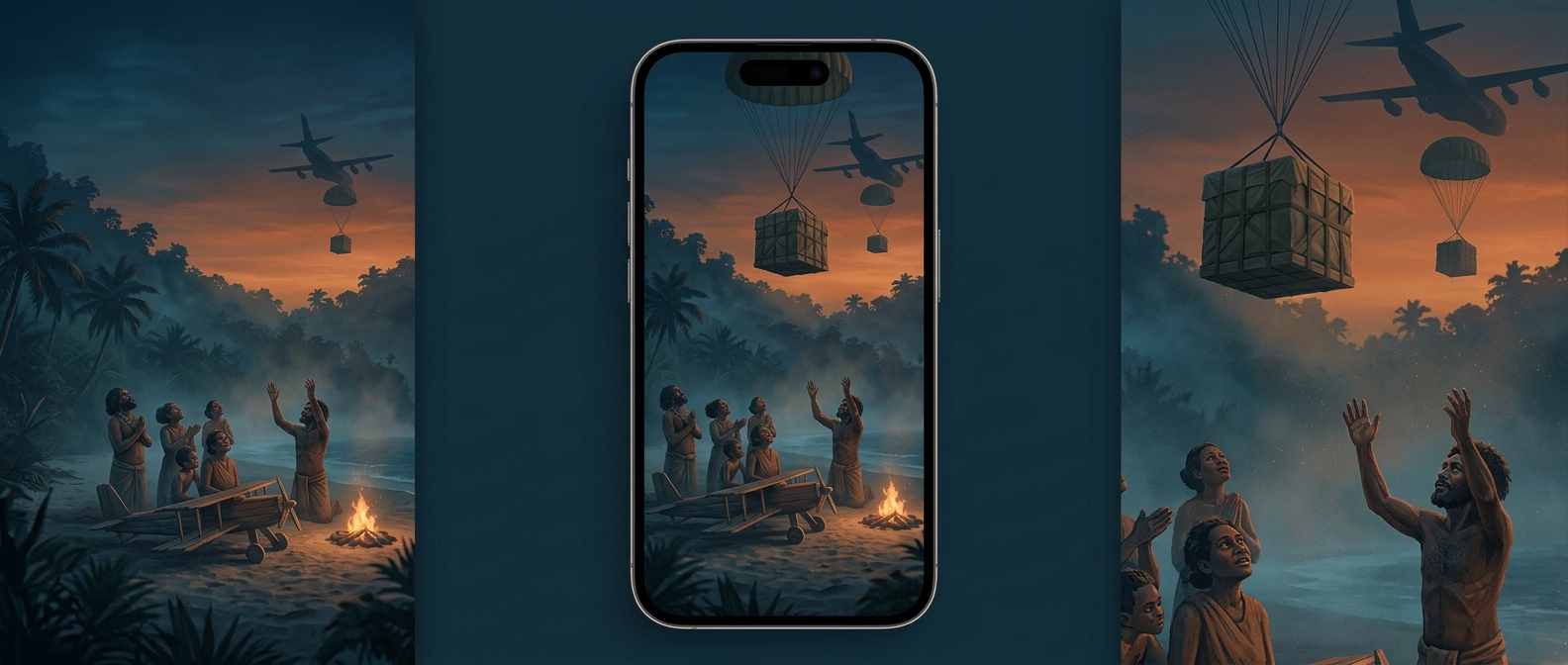
Why the Supplies Seemed to Arrive from Another World
In parts of the Pacific, wartime airfields brought an abrupt spectacle: aircraft landed with food, tools, clothing, and other goods, often in quantities local people had rarely seen. Islanders sometimes helped build or maintain facilities and worked alongside military forces, but the supply system was controlled by outsiders. When the war ended, many bases closed and the deliveries stopped.
That contrast mattered. The goods had arrived through relationships and procedures that islanders could observe—aircraft, landing strips, radios, and organized work—while the decisions governing their distribution remained largely beyond their reach.
What the Bamboo Airfields Meant
Some communities built symbolic versions of the infrastructure they had witnessed, including imitation airstrips or aircraft made from local materials. These acts are often reduced to the idea that people simply copied machines in hopes of summoning more supplies. A fuller reading is that they could express a search for renewed access, a response to sudden disruption, or a way of making sense of wealth that had appeared and vanished under foreign control.
The movements grouped under the outside label “cargo cults” were not one religion with one set of beliefs. Practices and explanations varied from place to place, and ritual imitation did not mean people failed to understand what an aircraft was. It could give visible form to hopes and claims about relationships, authority, and the return of resources.
A Label That Can Hide the Story
Calling these movements cargo worship can make them sound like a simple misunderstanding. It also obscures the wartime conditions that made the goods so striking—and the unequal systems that determined who could obtain them. The bamboo runway was not merely a pretend airport: it was a local response to a real rupture, built from the materials and possibilities at hand.