Why a Robot Was Put Beside a Die-Casting Machine
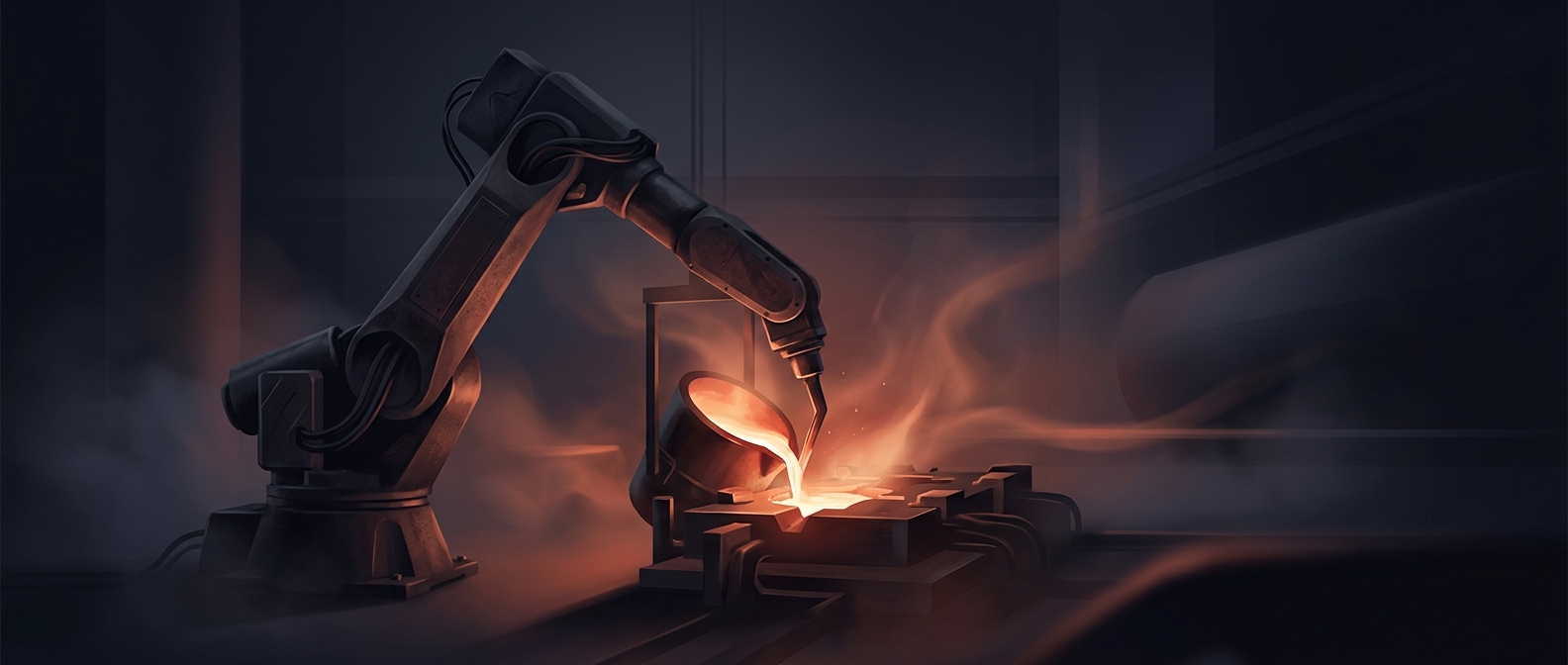
Die casting makes metal parts by forcing molten metal into a shaped mold, where it cools and hardens. When the mold opens, the new casting is still extremely hot. Someone must remove it before the machine can begin the next cycle—a brief but hazardous job repeated over and over.
Unimate’s role was to take over that handling step. It did not need to judge the part’s quality or improvise a new movement each time. The machine and its surroundings stayed in fixed positions, so the arm could follow a programmed sequence: reach in at the right point in the cycle, grasp the casting, and move it away.
The First Advantage Was Consistency
A robot could repeat the same motion without tiring, keeping pace with the casting machine’s cycle. Just as important, it could work close to hot metal without putting a person’s hands in the same danger. The value was not humanlike dexterity; it was dependable movement in a controlled, repetitive setting.
That made die casting a practical early use for industrial robots. Factories already organized production around machines that performed the same operation repeatedly. Adding a programmable arm to one step could reduce exposure to heat while keeping parts moving through the line. The robot automated the handoff between machine cycles, not the entire process.