What “off the grid” changes day to day
A camp without official utilities has no public network bringing electricity and water to each dwelling—or carrying away wastewater. Residents therefore have to arrange basic services themselves. Depending on the site and household, that can mean generating power, hauling or storing water, and managing waste without the dependable connections most homes take for granted.
That distinction matters: no utility bill does not mean no cost or upkeep. Equipment, fuel, water, repairs, and transportation can all take money and labor. Living there trades recurring service charges and formal infrastructure for more responsibility—and less certainty.
Why the desert setting makes the tradeoff visible
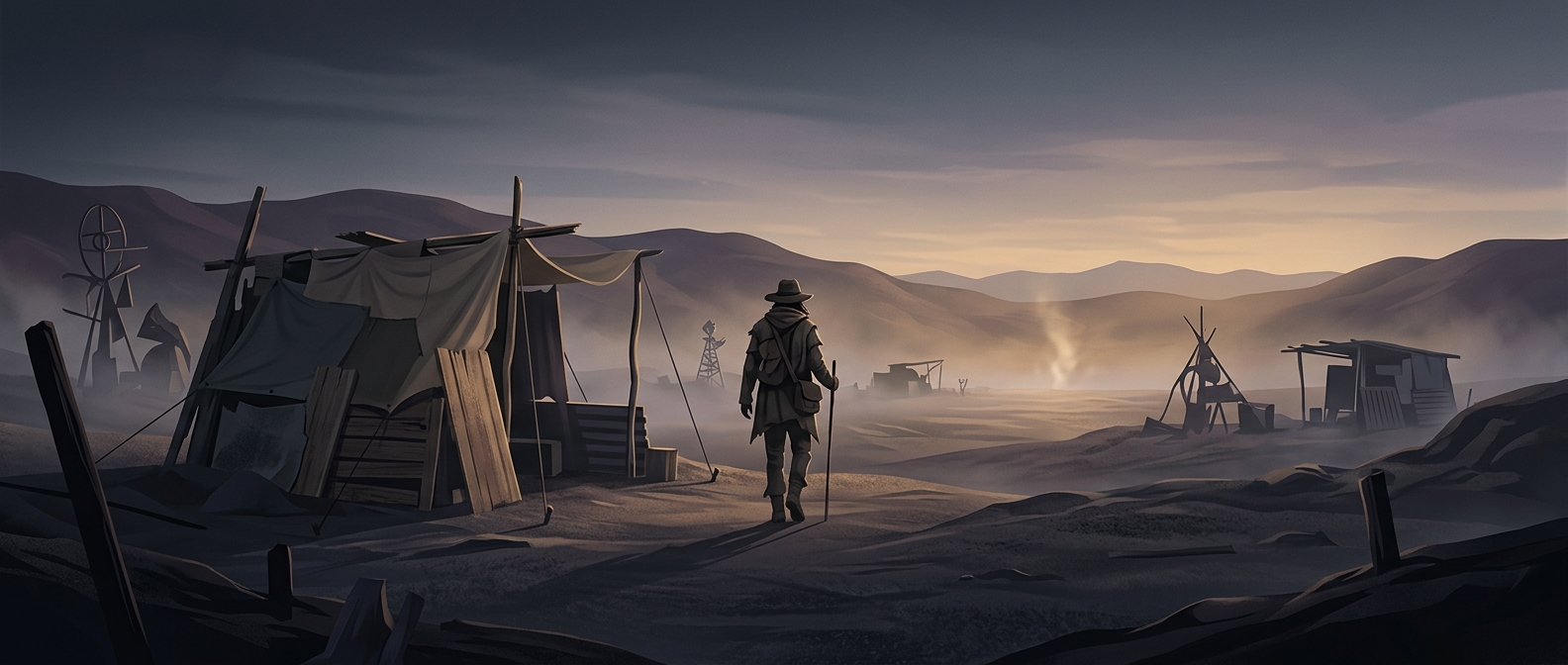
In a sprawling desert settlement, homes and neighbors may be far apart, so extending conventional pipes and power lines can be difficult. The open landscape can make the absence of infrastructure feel like freedom, but heat and distance also make water, shade, and reliable energy especially consequential. A breakdown is not just an inconvenience if the nearest replacement or service is far away.
For people seeking a life outside standard housing costs, the camp can offer room to stay without signing up for ordinary utility accounts. Its appeal rests on a practical bargain: more autonomy in exchange for solving everyday needs yourself. The defining feature is not simply that the lights are off the public grid; it is that keeping daily life going becomes a personal project.