What happens when one leg does the work
A leg that remains active has to support the body and make constant small corrections to keep it upright. Those demands keep its muscles working. The other leg, if kept largely still for a long time, receives much less of the repeated loading and movement that help maintain muscle tissue.
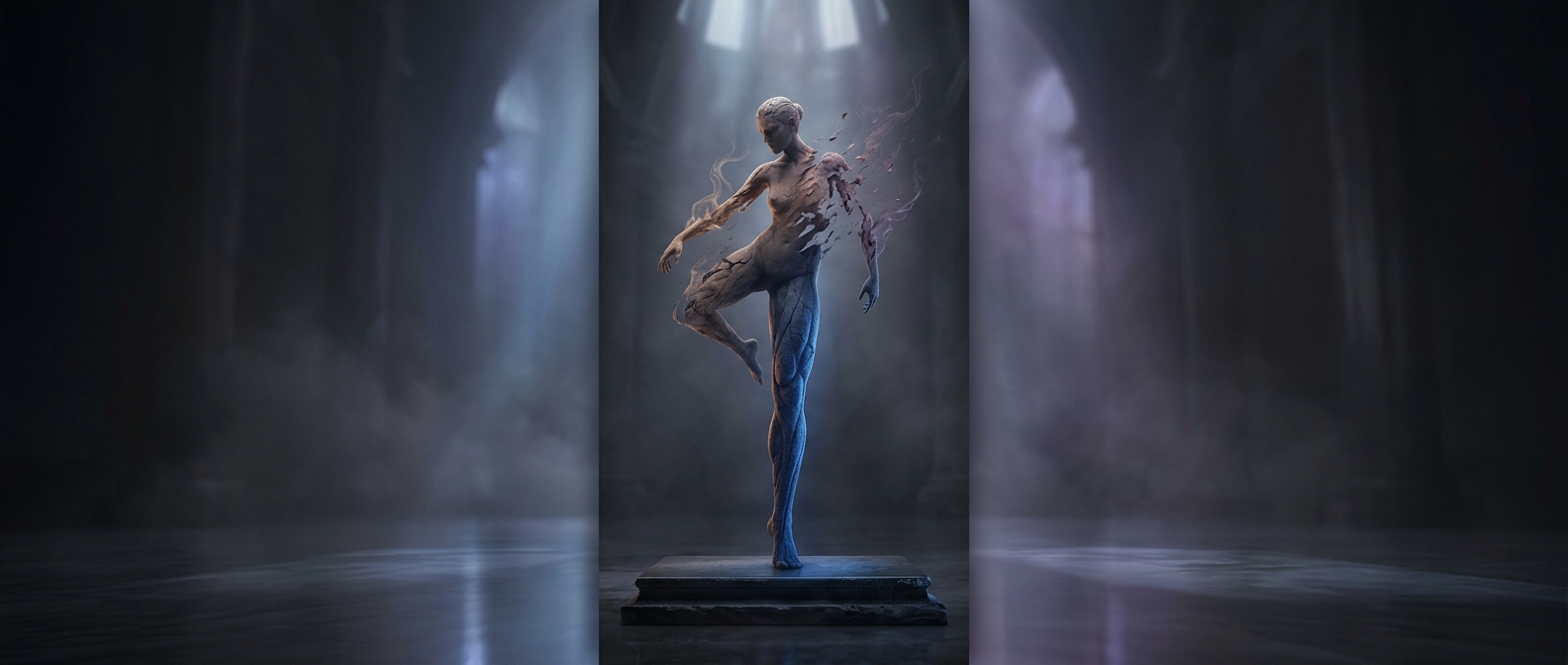
Muscles are continually renewing their proteins. When a muscle is used less, the balance shifts: the body breaks down more muscle protein than it replaces. Over time, the muscle shrinks and loses strength—a process called disuse atrophy. The limb may look markedly thinner and become difficult to use, though the pace and severity depend on how long and how completely it is inactive.
A bodily cost of an ascetic vow
For an ascetic who treats prolonged one-legged standing as a vow, the posture is more than a test of endurance. It redistributes the work of standing onto one side while the other side misses ordinary movement. The supported leg is not immune to strain, and the raised or resting leg is not necessarily motionless; even so, greatly reduced use can gradually weaken it.
The result is not that every muscle in the unused leg simply vanishes. Rather, muscles lose size and capacity through lack of demand, while joints and other tissues can also become stiff after prolonged restriction. A vow intended to be sustained through discipline could therefore leave a lasting physical consequence: the leg that was spared the burden of standing may eventually be the one least able to bear it.