Why a Barometer Needs a Liquid Column
A barometer measures air pressure by balancing the atmosphere’s push against the weight of a liquid. In a classic mercury barometer, a glass tube is filled with mercury and turned upside down into a reservoir of the same metal. Some mercury falls, leaving a space at the top of the tube, while air pressing on the reservoir supports the column inside it.
When atmospheric pressure rises, it pushes harder on the reservoir and the column stands higher. When pressure falls, the column drops. The height therefore provides a visible measure of changing air pressure.
Density Made the Instrument Practical
The height of the column depends on how heavy the liquid is for its volume. Mercury is exceptionally dense, so a column only about 30 inches high can balance the atmosphere’s pressure at sea level. A water column would need to be roughly 20 feet tall to provide the same balance—awkward for an instrument meant to sit in a room or travel with an observer.
That compactness made mercury valuable for early barometers. The liquid also stays fluid across ordinary indoor temperatures, helping the instrument produce a clear, responsive reading.
The Tradeoff Behind the Glass
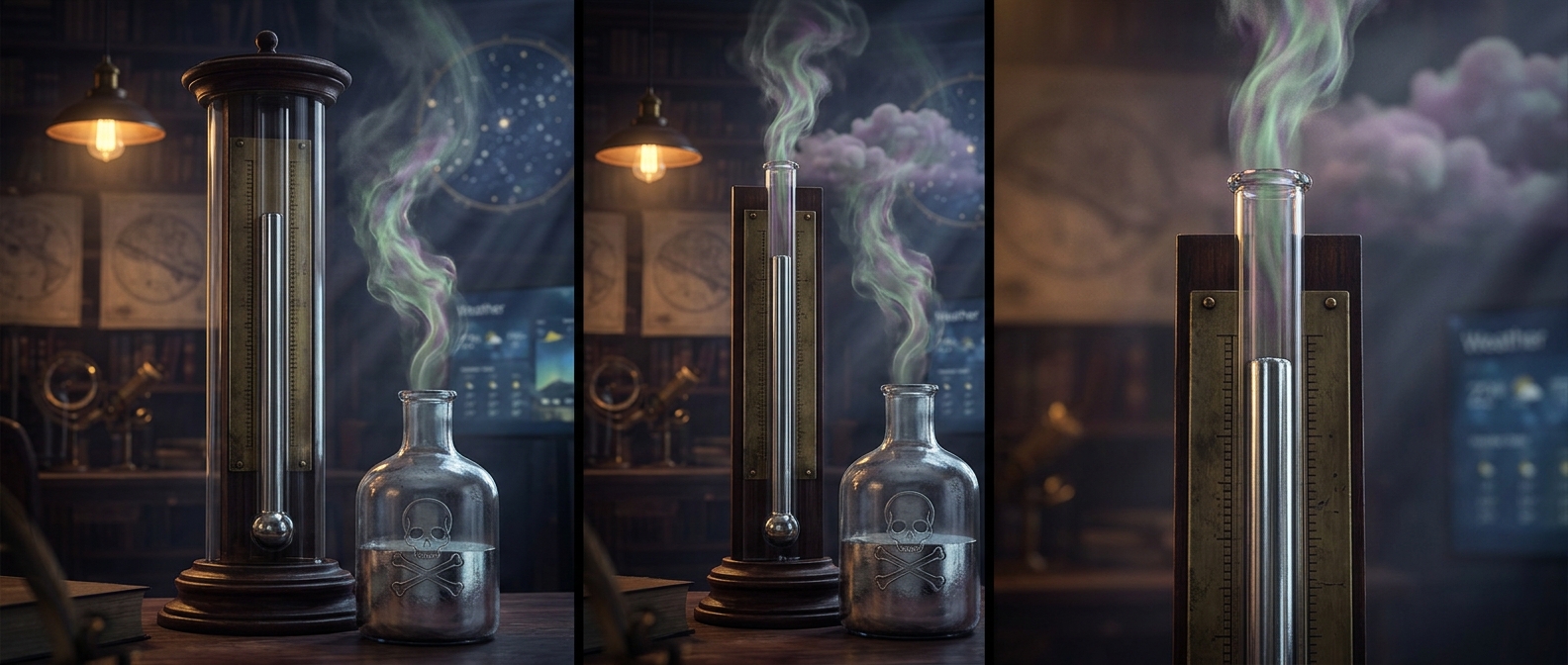
The same material that made the instrument convenient created a serious hazard. Mercury is poisonous, and spills can release harmful vapor; a broken barometer is not simply a matter of sweeping up a harmless liquid. Its usefulness came from a practical engineering tradeoff: a short, readable column in exchange for keeping a dangerous substance contained.
The barometer’s design makes that tradeoff easy to see: a small amount of exceptionally heavy liquid could do the work that would otherwise demand a tube taller than a person.