How headphones make noise cancel itself
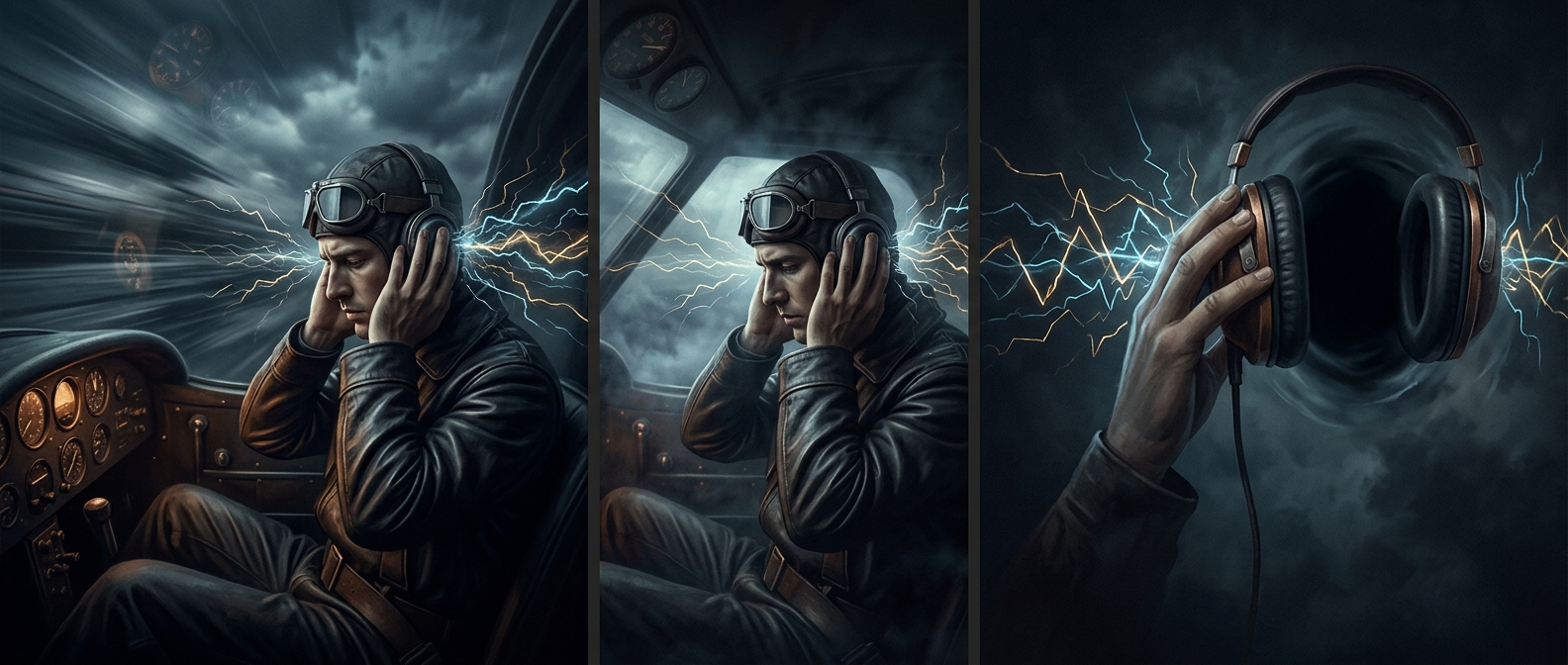
Active noise cancellation works by listening to the sound around the wearer, then playing a carefully timed opposite version of it through the headphones. When the two sound waves meet, their pressure changes partly offset one another—a process called destructive interference. The result is less noise reaching the ear, not a soundproof bubble.
The system depends on a microphone, a small electronic processor, and the headphone speaker working together. The processor must react quickly: if the countering sound arrives too early or too late, it will not cancel the noise effectively. That makes steady, low-pitched sounds—such as the continuous rumble of an aircraft cabin—better targets than sudden, irregular sounds like speech or a clatter.
Why the cockpit was a useful proving ground
In a cockpit, reducing the background roar can make radio communication easier to hear without simply turning the radio louder. But cancellation cannot remove every sound, so it complements rather than replaces the physical barrier of an earcup. The fit still matters, and the system has to operate reliably in a demanding setting.
That same ability to reduce a persistent low-frequency drone proved useful outside aviation. In consumer headphones, the cabin roar became the hum of a bus, train, or airplane: a continuous sound the electronics could counter while the wearer listened to music or simply wanted a quieter ride. The technology’s move from cockpit equipment to everyday headphones followed the noise it handled best.