A small barrier against an uncontrollable light
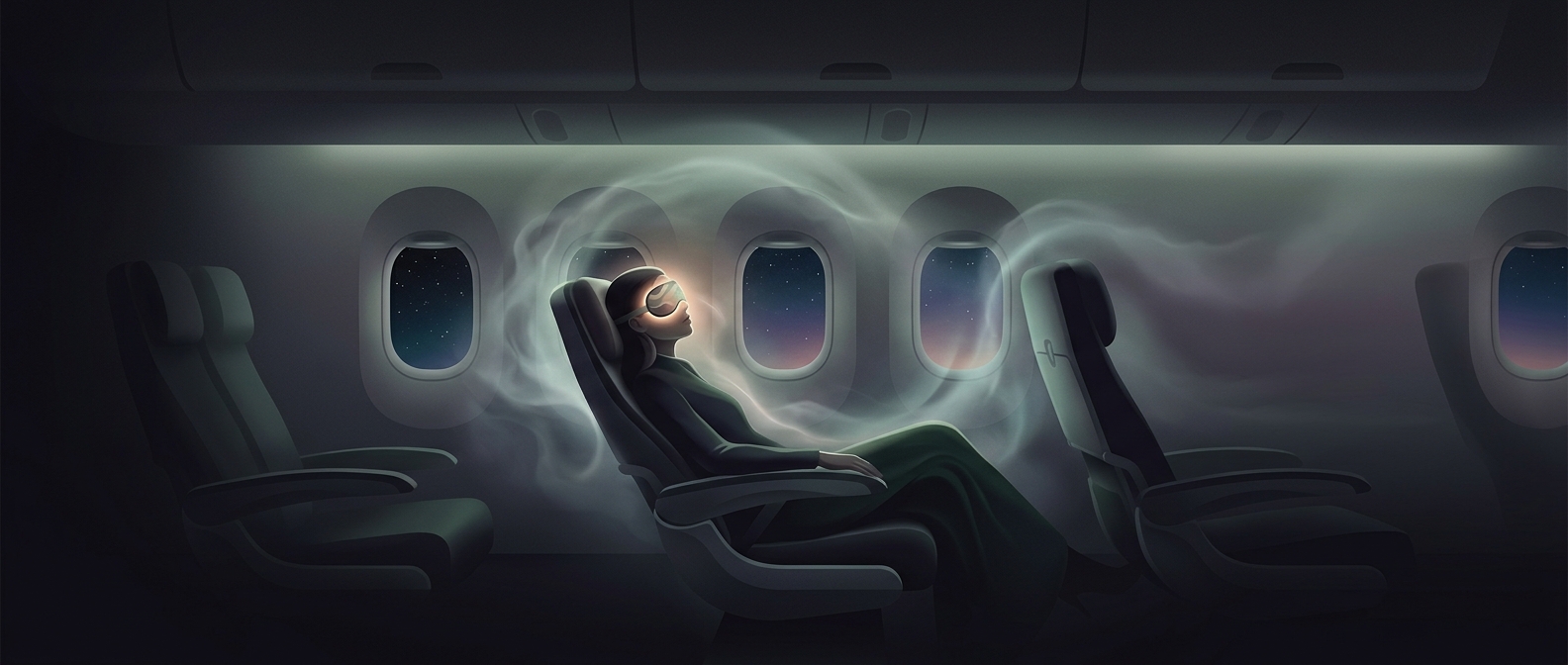
An airplane cabin is a shared space: one passenger may want to read while another is trying to sleep. In the 1950s, airlines began handing out fabric sleep masks to address that mismatch. A traveler could not turn off a neighbor’s reading lamp, but could put a soft barrier between the light and their eyes.
That made the mask a practical fix rather than a way to darken the cabin. It let passengers create a patch of darkness without asking the crew to change the lighting or asking someone nearby to stop reading.
Why blocking light can help
Light reaching the eyes is one cue the brain uses to judge whether it is day or night. A sleep mask reduces that visual signal, making it easier to rest when the cabin is lit or when a nearby lamp shines across the seat. It does not make the aircraft quieter or guarantee sleep; it addresses one obstacle passengers can control for themselves.
The usefulness of the mask came from its modest scale: instead of changing a shared cabin, it gave each traveler a personal way to block the glow.