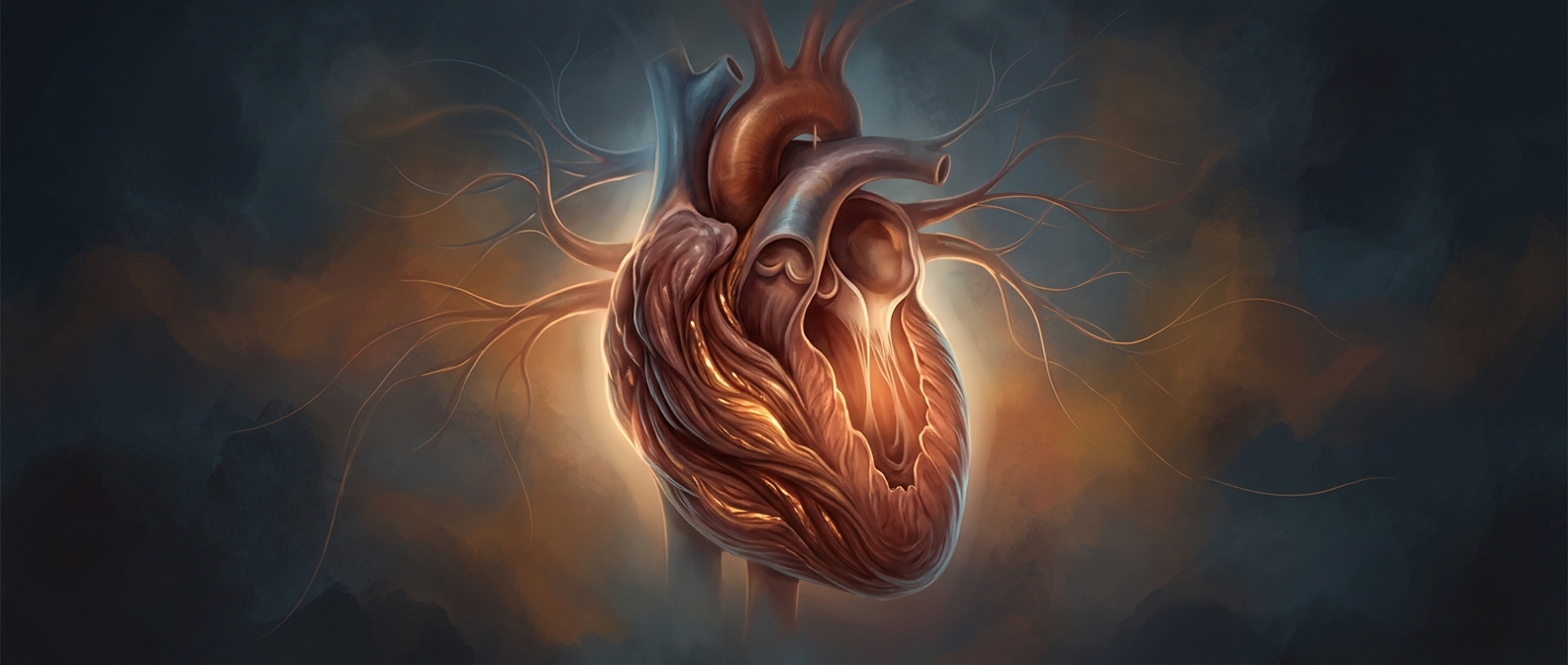
Why the Left Ventricle Has a Thicker Wall
The heart’s two ventricles—the lower chambers that push blood out of the heart—feed two different routes. The right ventricle sends blood to the lungs, where it picks up oxygen. The left sends oxygen-rich blood through the aorta, the body’s main artery, and onward to organs and tissues.
The key difference is resistance, not simply distance. The lungs are close, but their blood vessels form a delicate, low-pressure network. The body’s circulation branches through many vessels and must keep blood moving against greater resistance. To drive blood through that network, the left ventricle has to build much higher pressure.
Muscle Built for Different Workloads
A ventricle generates pressure by contracting its muscular wall. Over time, the left ventricle’s muscle develops more thickness and strength to meet its heavier pumping demand. The right ventricle can remain thinner because it moves blood through the lungs at lower pressure; pushing too forcefully against those fragile vessels would be harmful.
The heart’s two sides still work in sequence: blood passes from the right ventricle through the lungs, returns to the left, and is then sent around the body. Because the same volume of blood must pass through both sides over time, their output is matched, even though the pressure each side must produce is not. The difference in wall thickness is the visible result of that unequal workload.