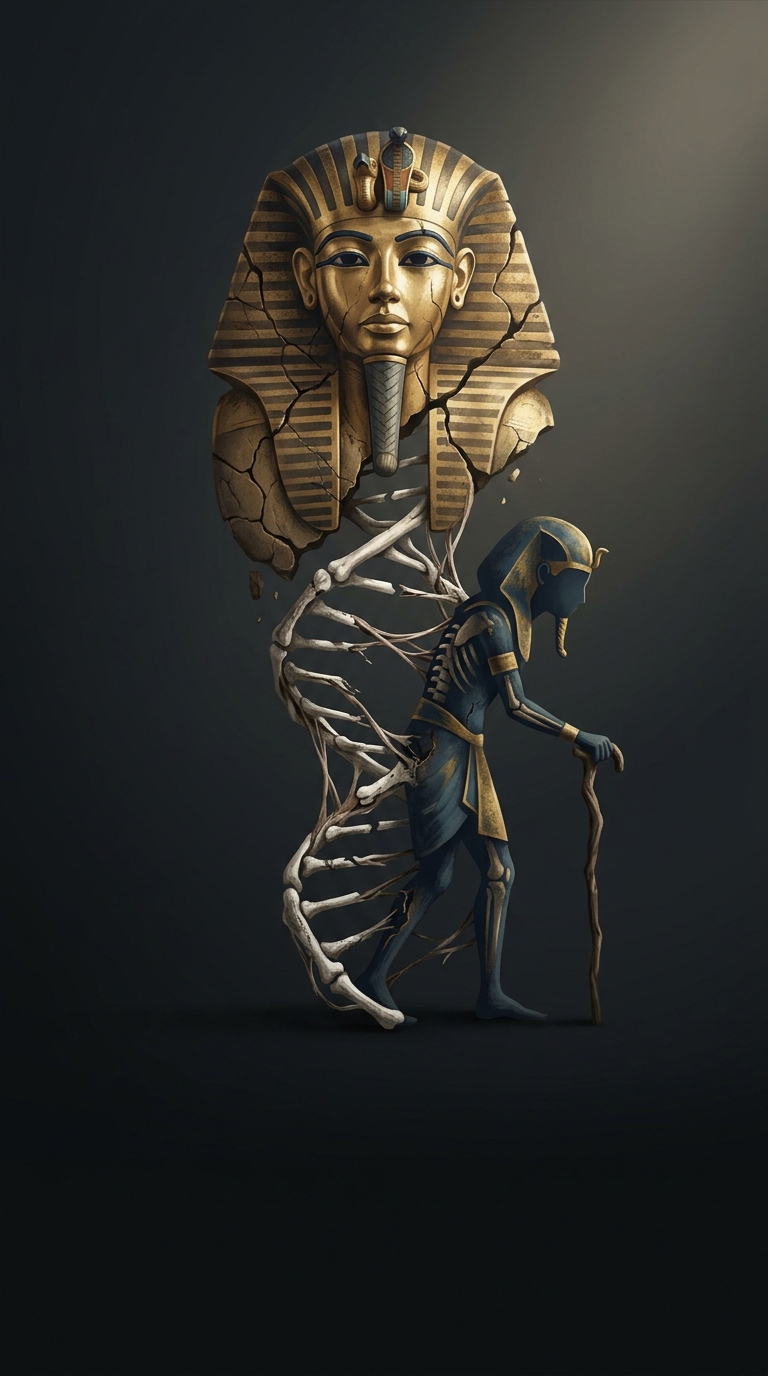
What a royal sibling marriage changed biologically
When close relatives have children, they are more likely to carry the same uncommon genetic variant inherited from a shared ancestor. If a child receives two copies of a harmful recessive variant—one from each parent—the condition can emerge. The risk rises with close kinship, though it does not mean every child will be affected, or that a particular illness can be traced to one marriage alone.
DNA analysis of Tutankhamun’s family identified his parents as siblings. That finding makes inherited vulnerability a plausible part of his medical story, but it cannot by itself account for every problem described in his remains. Genetic ancestry is not a diagnosis: several causes can produce similar signs, and the surviving evidence does not establish a single, complete explanation for his health.
Why keep marriage within the royal family?
A royal marriage was also a political arrangement. In a system where rule was tied to sacred kingship and dynastic descent, marrying within the ruling family could help keep claims to the throne—and the authority and wealth attached to them—inside that family. Such unions were not simply private choices; they helped define who belonged to the line of succession.
That political advantage came with a biological tradeoff. Repeated marriage among close relatives can make inherited variants more likely to meet in a child. The consequences are probabilistic, not automatic: family history can raise risk without guaranteeing disability or illness.
Tutankhamun’s case makes that tradeoff unusually tangible. The same family network that helped preserve royal identity also narrowed the pool of unrelated partners. His remains offer evidence of a vulnerable young king, but not a tidy medical verdict; the strongest conclusion is that close-kin parentage could have increased his inherited risks.