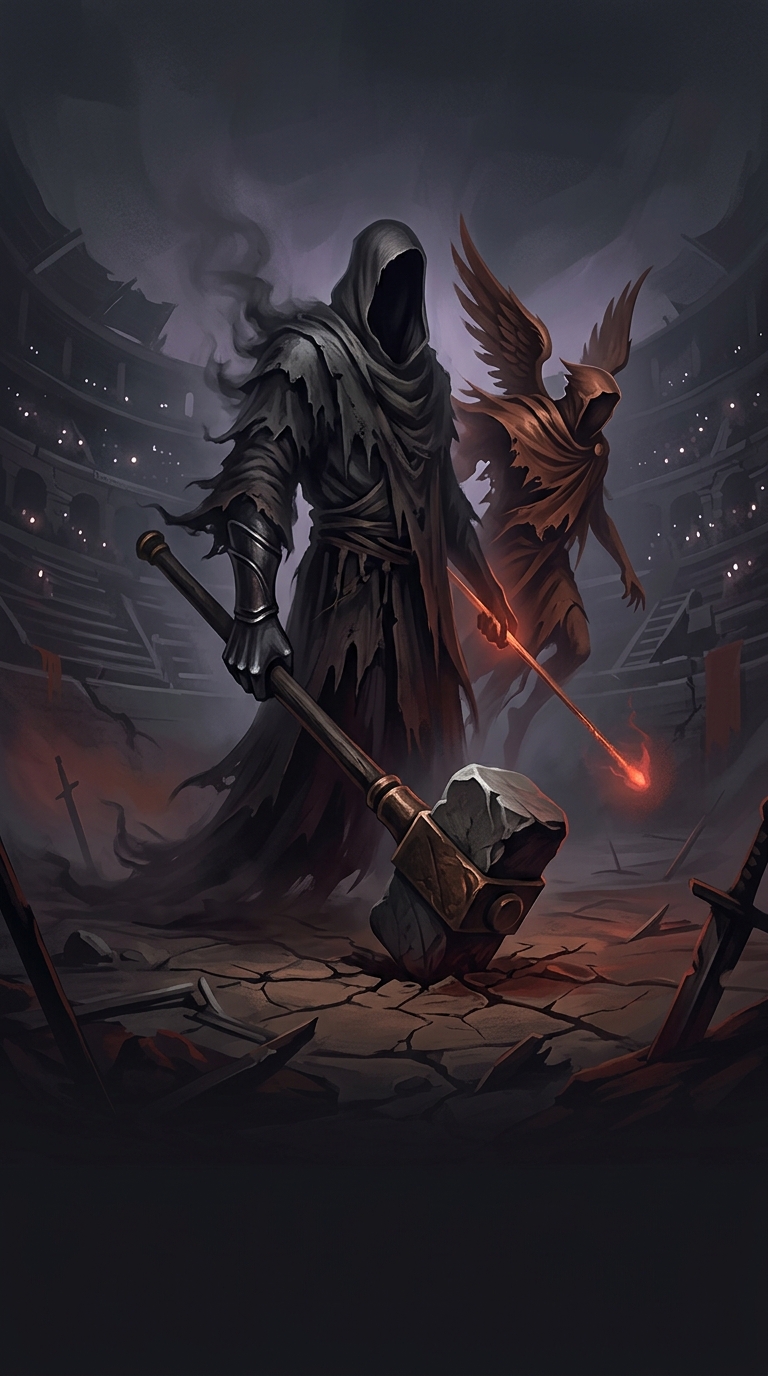
The Arena’s Grim Underworld Pageant
The figures described as Charon and Mercury turned a gladiator’s death into a miniature scene from Roman mythology. Charon was the ferryman who carried souls across the underworld’s river; Mercury, among his other roles, guided the dead. Their presence made the arena’s violence legible as a passage from life to the afterlife, not just the end of a contest.
What the Attendants Were Portrayed Doing
The account comes from Tertullian, a Christian writer around the turn of the third century who criticized Roman spectacles. He describes a performer representing Mercury checking fallen bodies with a heated iron wand, while a Charon figure used a mallet. The gestures evoked the gods’ underworld roles while attendants dealt with the bodies left in the arena.
That distinction matters: Tertullian was describing—and condemning—the spectacle, not laying out a neutral handbook of arena procedure. His account supports the striking image of costumed attendants, but it does not establish that every Roman arena followed an identical routine or that each blow served as a precise medical test.
Death as Part of the Show
Roman audiences encountered mythology not only in stories but through public performance. In this setting, the attendants’ costumes and actions could turn the aftermath of combat into another staged moment, linking the visible body on the sand to an imagined journey beyond it. Even the arena’s cleanup could be given a theatrical role: the dead were not simply removed from view; their departure was framed in the language of the underworld.