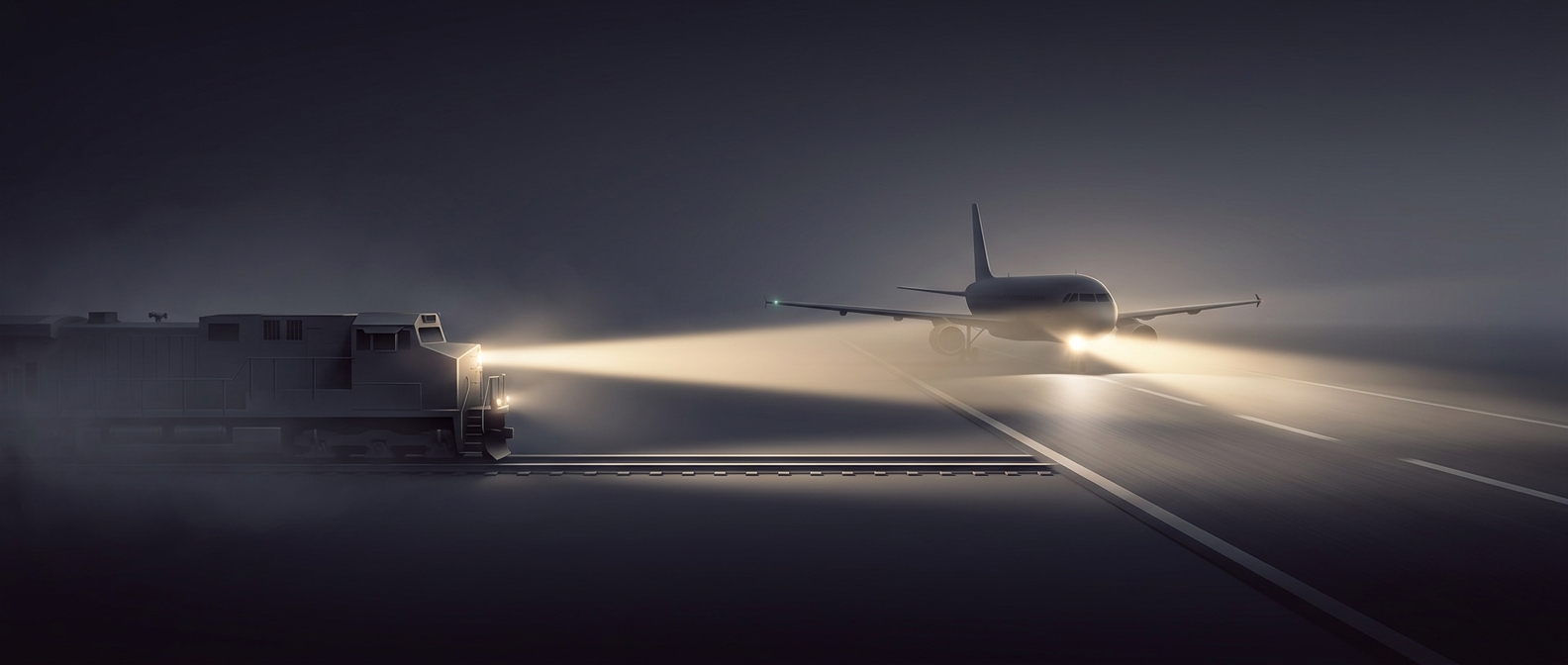
A railway through an airport’s most controlled space
At Gisborne Airport in New Zealand, the railway does not skirt the airfield: its track crosses the runway itself. That makes the crossing more than an unusual intersection. A runway is a carefully managed route where an aircraft needs an unobstructed strip of ground to take off or land; a train is confined to rails and cannot steer around an obstacle.
The two kinds of traffic therefore have to use the crossing at different times. Before either enters, its movement must be coordinated with the other. The key safety principle is simple: the runway and track cannot be treated as independent routes when they occupy the same patch of ground.
Why the crossing demands coordination
Aircraft and trains also behave differently when stopping. A plane may be moving quickly and needs a long, clear runway, while a train has substantial momentum and follows a fixed path. If one were already committed to crossing, the other could not safely improvise around it. Scheduling access in advance keeps the conflict from becoming a last-second braking problem.
Most airports separate aircraft from road and rail traffic with fences, underpasses, or routes around the runway. Gisborne’s level crossing—where the track and runway meet at the same height—makes the shared space unusually visible. Every movement has to respect both systems’ needs: the train’s continuous track and the aircraft’s clear strip of pavement.