Why a Car’s Sudden Stop Hurts
A crash is not just a collision between a car and a wall. It is a rapid change in speed, or deceleration, that keeps pushing a person’s body forward after the vehicle begins to stop. The force can injure the head, chest, and internal organs—and the way it is distributed depends on how the body meets the car’s interior.
In the early days of automotive safety research, engineers used donated human bodies to investigate that problem directly. Measurements from impact tests helped them study how bones and tissues responded to sudden force. A skull, for example, could be examined for the kinds of impacts that caused fractures; the resulting evidence gave engineers a physical basis for designing around human injury rather than relying only on guesses or simplified models.
Turning Injury Data into Car Design
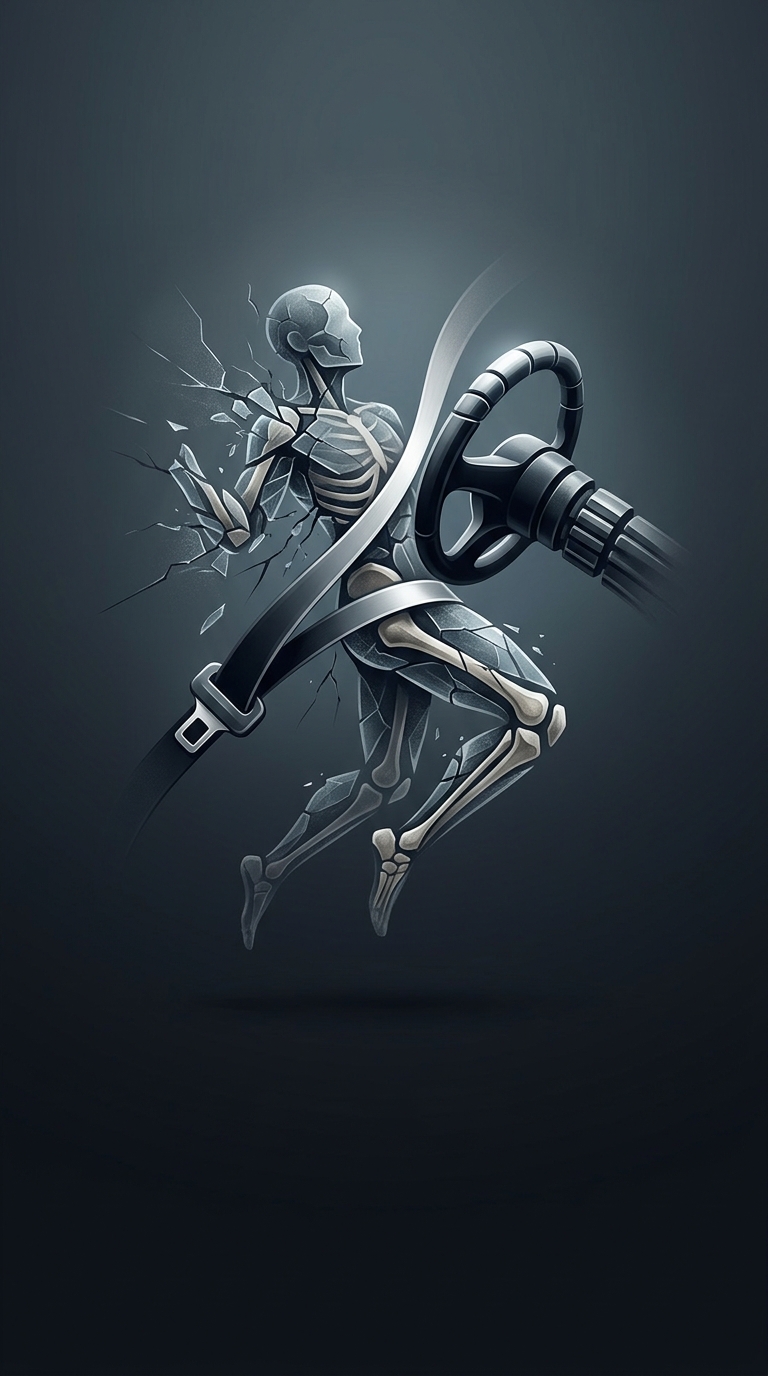
The findings fed into a broader effort to manage crash forces. A seatbelt restrains the body so it does not strike the dashboard or windshield. A shatter-resistant windshield is less likely to break into dangerous shards, while an energy-absorbing steering column is designed to give way rather than drive forcefully toward the driver. These features address different parts of the same problem: reducing the force a person’s body has to absorb.
Cadavers could reveal how real human anatomy responded to impact, but they could not represent every occupant or every crash. Later testing increasingly relied on instrumented dummies—human-shaped devices fitted with sensors—and other tools that could be used repeatedly under controlled conditions. The early tests nevertheless helped establish a lasting principle of car safety: design the vehicle to control what happens to the person inside, not merely to keep the car intact.