Why a quiet sleigh could be hard to notice
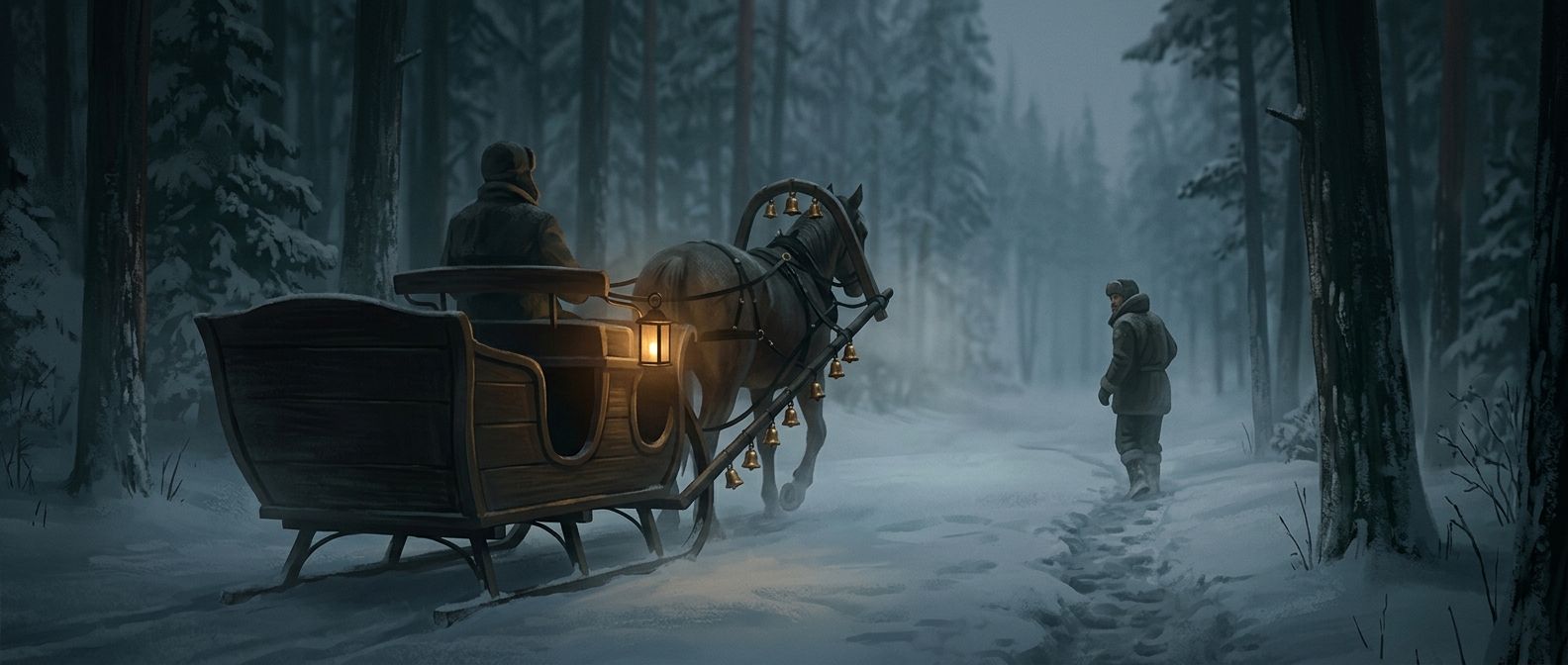
A horse-drawn sleigh can move with surprisingly little sound. Its runners slide over snow rather than rumbling over a hard road, and the snow itself muffles hoofbeats. For someone walking nearby—especially around a bend or in poor visibility—the first warning might otherwise come only when the horse was close.
Bells made an early warning
Small bells attached to the harness rang as the horse moved. Unlike the faint scrape of runners, their bright, repeated sound carried ahead of the sleigh, giving pedestrians time to look up and move aside. The warning was useful in both directions: walkers could hear the sleigh approaching, while a driver could notice people on the road and adjust course or speed.
The bells did not make a sleigh safer by stopping it quickly; a loaded sleigh on snow could still take time and space to slow or turn. Their value was earlier awareness, when there was still room to respond. The sound effectively extended the distance at which horse and pedestrian could detect each other.
A practical answer to winter silence
On a noisy, bare road, wheels and hooves announce a vehicle naturally. Snow changes that equation by making travel smoother and quieter at the same time. Harness bells supplied the missing cue, turning a sleigh’s approach into something people could hear before they had to share the road with it.