Why a Knock Stops the Hand
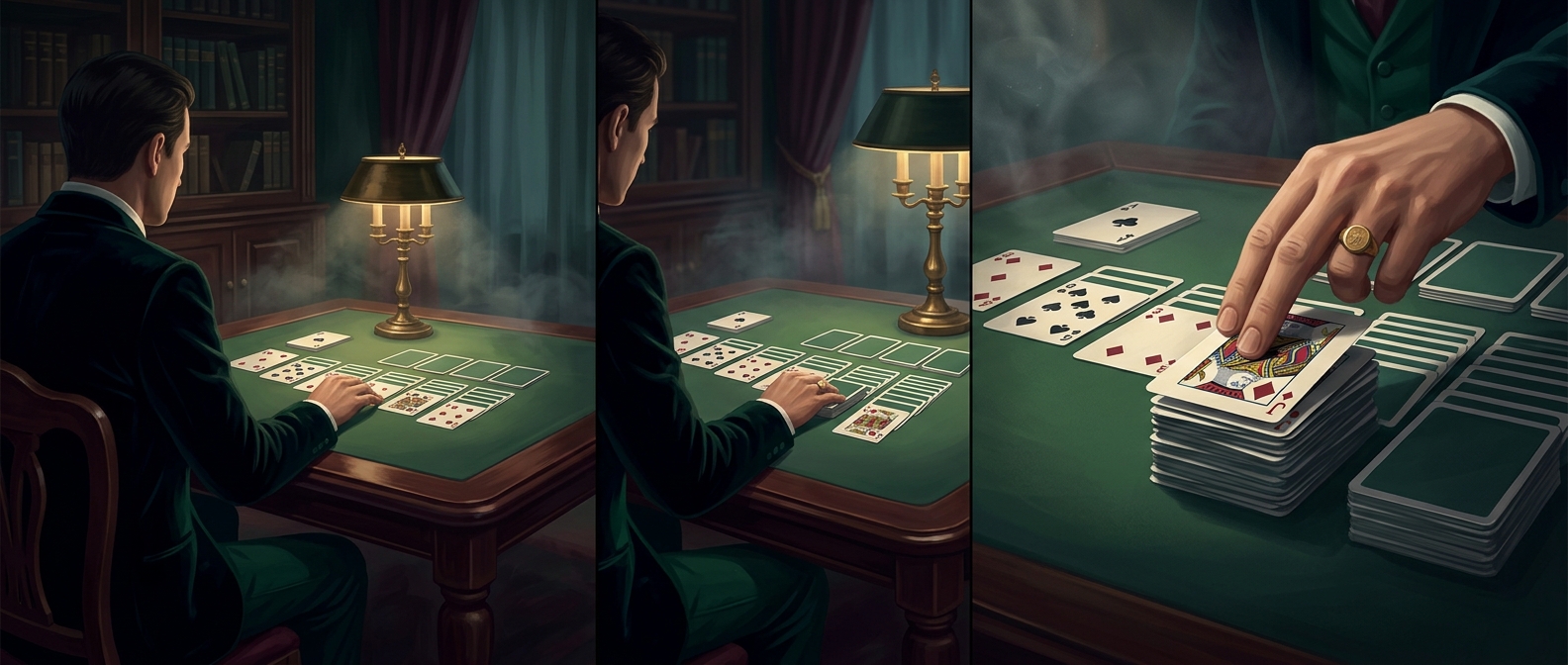
In Gin Rummy, a knock is a player’s decision to end the current hand rather than keep drawing and improving their cards. Under standard rules, a player may knock after discarding if the cards left outside their completed sets and runs—called deadwood—are worth 10 points or fewer. A set is usually three or four cards of the same rank; a run is consecutive cards of the same suit.
The knock turns a private race to organize cards into an immediate comparison. The opponent gets a final chance to arrange their own hand, and in many standard versions may add suitable cards to the knocker’s sets or runs. Then each player counts the value of the cards still unmatched.
The Risk Behind Ending Early
The knocker does not automatically score a win just for calling it. If the opponent finishes with less deadwood, the knock is “undercut”: the opponent scores instead, often with a bonus. Otherwise, the knocker generally scores the difference between the two deadwood totals. Exact scoring details can vary by rule set.
That risk makes a knock a judgment call. A player may have enough deadwood to qualify but still wait, hoping to improve their hand—or knock now to avoid giving the opponent more time. If a player matches every card into valid melds, that is gin, a stronger finish that usually earns a bonus.
The consequence is that one discard can abruptly freeze both players’ plans. The hand’s winner may depend not on who collected the most impressive melds, but on a few unmatched cards left in the other player’s hand.