How a magnetic field turns a pan into a heater
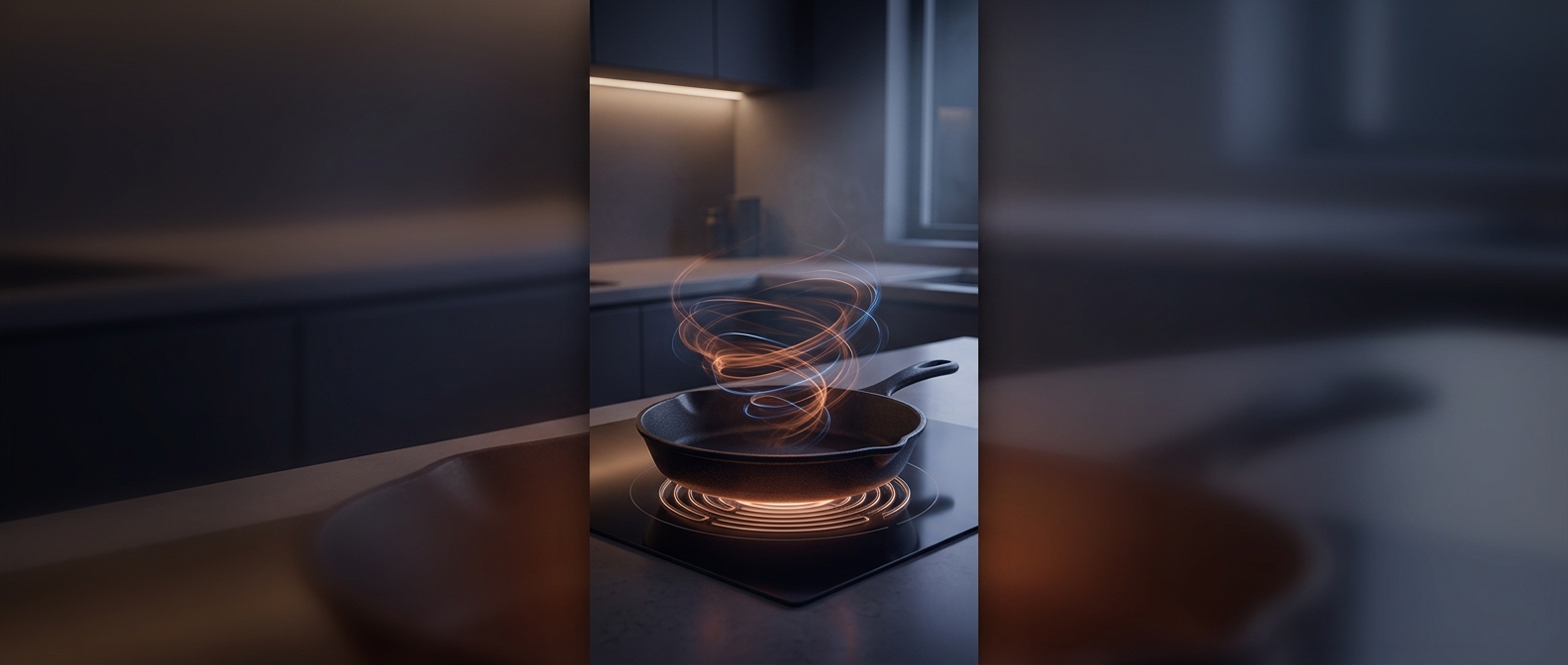
Under an induction cooktop’s glass is a coil of wire carrying alternating electric current. That current creates a magnetic field that rapidly changes direction. When a pan made of magnetic material—typically iron or magnetic stainless steel—sits above the coil, the changing field induces tiny circulating electrical currents in the pan’s metal. The metal resists those currents, and that resistance converts electrical energy into heat.
The pan itself is therefore the main heating element. It transfers heat to the food through contact, while the glass is warmed mostly by heat flowing back from the hot pan. This is why an induction surface can stay cooler than a conventional electric burner, though it is not necessarily cool enough to touch safely after cooking.
Why some pans work and others do not
Induction needs a pan that responds to the magnetic field. A simple test is to see whether a refrigerator magnet sticks firmly to the bottom; if it does, the pan will generally work. Aluminum, copper, and many glass pans do not respond on their own, though cookware with a magnetic base can make them compatible.
The cooktop also needs the pan to be positioned over its coil. Without suitable cookware, little energy is transferred, so many models will not heat at all. The result is a direct route from electricity to the cooking vessel: change the magnetic field, generate currents in the pan, and the pan heats the meal.