How Color Became a Battleground for Margarine
Margarine could be made from pale fats, while butter’s familiar yellow came from the milk fat—and, depending on season and feed, from pigments in cows’ diets. To shoppers, the color difference could make margarine look less like a direct substitute for butter. That distinction mattered in a market where appearance helped signal what a food was and what it was worth.
Butter producers and their allies argued that margarine’s resemblance to butter could mislead customers and threaten dairy sales. In some places, lawmakers responded by restricting the addition or sale of yellow-colored margarine. Manufacturers adapted by selling the spread pale, sometimes with a small capsule of yellow dye for customers to work into it at home. The capsule turned color into a consumer’s job—and let margarine makers preserve the option of a butter-like appearance where rules allowed it.
Why Pink Was Proposed
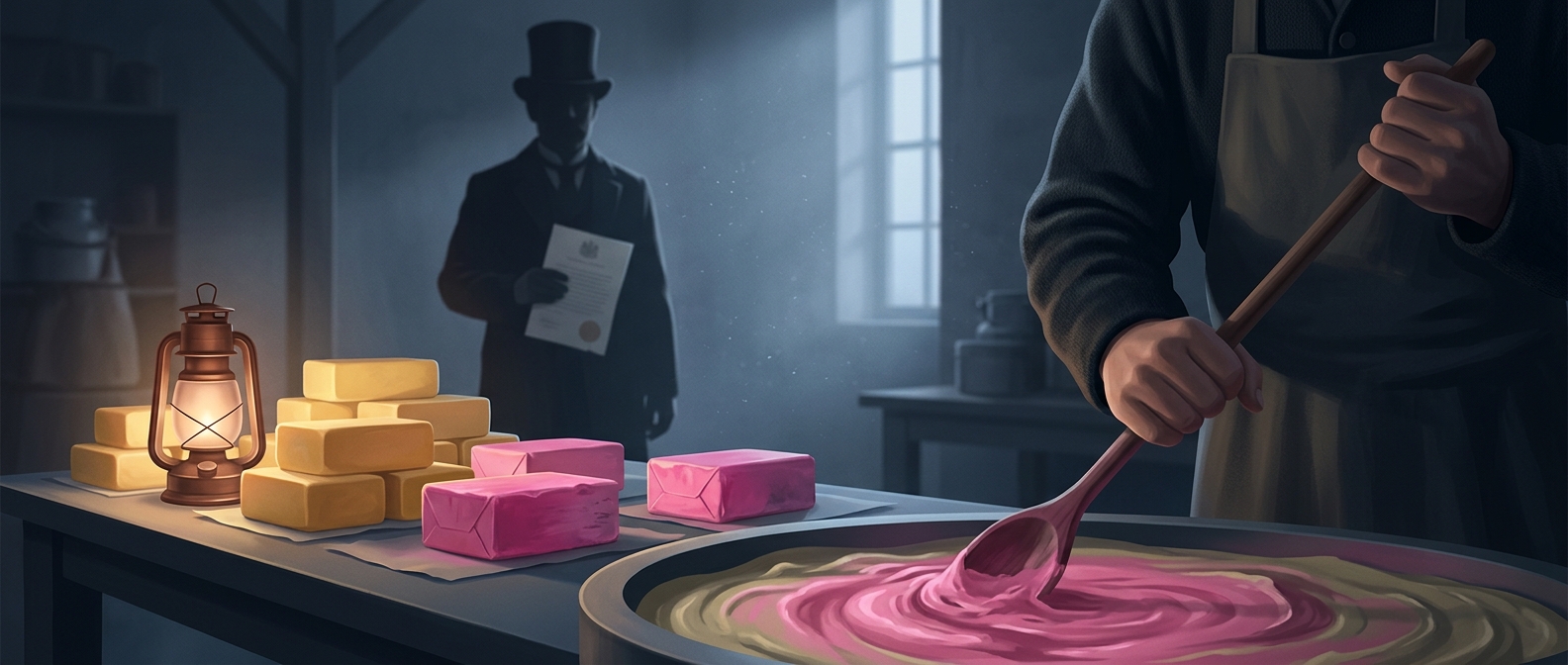
Some opponents wanted more than a ban on yellow dye: they pushed for margarine to be colored pink, a hue that would make it unmistakably unlike butter. The point was not to improve its taste or keep it fresh. Color itself was being used as a form of regulation, making a cheaper competing product visibly different at the moment of purchase and at the table.
That is why the dispute reached into the kitchen. Rules about a food’s appearance could dictate whether a household received a pale block, mixed in its own dye, or faced a product deliberately made less butter-like. The color on a slice of toast was the final result of a contest among manufacturers, lawmakers, and the dairy trade—not simply a choice made by the person eating it.