Why Tug-of-War Is Won at the Ground
A team does not pull the opposing team directly so much as use the ground to resist being pulled itself. Each player leans back and pushes against the earth with their feet; friction between shoes and ground keeps them from sliding. The rope carries the tension between the teams, but footing determines how much of that tension a team can put to use. If the ground cannot provide enough grip, players slide even while pulling hard.
That is why a line of strong individuals is not automatically a strong team. Players need to keep their bodies low and aligned so the rope’s pull does not tip them forward, and they must coordinate their efforts. A steady, shared pull lets each person add force without abruptly jerking the line or losing balance. If one player slips or changes position, the others may have to spend effort staying upright instead of moving the opposing team.
What Changes When the Ground Gives Way
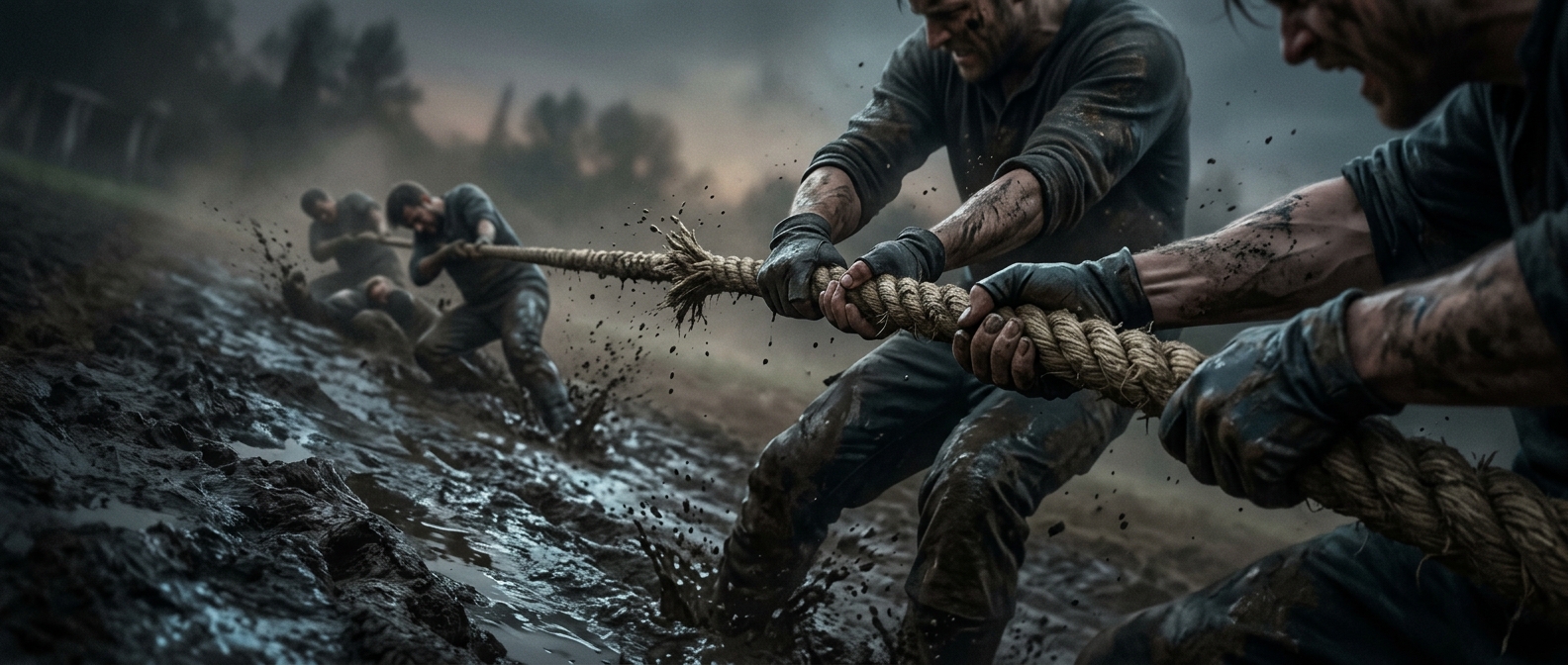
On firm ground, a planted foot can act like an anchor. Mud makes that anchor unreliable: it deforms underfoot, and a shoe can shift or sink before it gains a stable push. The rope may remain taut, but the team’s connection to the ground weakens. The result can be a sudden slide that spreads down the line as players struggle to keep their footing.
The contest is therefore a chain of linked forces: ground grips feet, bodies transfer force to the rope, and the rope transfers it to the other team. A weak link can decide the pull. In muddy conditions, the team that keeps its feet and timing may gain ground not because it can summon more strength, but because it can direct more of its strength into the rope.