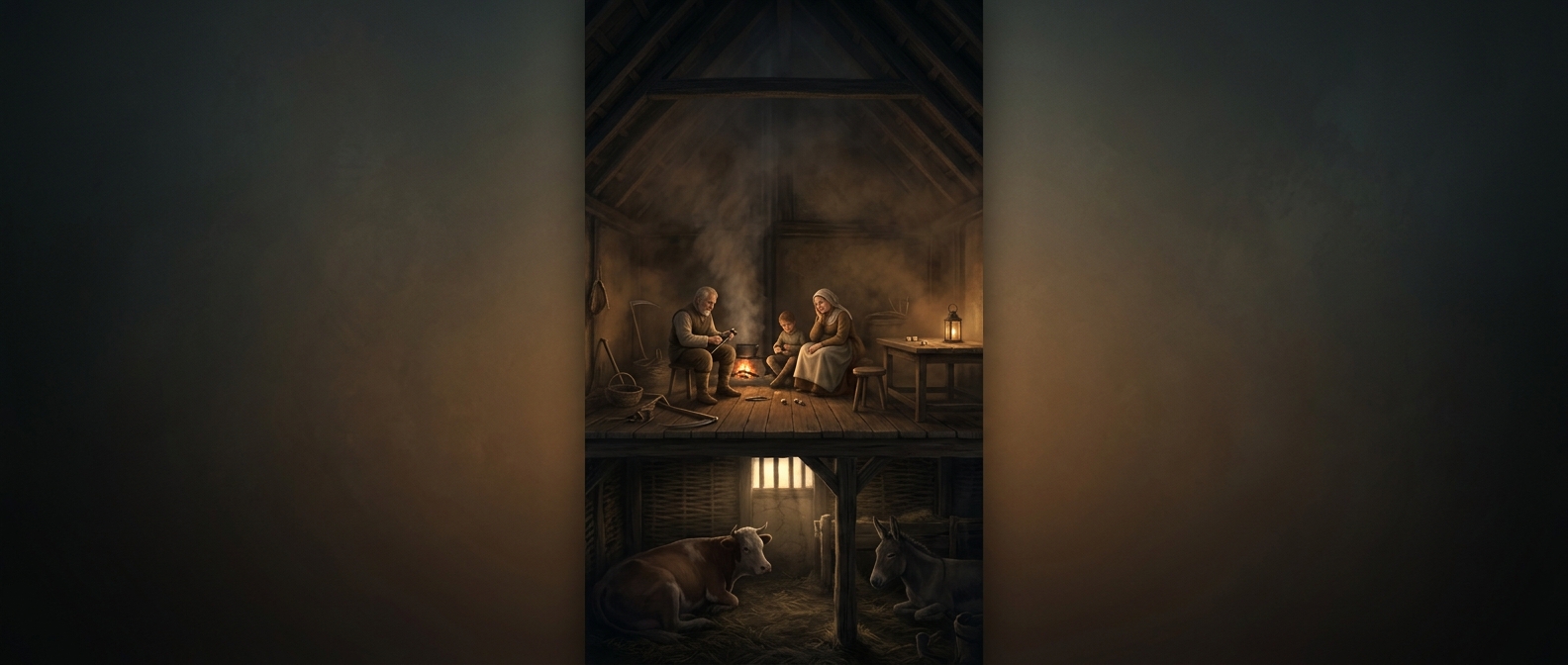
A medieval home was also a working space
For many rural households, the boundary between home and livelihood was thin. A family’s animals were not simply pets or background scenery: they could provide milk, wool, manure for fields, or labor. Keeping livestock close made daily care easier and, in some homes, brought animal heat into the rooms above. The arrangement also meant living with noise, dirt, and odor. It was a practical compromise, not a sign that people were unaware of hygiene.
Work followed the agricultural year
Fieldwork shaped the rhythm of village life. Sowing, tending crops, and harvesting demanded long stretches of labor, with tasks varying by season. Markets connected that local work to a wider exchange: households could sell or trade produce and goods, and acquire things they did not make themselves. A market day was therefore both a commercial event and a chance to encounter people beyond the immediate household.
Ordinary life was not a pause between wars
Battles mattered, but they were not the everyday experience of most people. The more continuous pressures were making food, maintaining a home, caring for animals, and finding ways to trade. Even games belonged to that lived world: leisure took place alongside work rather than replacing it. The result was a life organized less around dramatic events than around recurring needs—fields to tend, stock to feed, and goods to bring to market.