Why Mulberry Groves Mattered to Silk
Silk was not simply a craft secret that could be carried away in a bundle. Its production depended on a living supply chain: silkworms had to be raised on fresh mulberry leaves, and the worms’ feeding and growth had to be managed before they spun cocoons. A region that could not reliably provide leaves could not sustain silk production, no matter how skilled its weavers were.
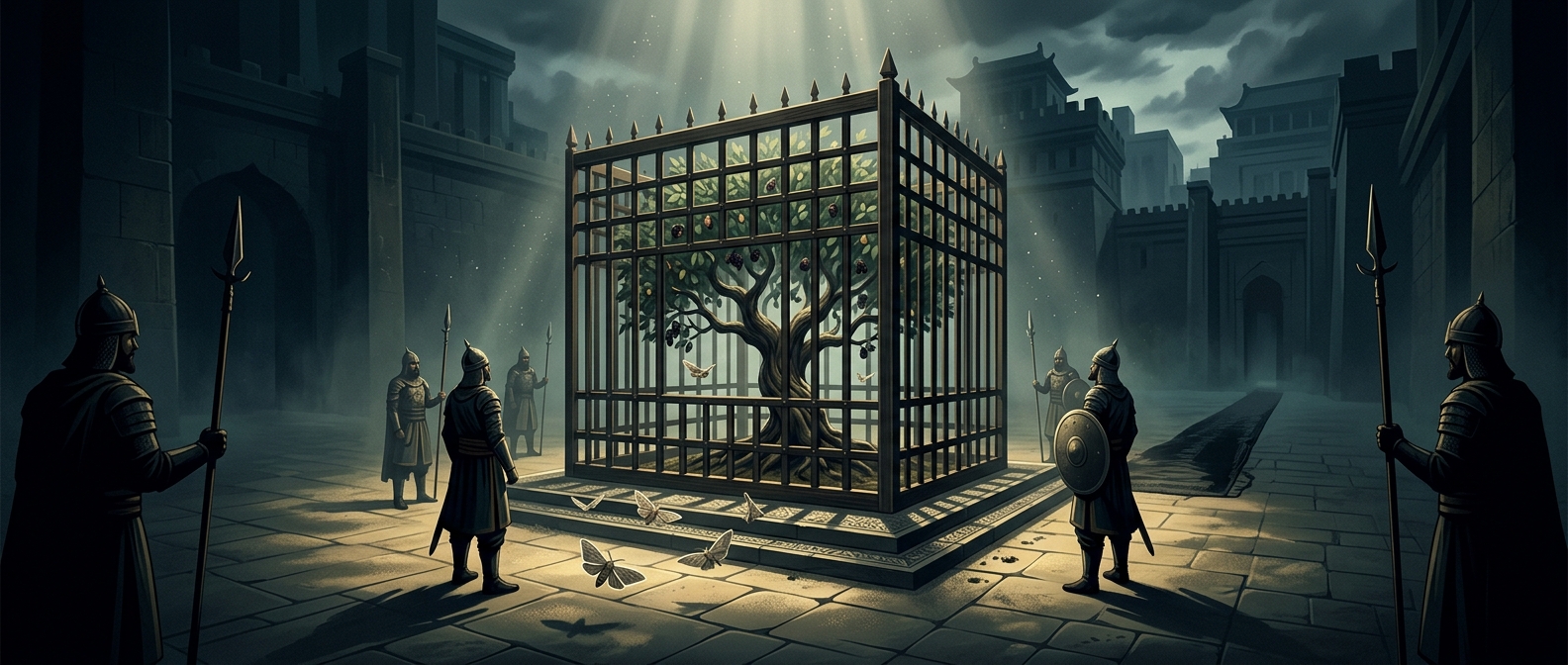
That made mulberry trees valuable infrastructure. Groves took land, time, and labor to establish and maintain, while the leaves had to be gathered when needed. Controlling the trees meant controlling a crucial input—and the ability to keep silk makers supplied.
From Orchard to Political Leverage
Silk’s high value made that agricultural dependence politically significant. Rulers and states that cultivated sericulture—the raising of silkworms for silk—could support production at home, collect revenue from it, and supply a prized commodity for trade and diplomacy. Where production relied on imported silk, access to the finished cloth could instead depend on merchants and trading routes beyond a ruler’s control.
The leverage was not that a mulberry grove alone guaranteed wealth. Silk also required skilled workers, careful rearing, and processing. But without leaves, the process stopped at its first step. The trees connected control of land to control of a luxury industry.
The Hidden Infrastructure of a Luxury
Silk’s glamour could obscure the ordinary work beneath it: planting trees, tending groves, and carrying leaves to hungry larvae. Those demands shaped where production could take root and who could sustain it. In that sense, the mulberry was more than a food source; it was the agricultural foundation beneath a trade whose fortunes reached far beyond the orchard.