In Cars, a door is part of the character’s body
The cars in Pixar’s Cars are not ordinary vehicles carrying hidden human drivers. They are the people in the story: their eyes, expressions, voices, and movement all belong to the cars themselves. That makes a familiar feature like a side door feel oddly unexplained. If nobody climbs into the car, what is it for?
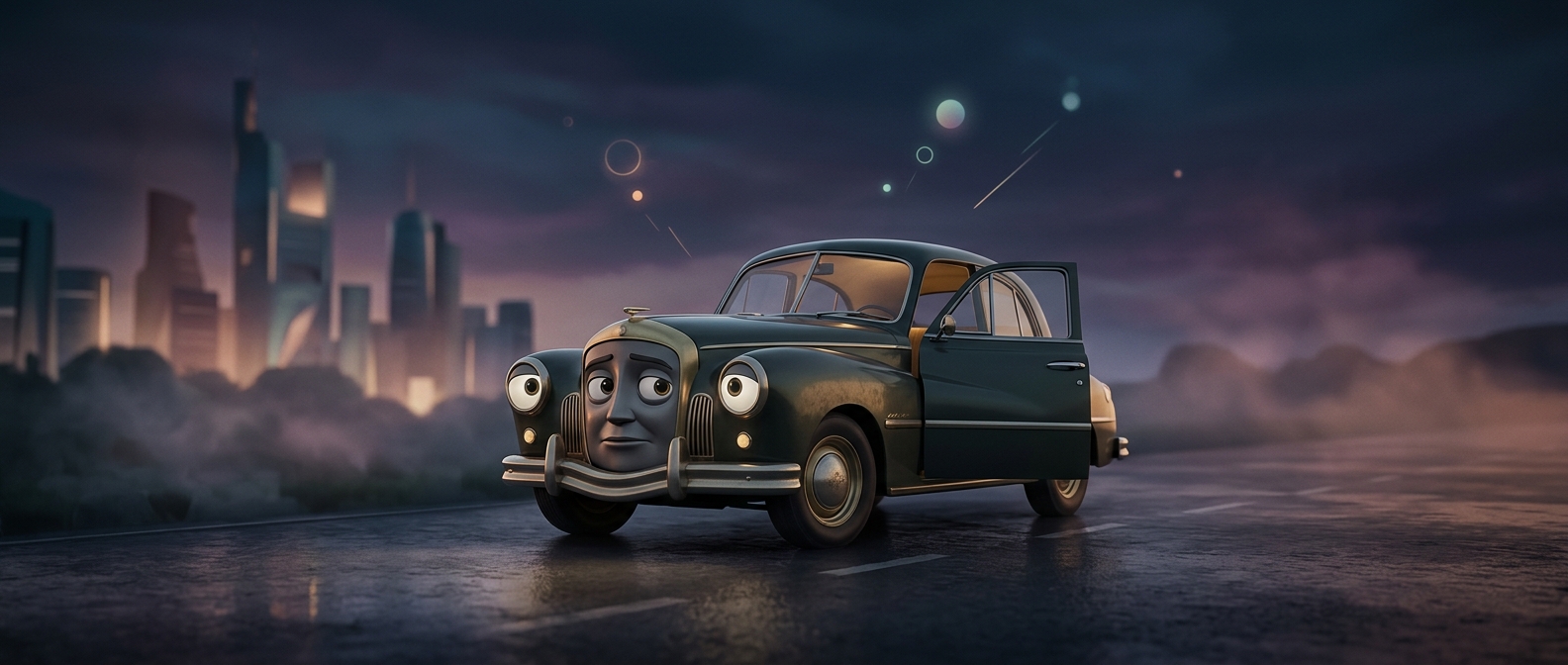
Part of the answer is visual design. A door is a major, recognizable part of a real car’s shape, marked by seams, handles, and windows. Keeping those details helps each character read instantly as a particular kind of automobile rather than as a smooth, abstract creature. The characters can look alive while still resembling the vehicles audiences know.
Familiar details can outlast their original purpose
The films do not need to give every automotive feature a human-style use. A door can remain a door in the design vocabulary—a detail that makes the body feel complete—even when the story treats the whole vehicle as one living being. That creates a small mismatch between what the viewer sees and what the fictional world explains.
The result is a bit of accidental world-building: the cars look as though someone could open them, but the films offer no ordinary passenger to get in. Their doors preserve the familiar appearance of cars while quietly reminding us that, in this world, the car is already the one inside.