A problem of momentum, not steering
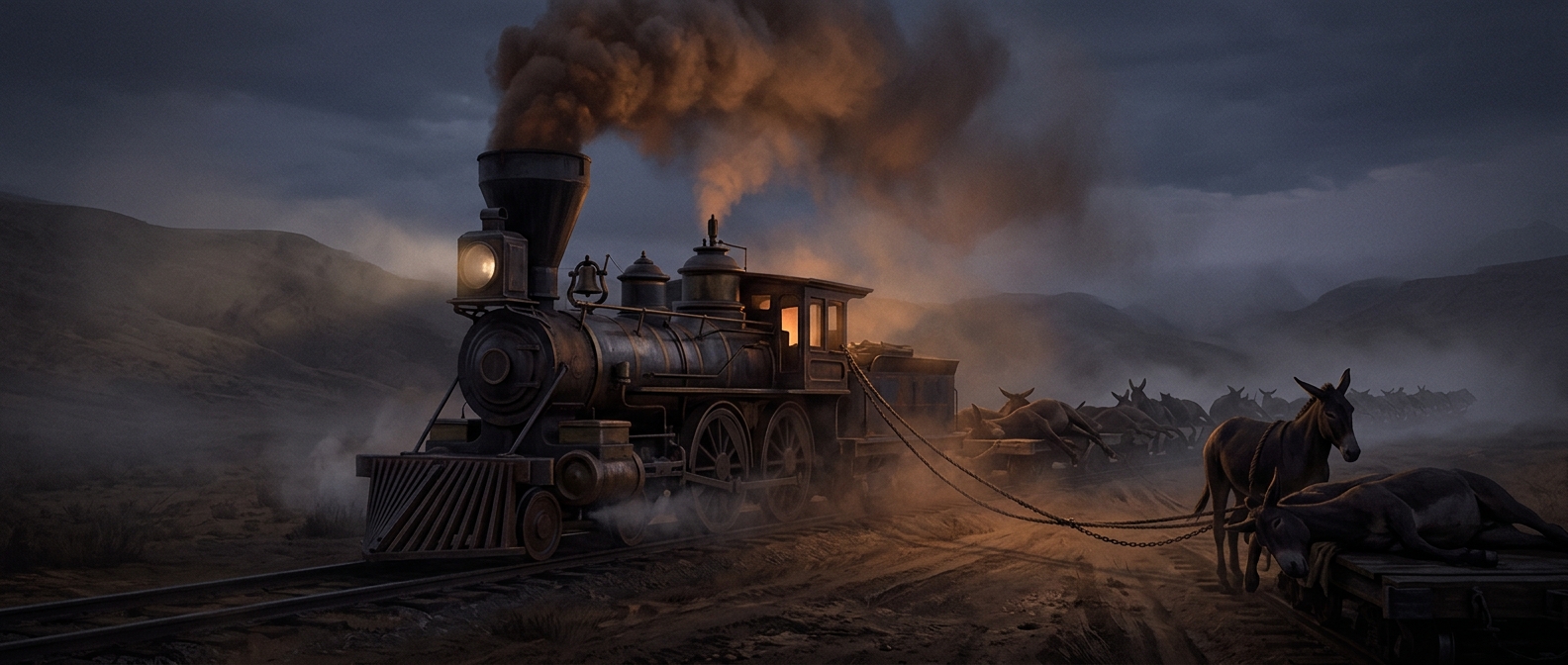
A steam locomotive could not swerve around an animal or object in its path. Its wheels were constrained by the rails, and its great mass made stopping a slow process: brakes could reduce speed, but they could not erase momentum at once. The practical goal was therefore to keep a collision from happening at wheel height.
Babbage’s cowcatcher addressed that problem with a simple change in geometry. Its low, forward-projecting frame met an obstacle before the locomotive did and guided it away from the rails. The frame turned the train’s forward motion into a sideways push, giving a loose object—or an animal able to move—a chance to clear the track before the wheels arrived.
A compromise at the locomotive’s nose
The device was a deflector, not a shield. It could help with something that yielded or could be pushed aside; it could not guarantee safety against a large, fixed obstruction. Its usefulness depended on the obstacle, the train’s speed, and whether there was room beside the track for anything to move. A collision could still damage the locomotive or cause a derailment.
That limitation is part of the engineering story. The cowcatcher did not make a heavy train nimble; it gave the train a first point of contact designed to redirect trouble rather than meet it with the wheels. Babbage’s contribution came from treating railway safety as a problem of force and shape—a practical mechanical challenge years before his calculating-machine designs made him famous. The telling detail is that the device could offer only a few moments’ warning, but on a railway those moments were the difference between striking an obstacle and sweeping it clear.