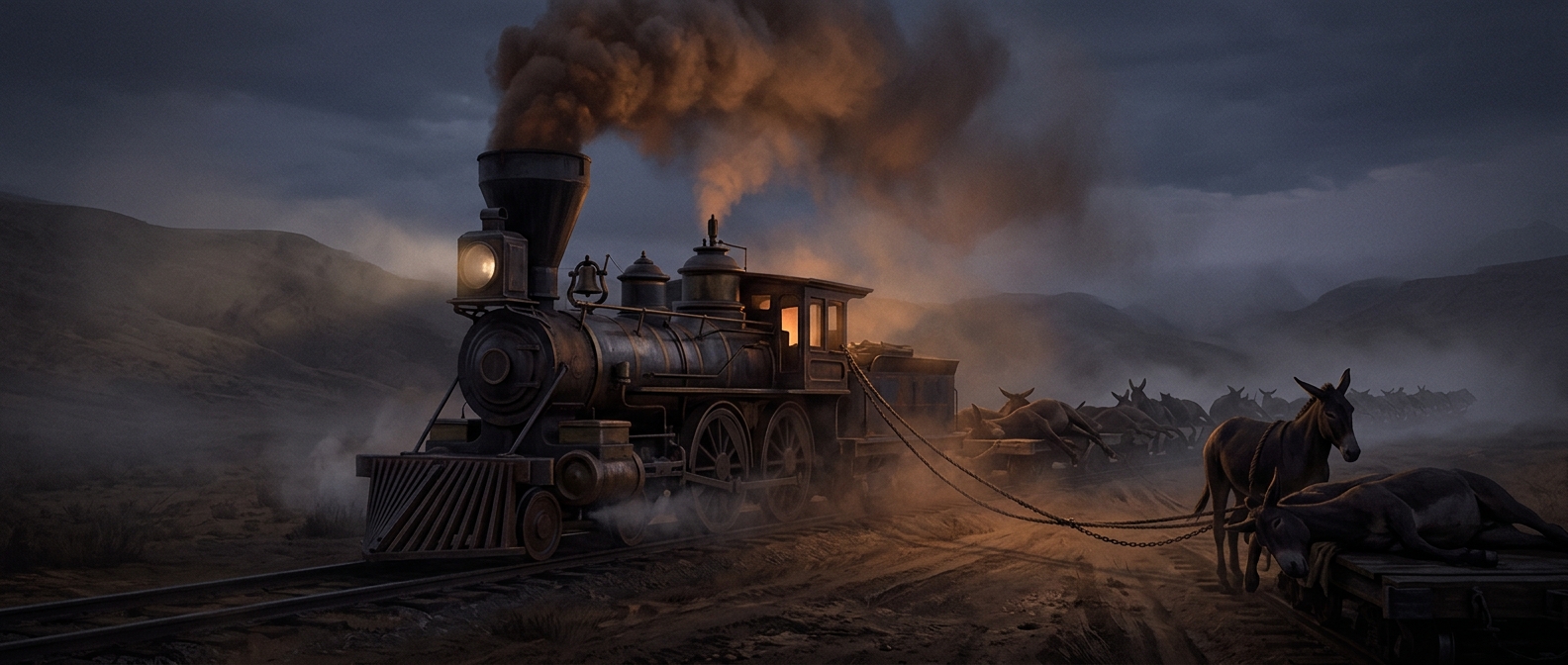
The locomotive’s blunt answer to an obstacle
Before a train could stop quickly, an animal on the rails was a problem the locomotive often had to meet rather than avoid. The front pilot—the low structure beneath the nose—helped keep obstacles from passing under the wheels. Its sloped face could push some objects off the track as the train moved forward.
That made the device useful when livestock wandered onto the line. A collision could kill the animal, and the pilot could shove the body aside instead of letting it lodge beneath the locomotive. It was not a humane or reliable way to prevent a collision; it was a practical response to a machine with a long stopping distance.
Why “cowcatcher” is a misleading name
The nickname suggests a tool that scooped up cattle. In reality, the pilot’s job was closer to clearing the track. Its shape and strength varied among locomotives, but the basic purpose was to deflect obstacles away from the wheels and running gear—the parts that keep the train moving.
The grim distinction matters: the device did not catch cows so much as reduce the chance that an animal or other obstruction would become trapped beneath the locomotive. On a railway, clearing the path could mean pushing the obstacle out of it.