The experiment that made a frog’s leg twitch
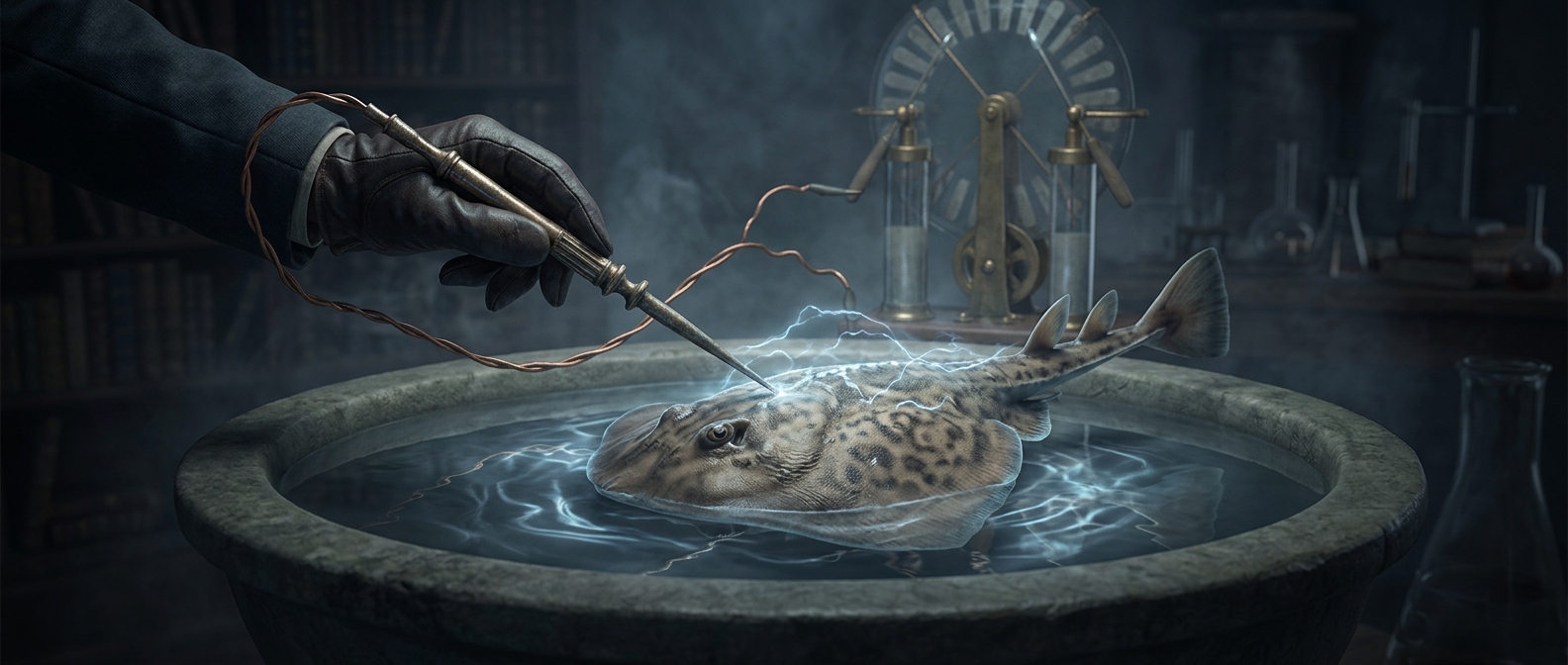
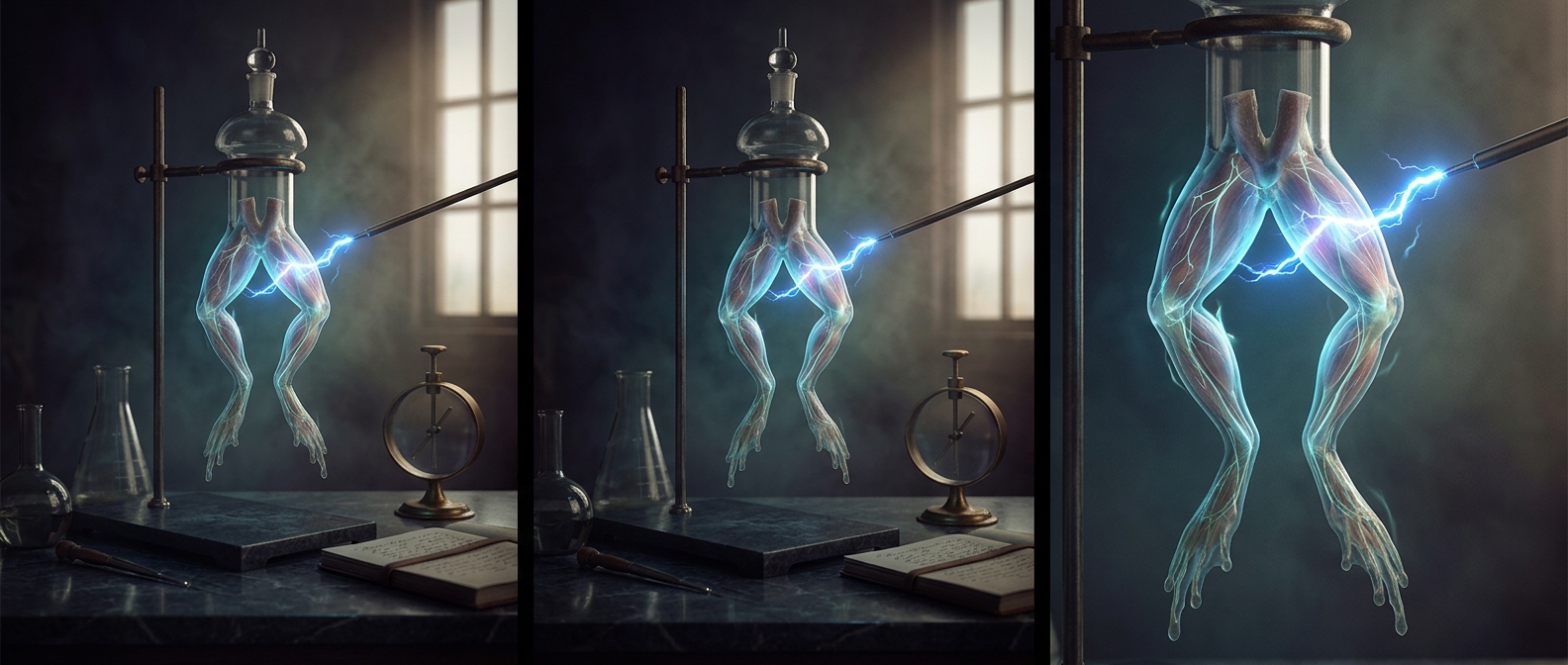
In the late 18th century, Italian physician Luigi Galvani was studying how nerves control muscles. When he touched a prepared frog’s leg with instruments made of different metals, the muscles sometimes contracted. The motion looked startlingly lifelike, but it did not mean the animal had returned to life. It showed that a muscle could still respond after death if its nerves and tissue remained capable of reacting.
The key was the contact between dissimilar metals and the wet tissue. Salts in the tissue carry charged particles, allowing a small electrical current to pass. That current can excite a nerve; the nerve signal then prompts muscle fibers to contract. In effect, the experiment supplied a stimulus to biological machinery that had not yet lost its ability to respond.
From twitching muscles to “animal electricity”
Galvani interpreted the contractions as evidence of electricity produced within animals, an idea he called animal electricity. Physicist Alessandro Volta argued that the metals themselves played a crucial role. His investigations into the effect helped lead to the voltaic pile, an early battery that produced a sustained current. The debate mattered because it pushed researchers to distinguish electricity generated by living tissue from electricity produced by a circuit.
That distinction also made the experiments unsettling: electricity could make part of a dead animal move, even though movement was not the same as life. The visible twitch offered a dramatic demonstration of how much bodily action could be triggered by physical forces.
Why the experiment haunted Frankenstein
Mary Shelley wrote Frankenstein amid intense public interest in electricity, life, and the boundaries of scientific knowledge. Galvani’s frog experiments helped shape that atmosphere, though Shelley’s novel does not provide a technical account of how Victor Frankenstein animates his creation. Instead, the experiments supplied a potent possibility: perhaps life’s motions could be investigated—and imitated—through natural processes.
The enduring unease comes from the gap between a leg that can be made to move and a creature that is alive. A twitch is evidence of a responsive nerve and muscle, not proof that the mystery of life has been solved.