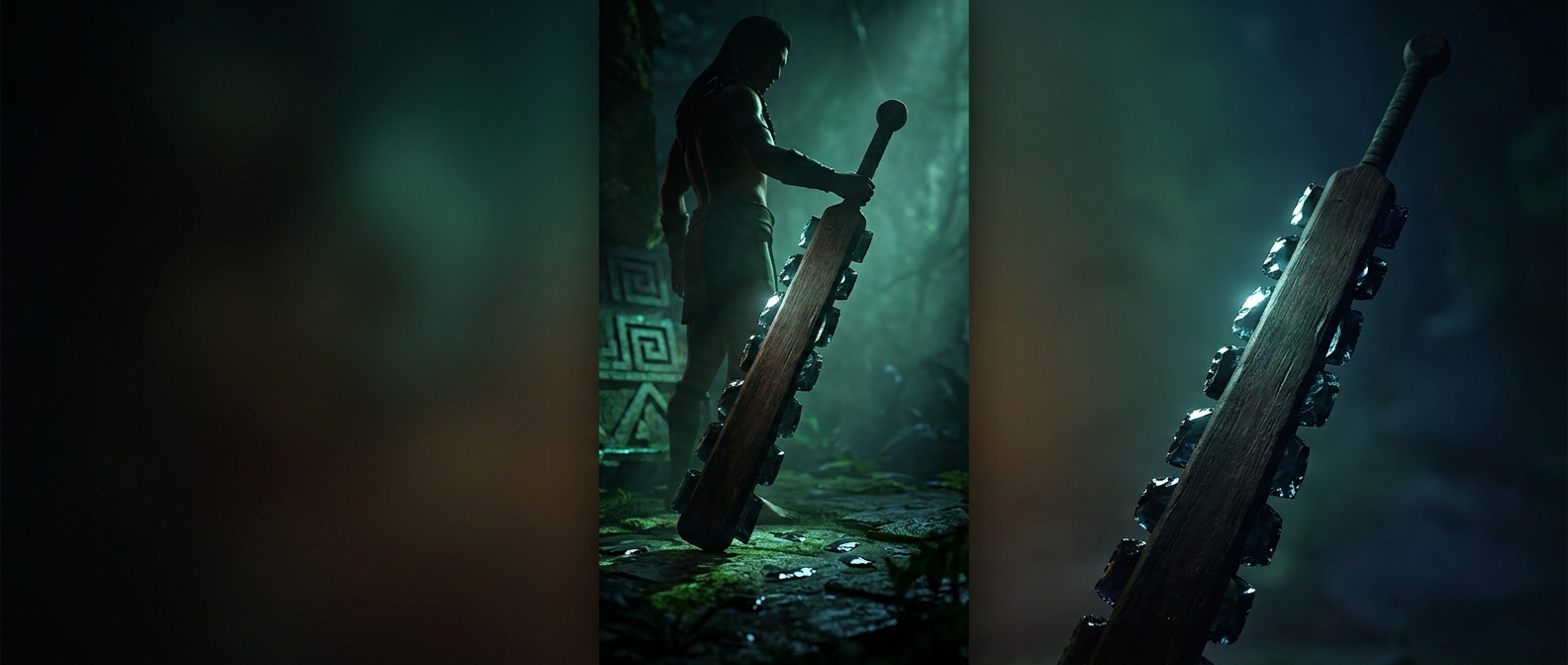
Volcanic glass turned into a cutting edge
The weapon was the macuahuitl, a wooden club-like sword fitted along its sides with sharp pieces of obsidian. Obsidian is volcanic glass: when carefully fractured, it can form an exceptionally keen edge, sharp enough to slice skin and flesh. The weapon’s wooden body held several blade segments in place, creating a long cutting surface without requiring a single forged metal blade.
That choice reflected the materials and craft traditions available in central Mexico. Aztec smiths did not make steel swords; obsidian, by contrast, could be shaped into cutting tools with a sharpness that ordinary metal edges could not easily match.
A formidable edge with a tradeoff
The macuahuitl was not simply a wooden sword with glass decorations. Its obsidian edges were intended to cut during a strike, while the heavy wooden core gave the weapon force. But obsidian is brittle: a hard impact could chip or break an edge. The weapon’s construction therefore joined a very sharp material to a sturdy support, rather than relying on one unbreakable blade.
That tradeoff helps explain why the macuahuitl was both feared and distinct from a European steel sword. It could deliver a severe slicing blow, but its fragile cutting pieces were vulnerable to damage in ways a forged metal blade was not. Its striking appearance came from a practical design built around a material that was sharp, abundant, and breakable.