A sharp edge made by fracture
Obsidian is volcanic glass formed when lava cools quickly, leaving little time for crystals to grow. When struck in a controlled way, it breaks along curved surfaces called conchoidal fractures. Those breaks can produce edges finer than many metal edges—but the same glassy structure makes them prone to snapping or chipping under impact.
That gave the weapon its defining tradeoff. Its cutting power came from a row of hard, keen edges; its weakness was that those edges could not safely absorb the shock of a metal blade or a blow against armor.
A wooden body, separate cutting edges
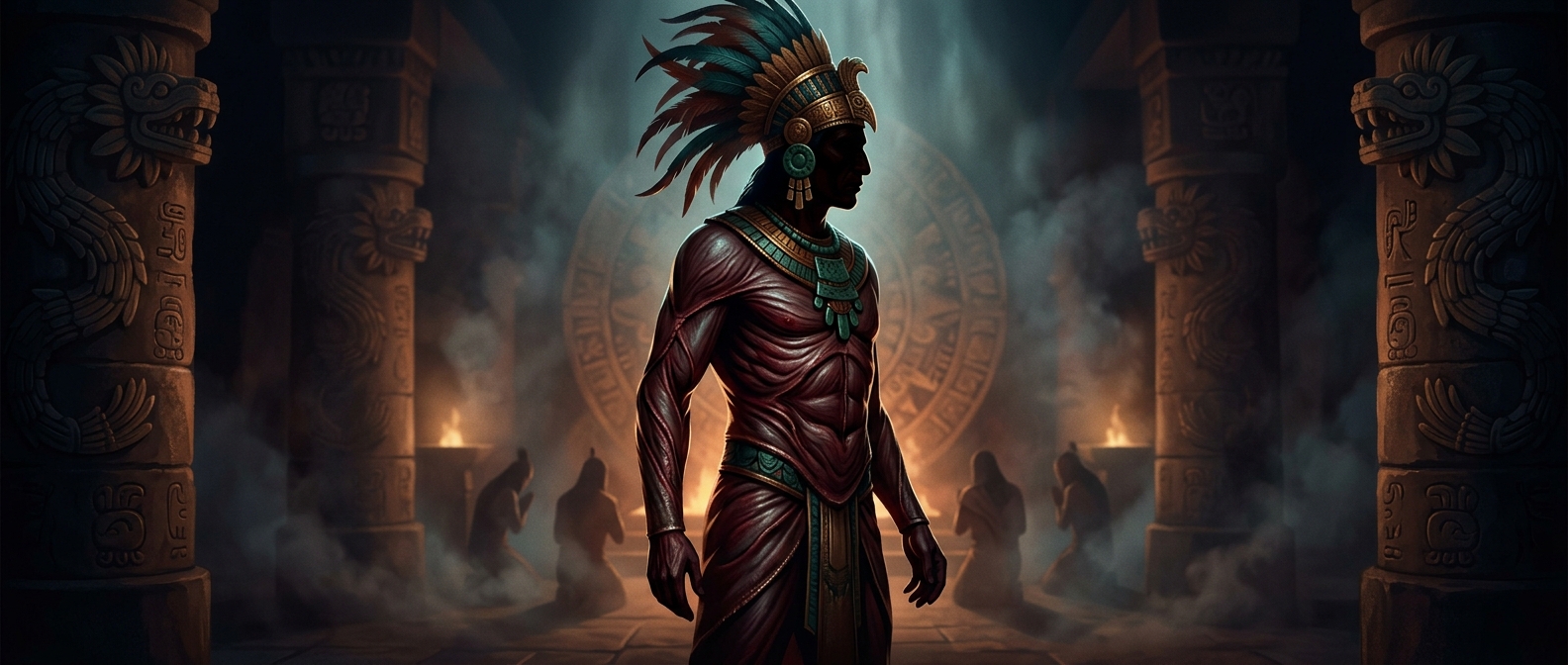
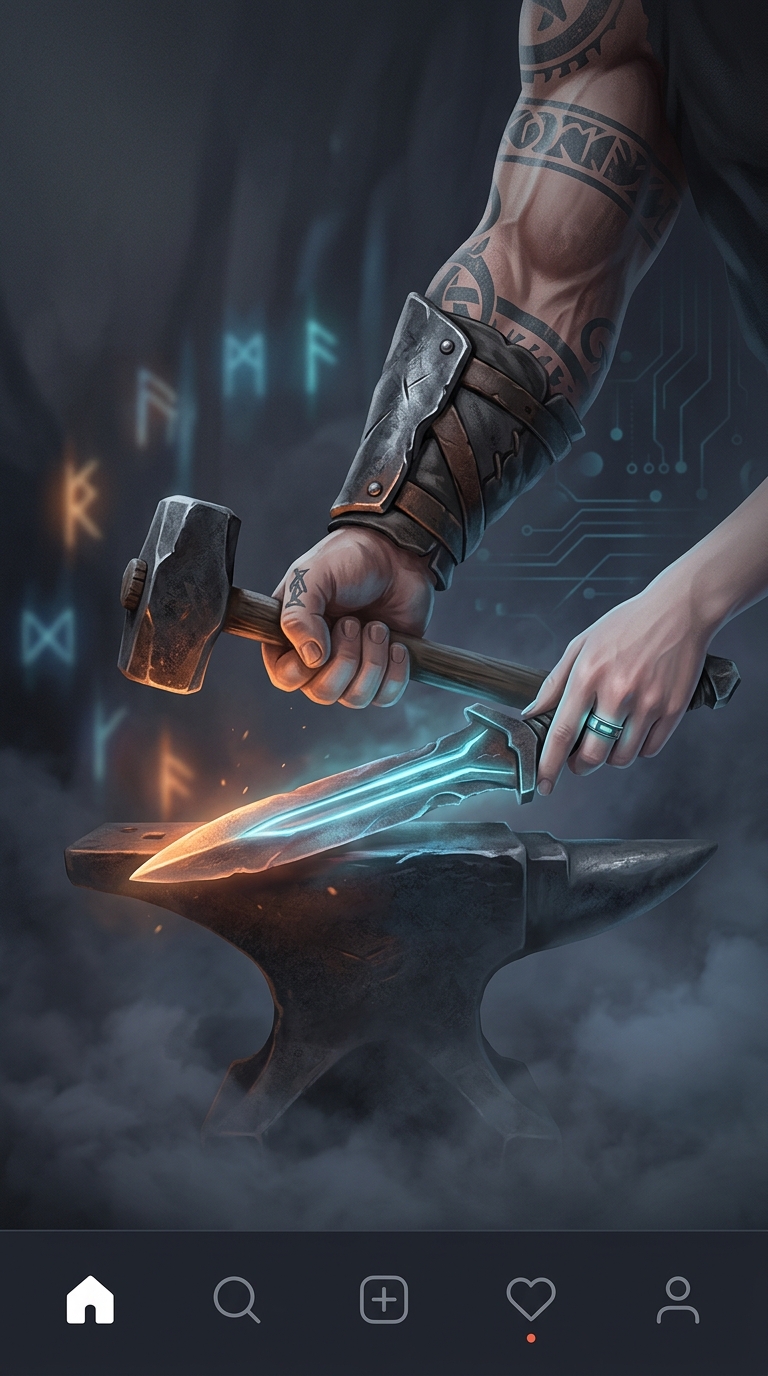
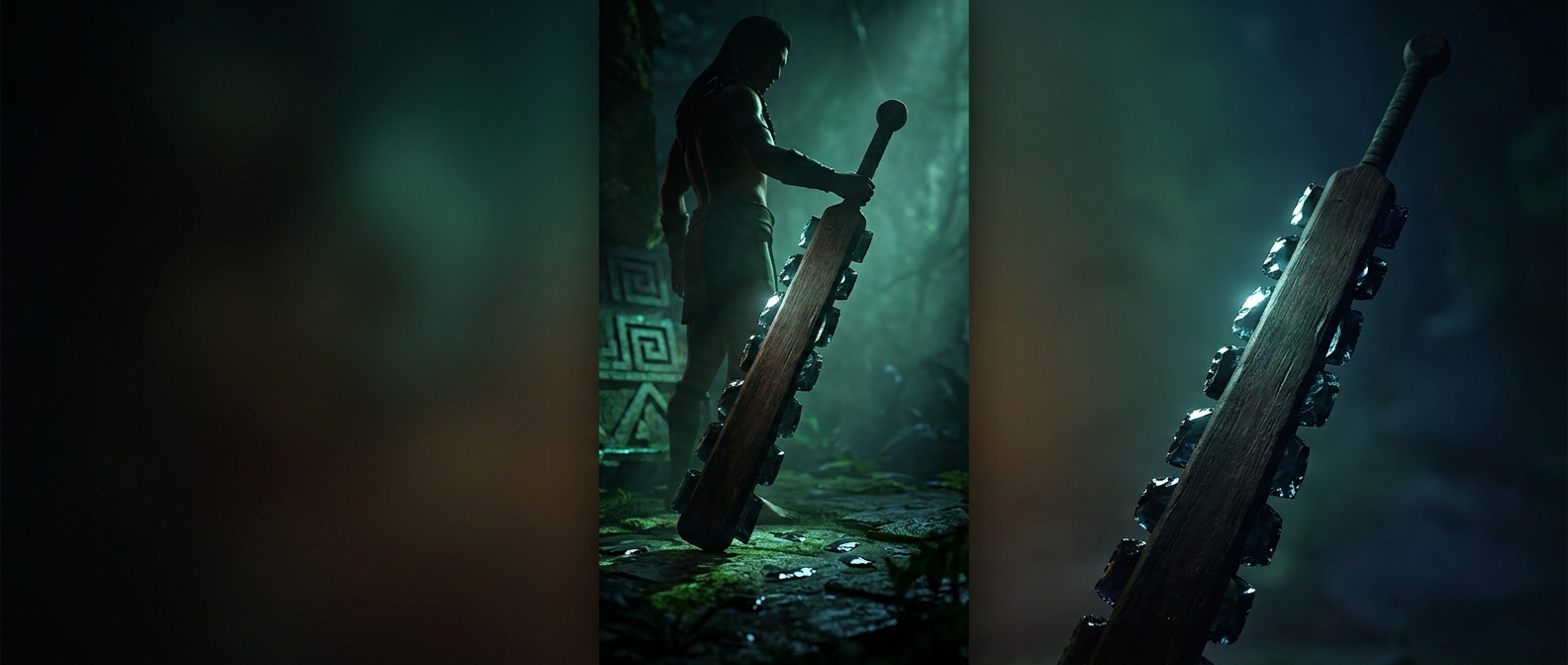
The weapon, often called a macuahuitl, was not a sword with a single metal blade. It was a wooden club fitted with narrow obsidian pieces along its sides. The wood supplied a sturdy handle and backing, while the glass did the cutting. Individual pieces could be damaged without the entire weapon being made of brittle material.
In use, it combined the mass of a club with the slicing action of exposed edges. That made it a practical design built around locally available materials, rather than an attempt to copy a European steel sword.
Strength—and a maintenance cost
The obsidian edge was formidable precisely because it was so sharp, but sharpness did not mean durability. A chipped piece could reduce the weapon’s cutting effectiveness and require repair or replacement. Its power and fragility came from the same material property: obsidian breaks readily, and a carefully controlled break can leave an exceptionally keen edge.