A fan built to take a blow
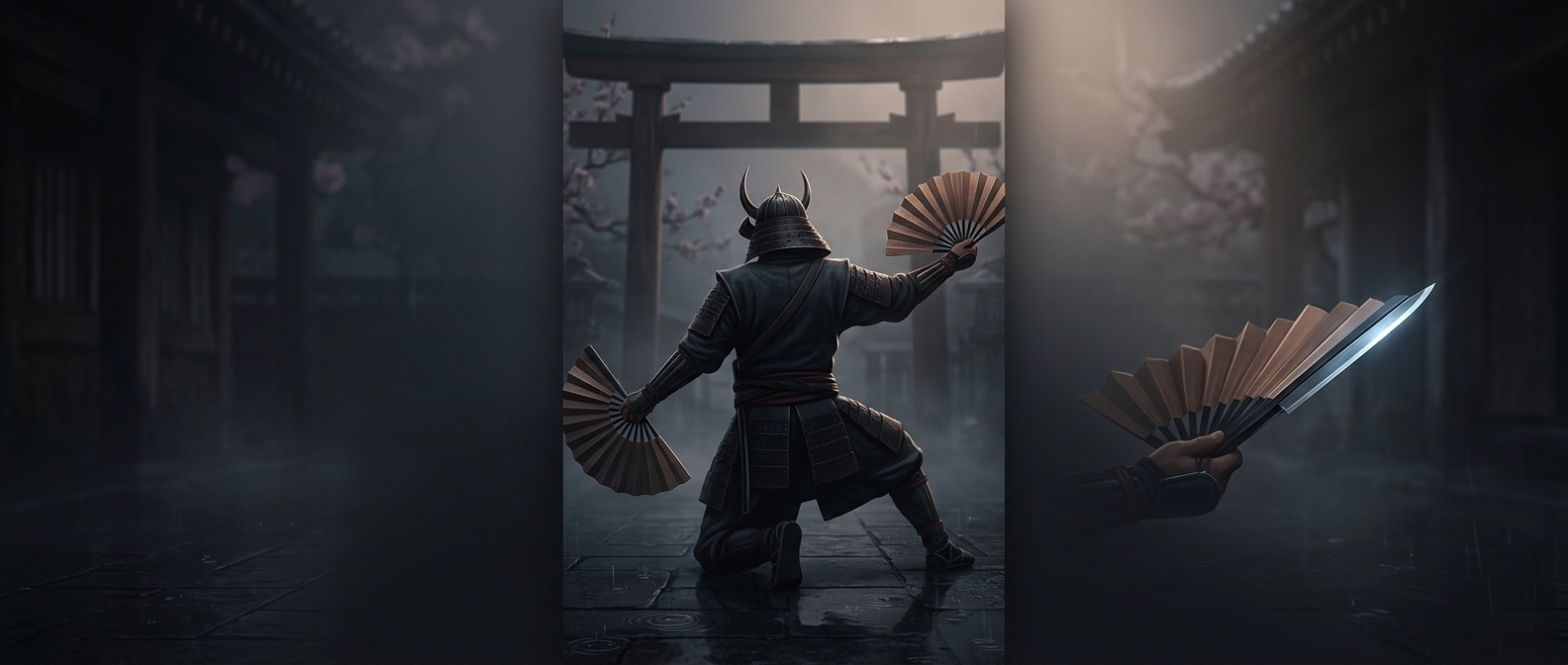
A tessen was not simply a paper fan with a weapon hidden inside. Its frame was strengthened with iron, making the open fan sturdier than an ordinary one and the closed fan more like a compact baton. That change in material gave a familiar object a second job: it could be used to deflect an incoming strike or deliver a blunt blow.
Why the shape mattered
The fan’s ribs spread outward when opened, creating a broad surface that could meet or redirect an attack. Closed, those same ribs gathered into a narrow, rigid handle. The tessen therefore offered two different ways to use one object: a wider barrier when open and a concentrated striking surface when shut. Iron added strength, but also made the fan heavier and less suited to the light, delicate role of an ordinary folding fan.
An accessory with a practical edge
Its significance lay in turning an everyday form into a tool without making it look like a conventional sword or club. The tessen was still a fan in shape, but its reinforced construction changed what it could withstand—and what its owner could do with it. In a sudden confrontation, the object in someone’s hand could serve as both a parrying tool and a blunt weapon.