A War Cabinet’s Workday Could Reach the Bathroom
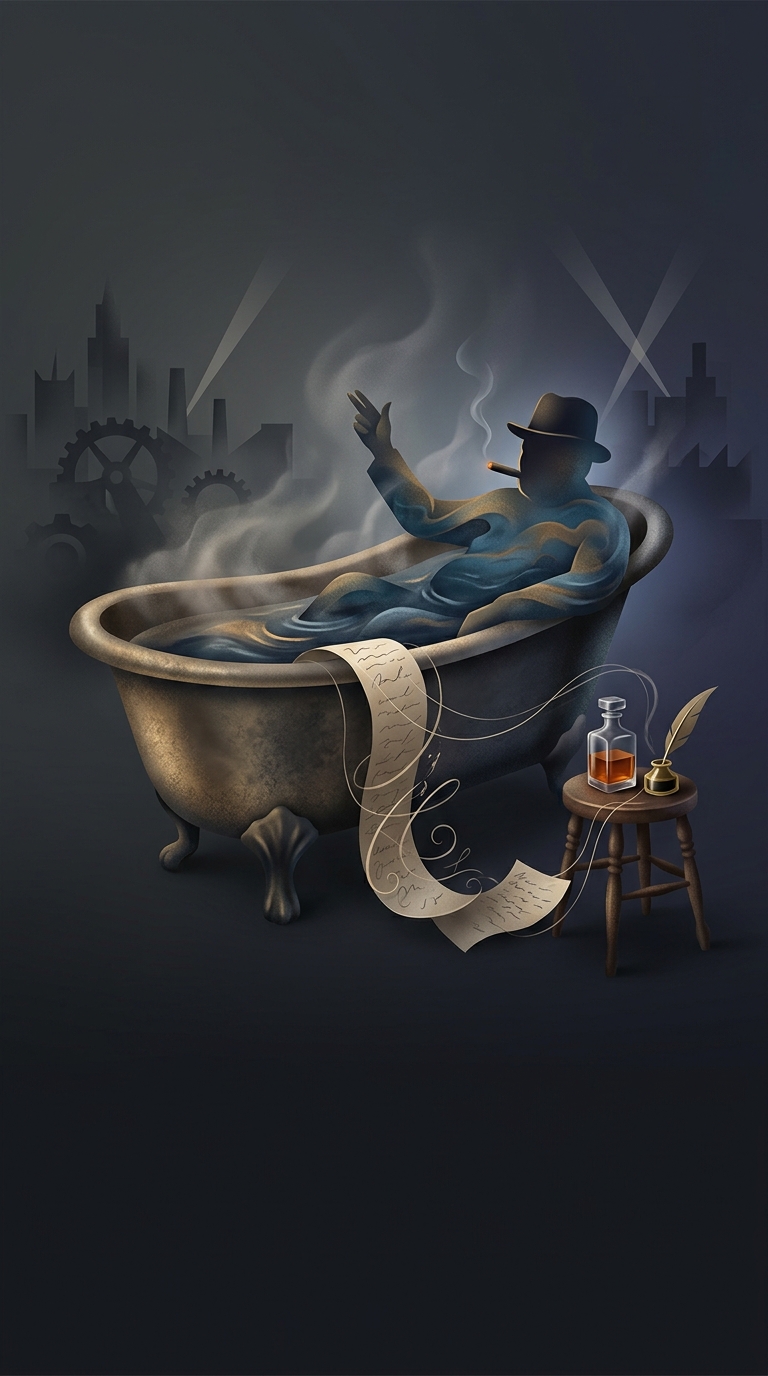
Churchill’s bathtub stories capture an unusual feature of his wartime routine: he did not always separate private time from official work. Accounts describe him dictating while bathing, with staff taking down his words from nearby. The tub became less an escape from government than another place where government business continued.
That arrangement depended on aides. Dictation turns spoken thoughts into usable paperwork only if someone is ready to record them, clarify wording, and carry the result onward. Churchill could keep working without sitting at a desk; his staff supplied the practical link between an informal setting and the formal documents the government needed.
Protocol Adapted to the Person
The reported image of Churchill greeting President Franklin D. Roosevelt naked belongs to the same portrait of a leader who treated ordinary conventions as flexible. It is striking precisely because a meeting between national leaders normally came with elaborate expectations of dress and ceremony. In the story, the visitor encountered Churchill on Churchill’s terms, rather than the other way around.
These episodes are best understood as anecdotes about a working style, not proof that every important decision was made in the bath or that officials routinely ignored protocol. Their significance lies in the contrast: the business of wartime government was formal and consequential, while the setting for dictation could be startlingly informal. For the staff waiting outside the bathroom, the boundary between Churchill’s private routine and the machinery of government was a door they had to keep working through.