How a Magnetic Ripple Can Help Light an Aurora
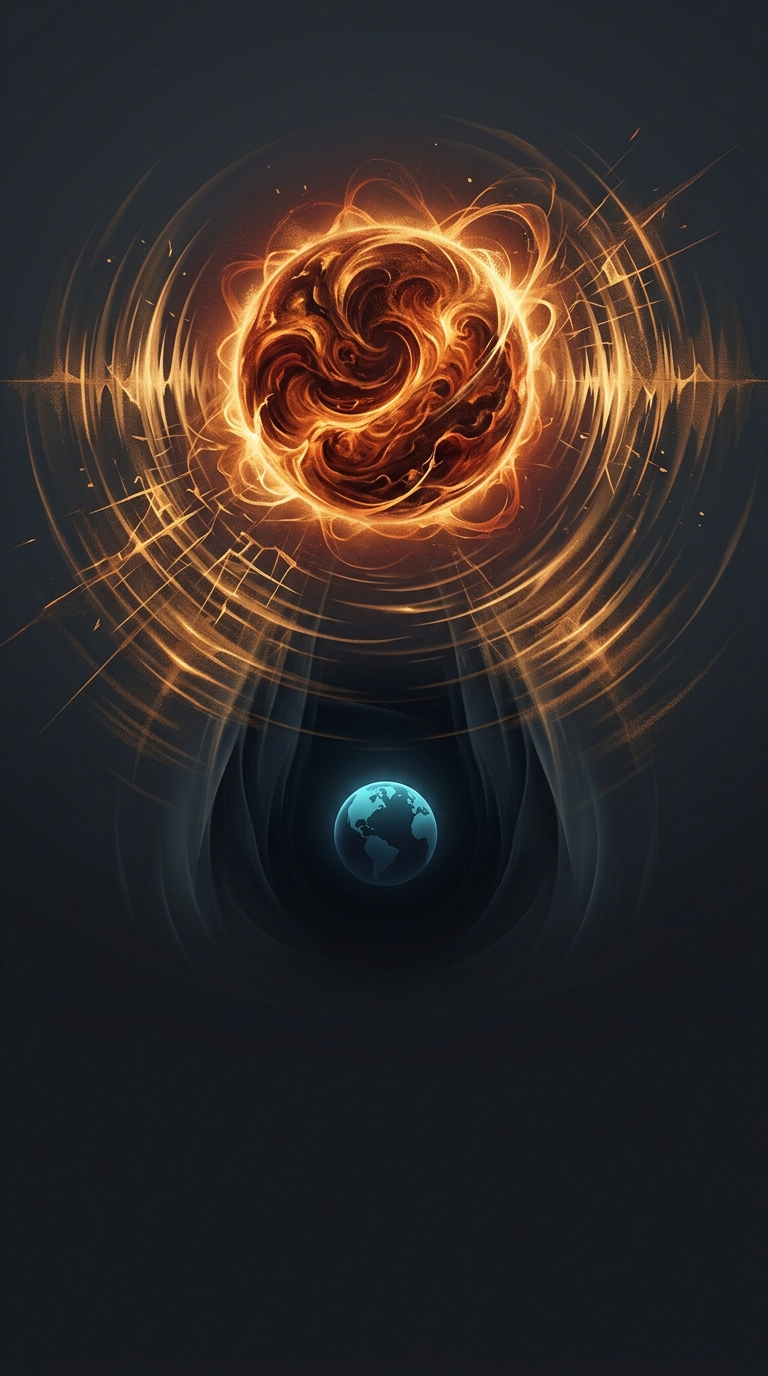
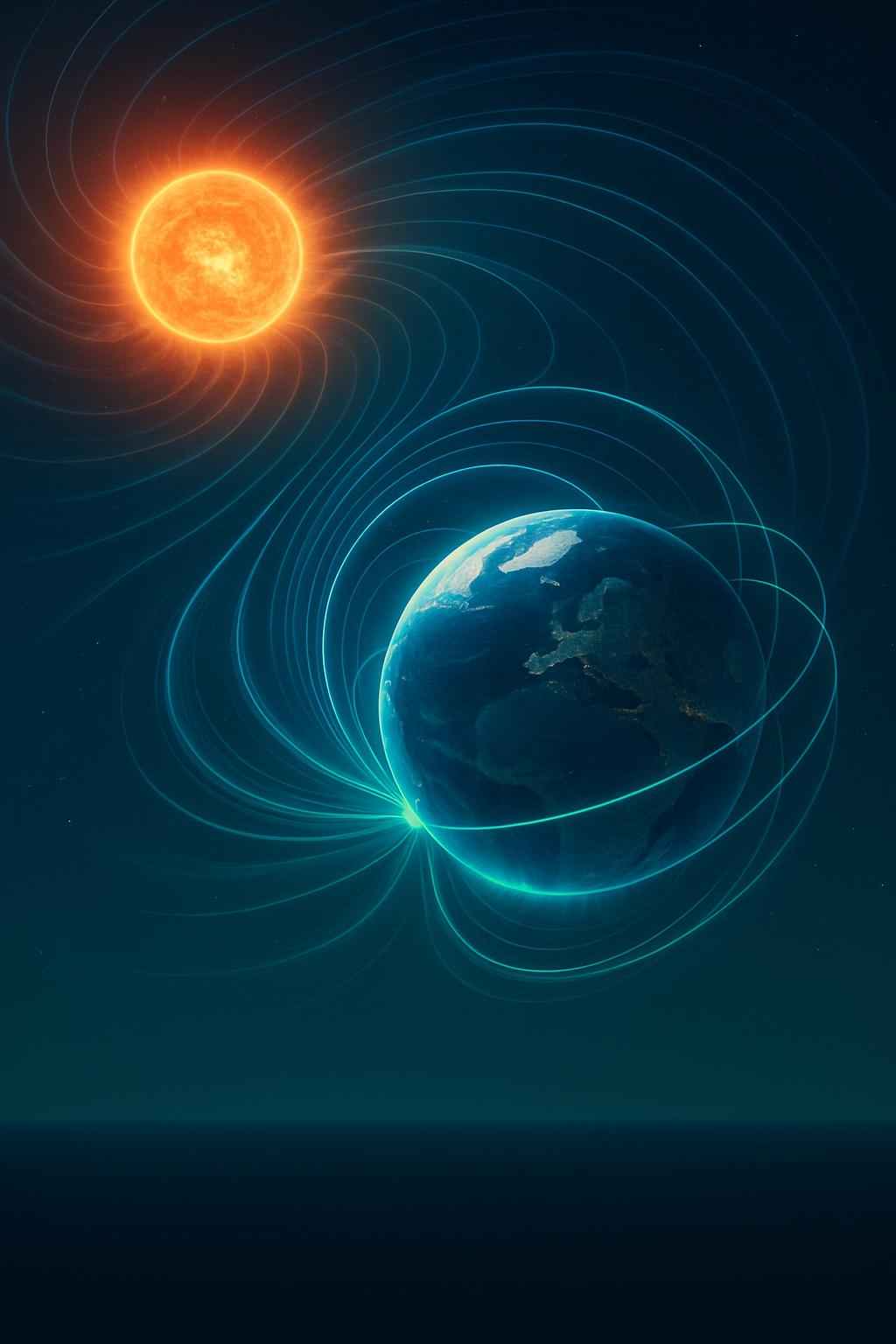
Earth’s magnetic field is not a rigid shell. It is threaded through the magnetosphere, the region around Earth filled with plasma from the Sun and from our own upper atmosphere. When the solar wind—the steady flow of charged particles from the Sun—pushes or tugs on this region, it can set the field and plasma oscillating together.
These disturbances are waves in a conducting, electrically charged gas. In an Alfvén wave, a change in the magnetic field pulls on the plasma, while the plasma’s motion in turn changes the field. The wave can travel along magnetic field lines, carrying energy without any gust of air; its speed depends on the field’s strength and the plasma’s density.
From Space Waves to Northern Lights
Some of that wave energy reaches the ionosphere, the electrically charged upper layer of the atmosphere. There, waves can help accelerate electrons downward along Earth’s magnetic field. When those electrons collide with oxygen and nitrogen high above the ground, they transfer energy to the atoms and molecules. As these particles release that energy, they emit the colored light of an aurora.
The connection is not simply that every magnetic ripple produces a visible display. Auroras also depend on how energy and particles are supplied and where they enter the atmosphere. But the waves reveal that the magnetosphere is an active, connected system: a disturbance far out in space can help shape activity near Earth.
That link is detectable even when no aurora is visible. Instruments on the ground can record small changes in the magnetic field as a wave passes, while spacecraft can measure the moving plasma and field directly. The same ripple can therefore be a faint instrument reading in one place and part of the energy pathway behind a luminous sky elsewhere.