The falling side creates the pressure difference
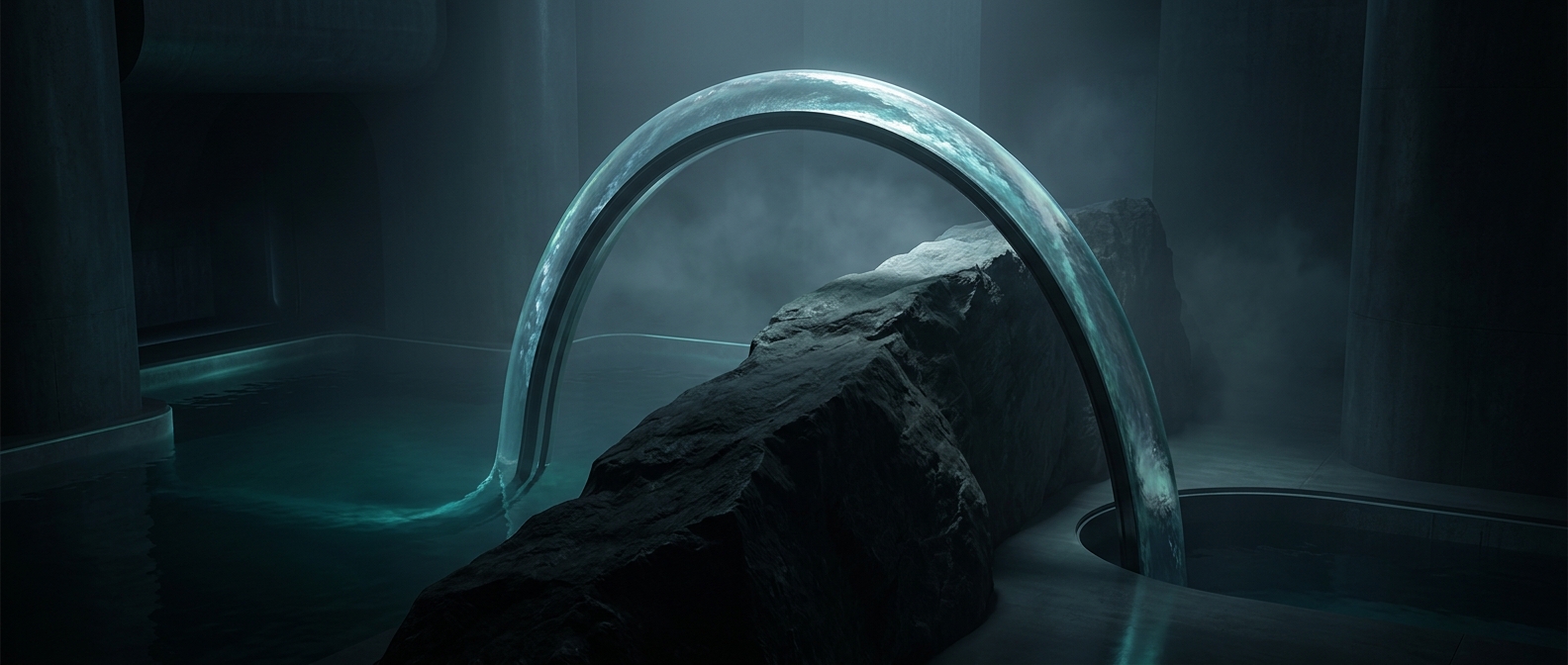
A siphon works only after its tube is filled with water. Once the tube contains an unbroken column, water descending through the lower outlet reduces the pressure near the top of the tube. The higher pressure on the source water’s exposed surface then pushes water up the other side and over the bend. Gravity is not lifting water over the hill; it is driving the downhill flow that makes the pressure difference possible.
Water molecules also cling to one another, so the moving column can remain connected through the bend. If air enters and breaks that column, the pressure difference can no longer pull water across, and the siphon stops.
Why the height of the hill matters
The water at the crest is under less pressure than the water in the reservoir. The higher the crest sits above the source’s surface, the lower that pressure must become to support the water column. At some point, the water can no longer stay liquid there: it begins to form vapor bubbles, interrupting the flow. At sea level, the theoretical height limit is roughly 10 meters, and real siphons usually fail sooner because of leaks, dissolved gases, or water vaporization.
The outlet must also be lower than the source’s water surface. That difference in height supplies the energy for the flow; raising the tube’s crest does not provide it. In practice, a siphon can carry water over a surprisingly high ridge, but only while the downhill side has enough drop to keep the whole column moving.