Why Erwin demanded Mary’s death
In 1916, Mary was a performing elephant traveling with the Sparks circus. After she killed her trainer, the news reached Erwin, Tennessee, where the circus was scheduled to appear. Residents feared another attack and demanded that the animal be killed. The decision was made in public, under pressure from a crowd—not through any process designed to assess an elephant’s behavior or consider safer alternatives.
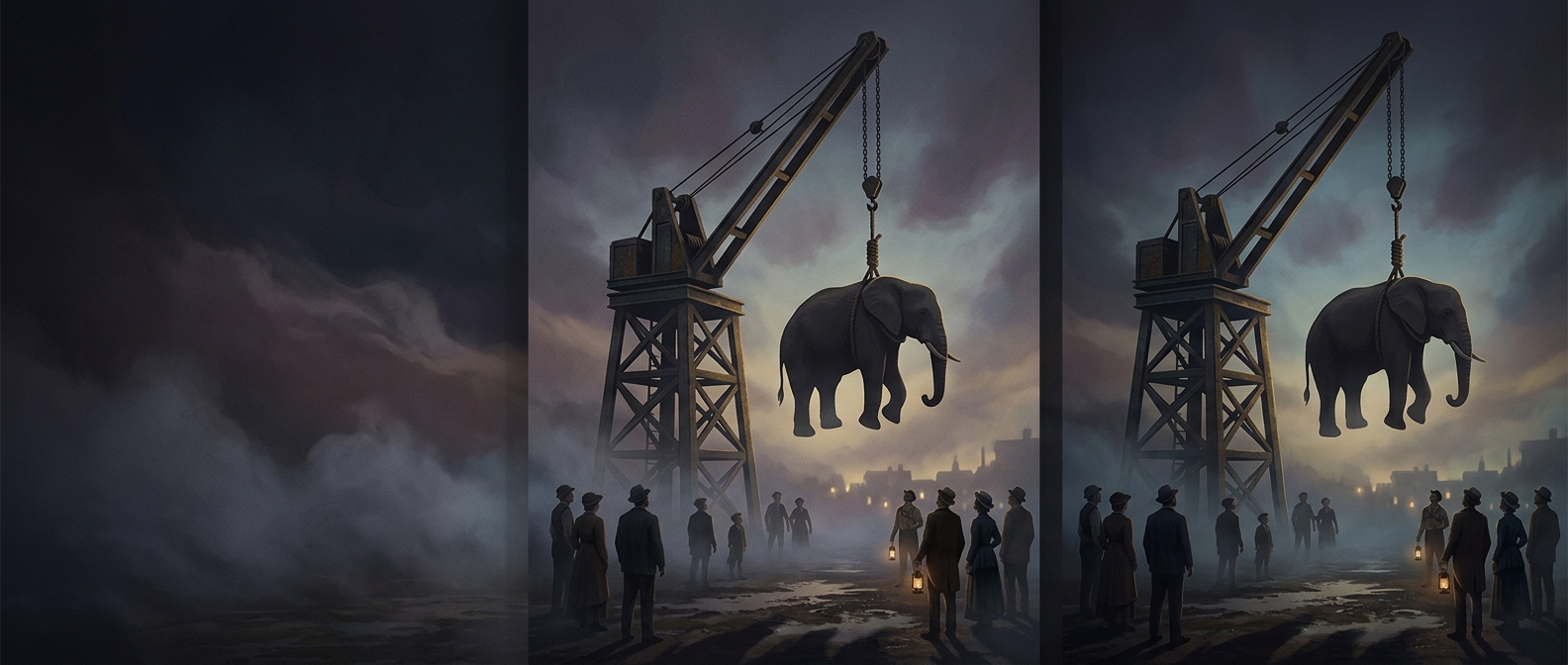
The circus faced its own practical problem: continuing the tour with an elephant that local people regarded as dangerous could provoke more conflict and threaten the show’s business. Its owners agreed to the town’s demand. When gunfire failed to kill Mary, a railroad crane was used to hang her in the rail yard.
A spectacle shaped by the era
The killing turned a frightening incident into a public execution. A crane, ordinarily used to lift heavy loads, became the means of carrying it out. The choice reflected the immediate aim of the crowd and circus: make the perceived threat disappear, using equipment already available in a town built around rail transport.
Mary’s death is remembered not only for its brutality but for what it reveals about the limited options people considered. A powerful captive animal had killed a person; instead of separating her from the public or seeking expert care, local pressure and the economics of a traveling show drove the response. The rail-yard crane made that decision visible to the whole town.