How cooling changes the glass
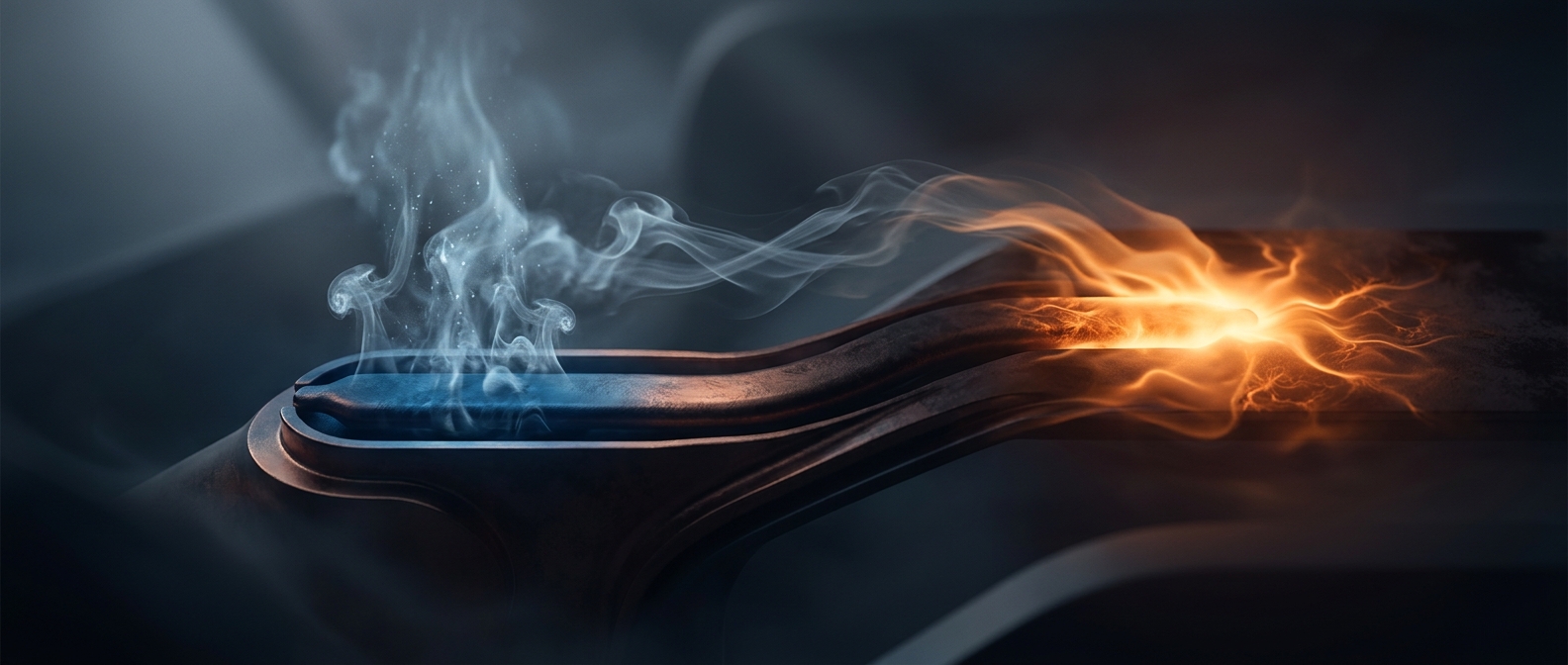
Tempered glass begins as ordinary glass, heated until it can be reshaped. While it is still hot, jets of cool air rapidly chill its surfaces. The inside cools more slowly, so it contracts after the outer layers have already stiffened.
That timing leaves the pane in a carefully balanced state: the surface is squeezed inward, while the core is held under tension. This pattern of forces is called compressive stress at the surface and tension in the center. It is not a coating or a separate safety layer; it is built into the glass as it cools.
Why a break spreads so quickly
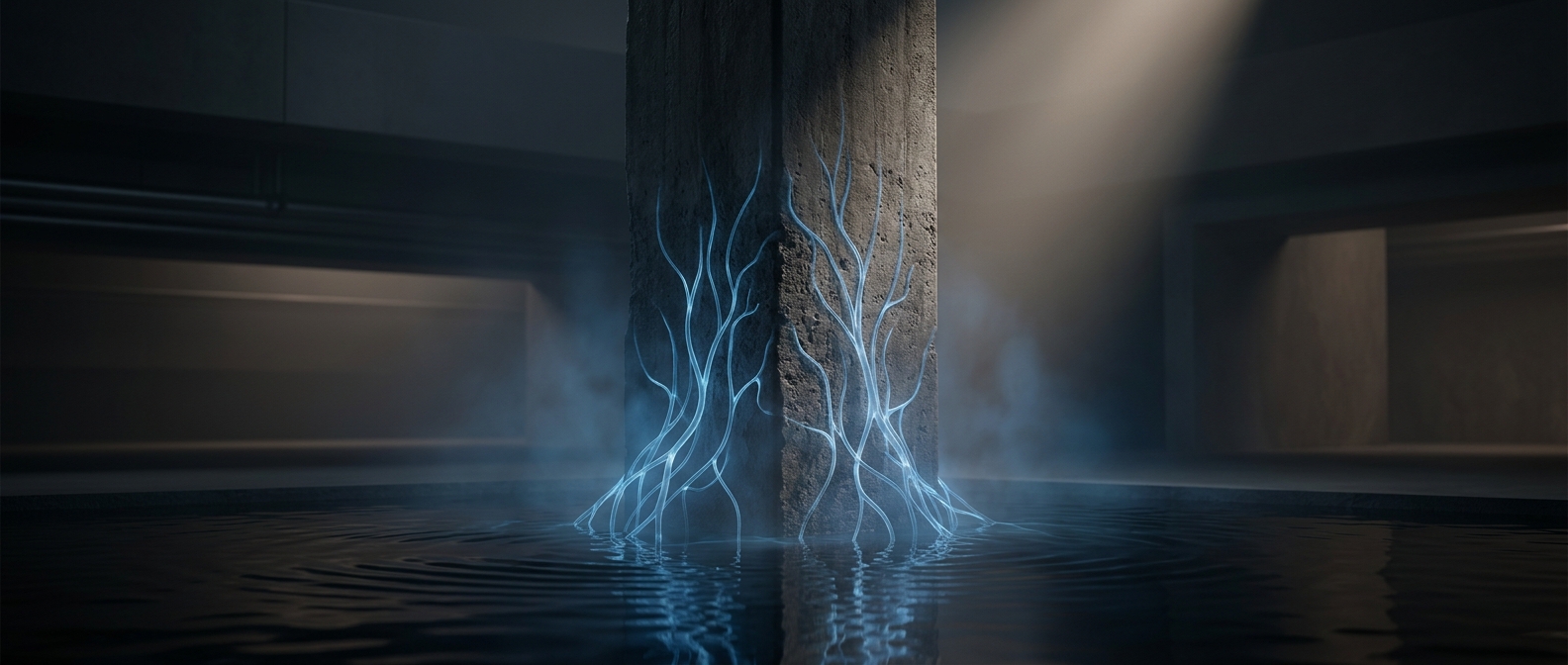
A crack usually starts at a flaw or impact on the surface. In tempered glass, that crack has to push through the compressed outer layer, which resists opening. But once it penetrates far enough to reach the tension-filled core, the stored force drives the crack rapidly through the pane.
The glass then breaks into many small, roughly rounded fragments rather than a few long, sharp shards. The pieces can still cause cuts, and the pane can fail suddenly, but they are generally less likely to produce the deep lacerations associated with large blades of broken glass.
The tradeoff is in the timing
Because the internal stresses are set during manufacture, tempered glass cannot be cut or drilled afterward without disrupting its balance and causing it to shatter. Any shaping or holes must be made before the heating-and-cooling process.
So the safety benefit comes with a practical constraint: the pane is tougher in use, but its final dimensions and openings have to be planned in advance.