A rental included the person who could run the car
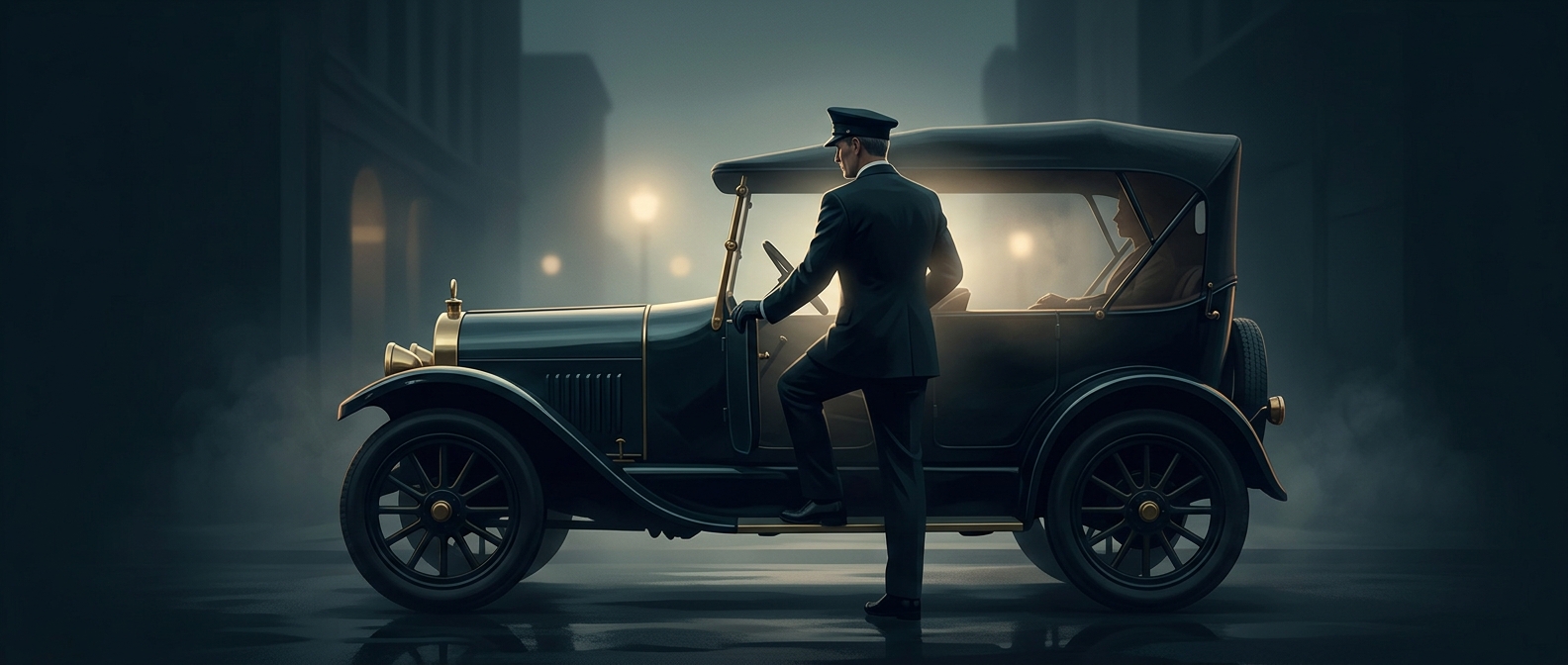
In the early days of automobile hire, customers were often paying for a journey, not taking possession of a vehicle. The rental came with a trained driver—commonly called a chauffeur—who handled the controls and got the passengers where they wanted to go.
That arrangement made sense when cars were unfamiliar, mechanically demanding machines. Starting, steering, and stopping one required practice, and a breakdown or operating mistake could leave a passenger stranded. The chauffeur brought the skill needed to make the car useful as transport, much as a hired carriage came with someone to drive it.
The driver was part of the service
A chauffeur did more than sit behind the wheel. The driver managed the vehicle during the trip, while passengers could focus on their destination rather than learning its machinery. In effect, early car hire sold access to both the automobile and the expertise required to use it.
As cars became more familiar and self-driving became practical for more customers, the balance shifted toward renting the vehicle alone. The change was more than a different way to pay: it turned a car from a chauffeured ride into something a customer could take away and operate independently.