How the brain maps an observed action
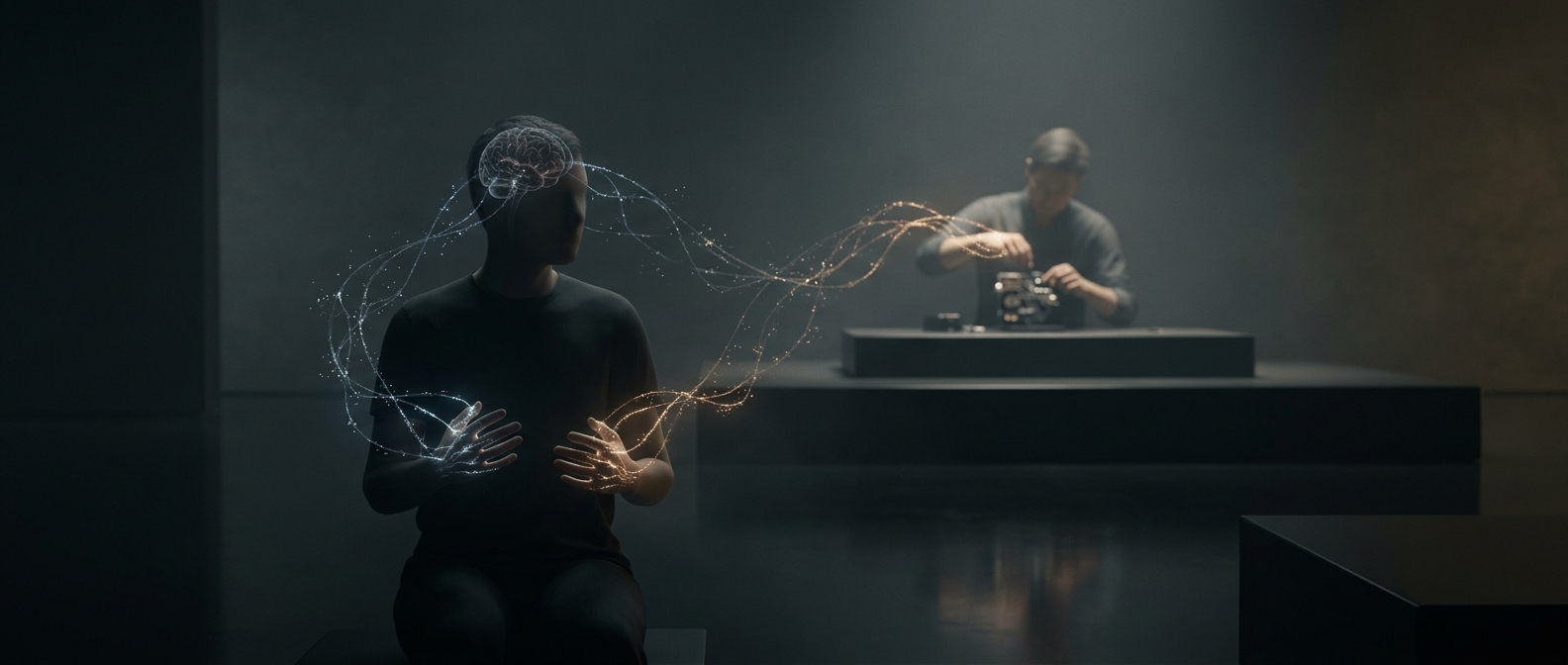
When you see a hand reach toward a cup, your visual system registers more than the hand’s changing position. It also tracks the arm’s shape and direction, which can help the brain identify the movement as a familiar action. In parallel, parts of the motor system—including regions involved in planning movements—may become active.
These regions work with sensory and planning areas to represent actions in terms the brain can use: what is moving, how it is moving, and what the movement may accomplish. Researchers often describe this overlap between doing and observing actions as action observation. Some neurons in this system respond both when an animal performs an action and when it watches a similar action, but the broader human response involves networks, not one simple “copy” mechanism.
A useful prediction, not a miniature performance
Motor-related activity can help the brain interpret an action by drawing on its own movement experience. If you have reached for a cup yourself, your brain has a store of familiar movement patterns to compare with what you see. That may help you anticipate the reach’s likely course or recognize its goal.
But activation does not mean you are secretly preparing to copy every gesture. The response varies with the action, the observer, and the situation, and it is only one part of understanding another person. The brain can use movement-related knowledge to make sense of what it sees without turning observation into execution. Watching someone lift a cup may engage parts of the system used to plan a lift; your hand still stays where it is unless you decide to move it.