How rising magma bends a volcano’s surface
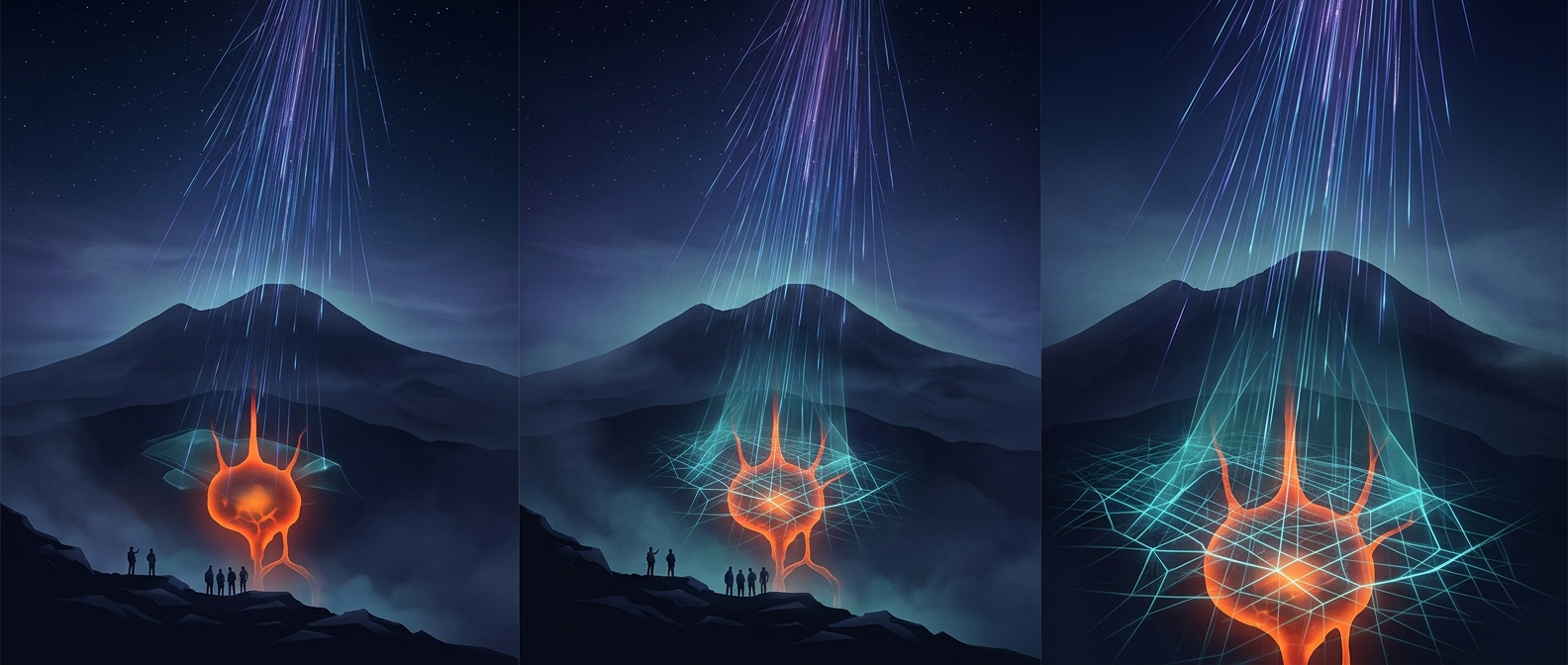
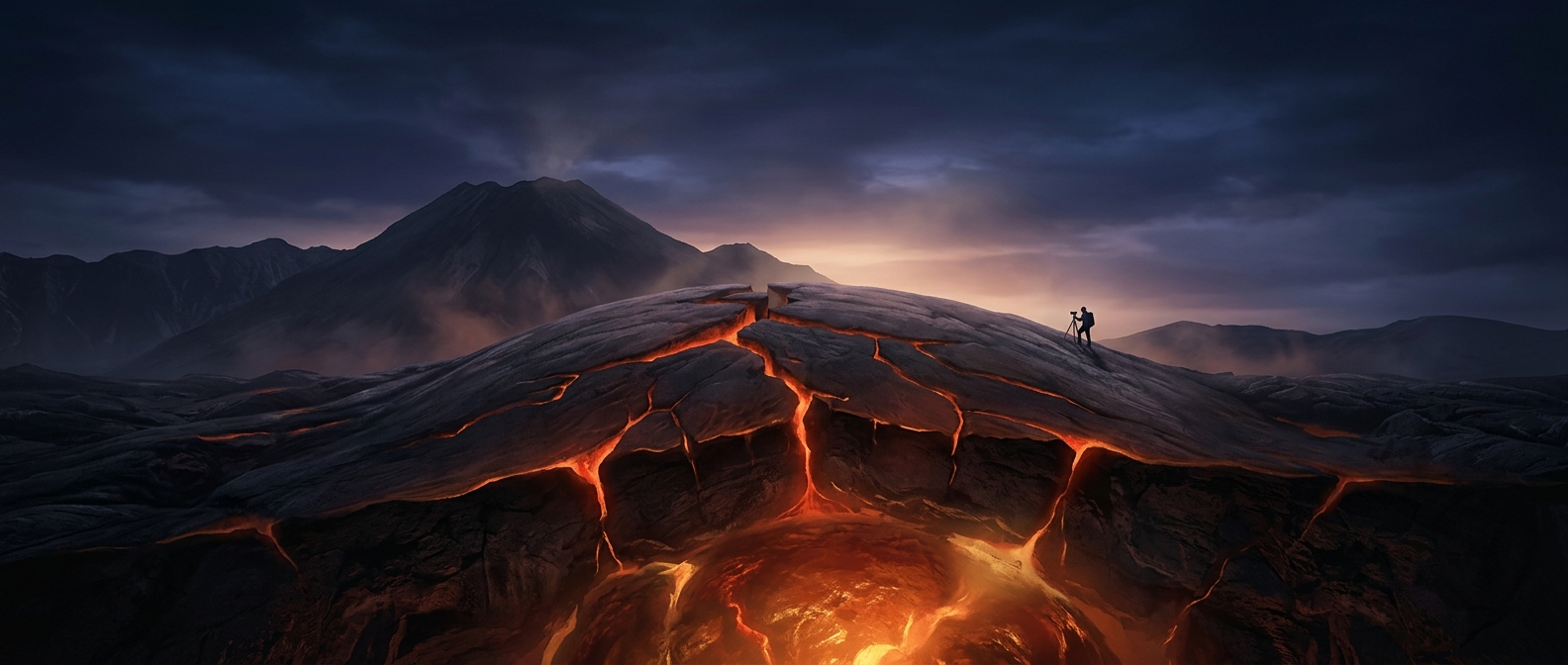
Magma does not usually travel upward through an empty space. It forces its way into cracks or gathers in underground pockets, pushing on the surrounding rock. If that pressure stretches or lifts the rock above it, the volcano’s surface can rise by a small amount—sometimes too subtle to notice without instruments.
The ground’s response depends on what is happening below. A growing pocket of magma may push outward in several directions, while magma moving through a narrow crack can produce a more localized pattern. The rock itself also matters: stiff, fractured, or layered ground may deform differently under the same underground pressure.
Measuring a change too small to see
Scientists track these shifts in two main ways. Instruments installed on the ground can measure changes in distance or tilt between fixed points. Satellites can compare radar images of the same area taken at different times; slight differences in how the ground reflects the radar reveal where the surface has moved.
Repeated measurements turn a barely perceptible bulge into a pattern scientists can map and compare. A widening area of uplift, for example, can help researchers assess whether pressure is building beneath part of a volcano. But surface movement is only one clue. It does not reveal the magma’s exact position or guarantee that it will reach the surface: underground pressure can change, magma can stall, and deformation can have other causes.
That is why scientists interpret swelling alongside other observations, such as earthquakes and volcanic gases. The practical value is not a countdown to an eruption, but an early sign that conditions underground may be changing—sometimes before those changes are visible to anyone standing nearby.