How a Roman family made its ancestry visible
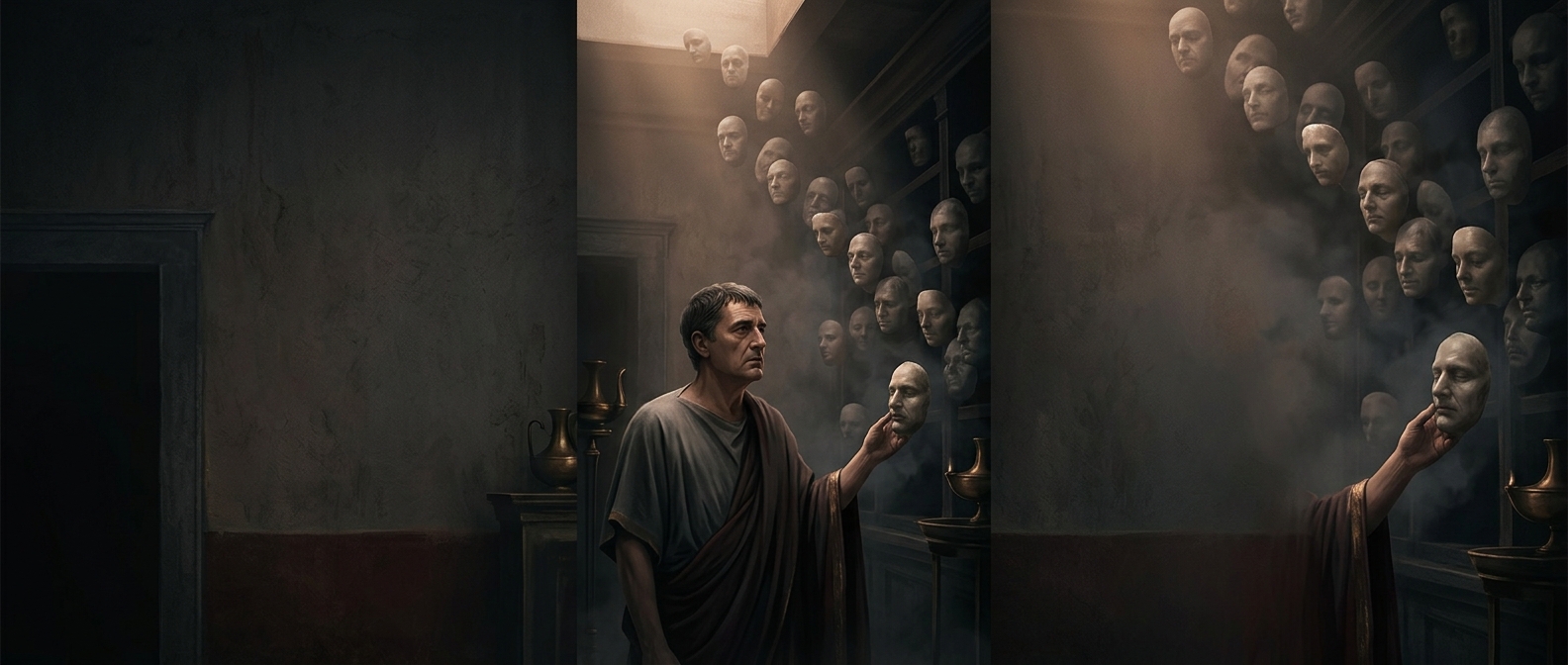
The masks were known as imagines: likenesses associated with a family’s distinguished dead. In elite Roman households, they were kept in the atrium, the central reception space where guests could see them. Often described as wax portraits, they were more than decoration. Their presence made family history part of everyday social life.
A visitor entering the house encountered not just the living head of the family but a visible line of predecessors. The masks connected a household to ancestors who had held public office or earned distinction, lending the family’s claims to status a tangible form. They also set an expectation: a descendant should live up to the reputation displayed around him.
From household display to public procession
The masks could leave the house for a funeral. In ceremonies for prominent men, performers wore ancestral likenesses and costumes associated with the offices their wearers had held. As the procession moved through the city, the dead appeared to be accompanied by earlier generations of the family.
That spectacle turned private memory into public reputation. The masks helped mourners place one person within a longer family story, while reminding spectators that the family had repeatedly contributed leaders to Roman public life. Ancestry was not merely remembered; it was staged as evidence of a family’s standing and obligations.
This practice belonged especially to Rome’s upper-class families, not to every household. Its influence came from joining two settings: the reception room, where visitors encountered a family’s past, and the funeral, where the city did too.