How a tooth bud becomes a tooth
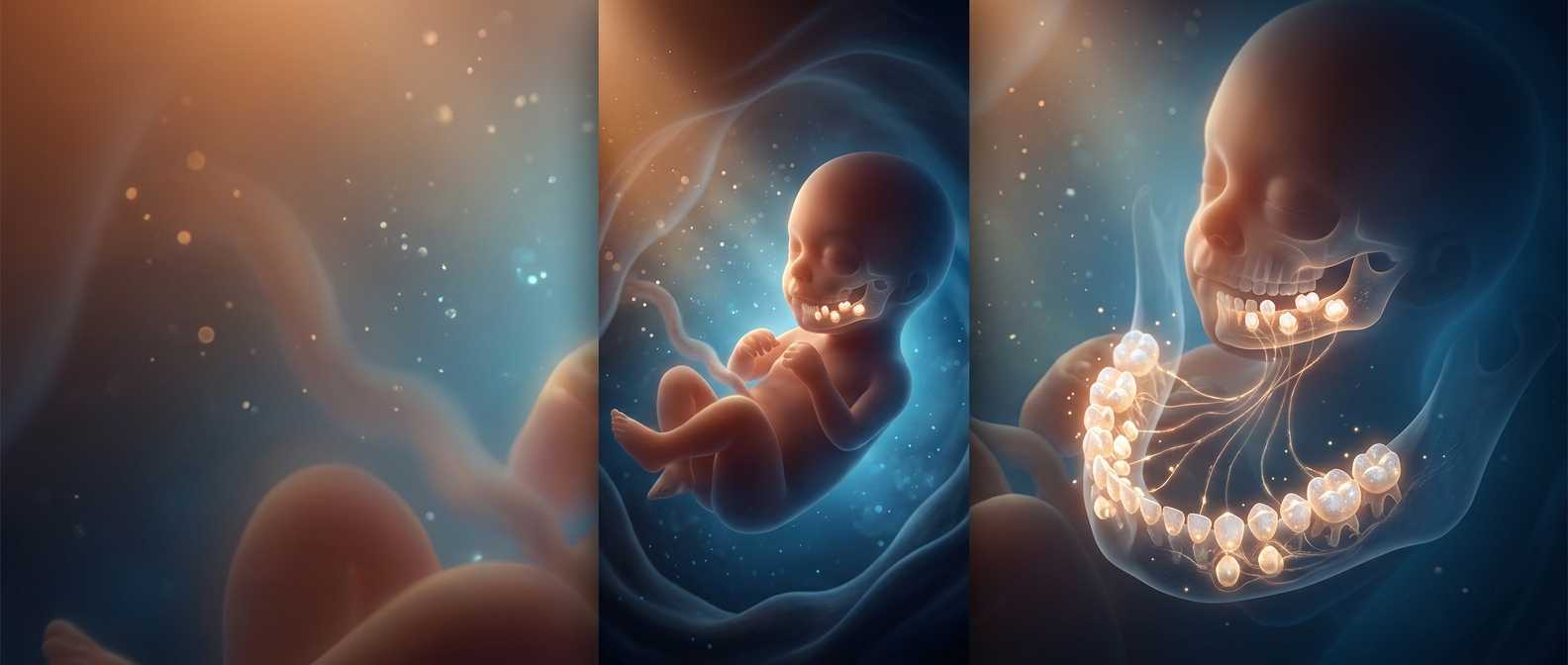
Early in pregnancy, a strip of cells in the developing jaw forms small structures called tooth buds. Each bud contains cells that will build different parts of a tooth: one group makes dentin, the hard layer beneath the enamel, while another forms enamel, the tooth’s protective outer covering. The surrounding tissue helps shape the crown and later contributes to the tooth’s support.
This is a staged construction process, not a tiny finished tooth waiting under the gum. The crown takes shape first, and its enamel gradually hardens as minerals are deposited. The root develops later, helping anchor the tooth in the jaw.
Why the teeth appear later
A tooth becomes visible only after its crown has formed and the surrounding jaw and gum change enough for it to emerge. Eruption—the movement of a developing tooth into the mouth—is gradual. It happens on its own schedule, so the timing and order can vary among children.
The long lead time matters because primary teeth do more than fill a smile. They help children bite and chew, and they hold space in the jaw for the permanent teeth developing beneath them. A primary tooth is therefore part of a sequence: it serves the mouth for a time, then gives way as the next set grows into position.