Why the dose in a meal matters
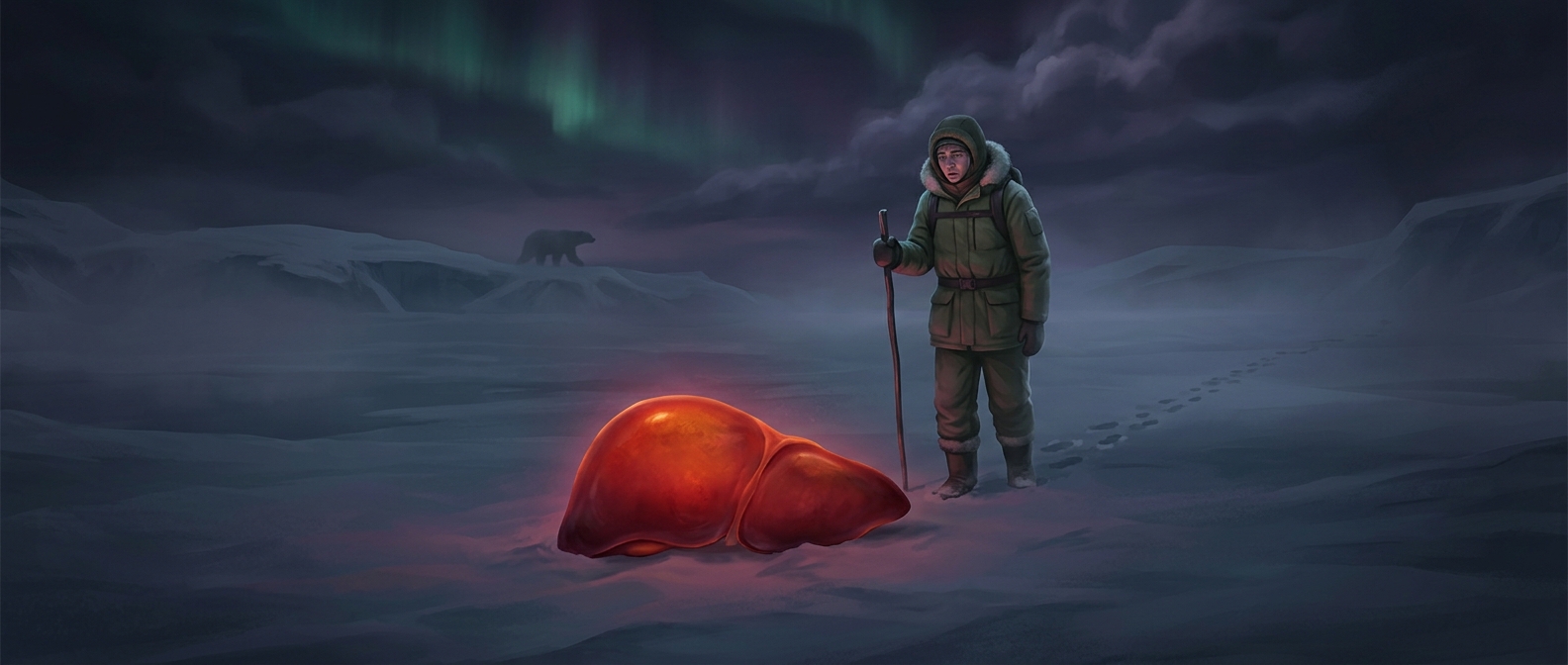
Polar bear liver is unusually hazardous because it contains a concentrated form of vitamin A called retinol. The vitamin is essential in small amounts, but the liver of an animal that lives on a vitamin-A-rich diet can accumulate far more than a person needs. A serving can therefore deliver an extreme dose at once.
What excess retinol does
Unlike many water-soluble vitamins, retinol is not rapidly carried out of the body in urine. It is stored, mainly in the liver, so a large intake can overwhelm the body’s ability to manage its reserves. Excess retinol disrupts normal cell function and can injure the liver and other tissues.
Acute vitamin A poisoning may bring on nausea, vomiting, headache, dizziness, and changes in vision. In serious cases, the skin can become dry and peel as its outer layers are affected. The danger is not that vitamin A is inherently toxic; it is that a single portion of this liver can push intake far beyond the body’s narrow useful range.
Why cooking does not solve it
The hazard comes from the amount of retinol in the tissue, not from a germ that heat can kill. Cooking may make the liver safe from some infectious risks, but it does not reliably remove its vitamin A. That is why this is a rare case in which a nutrient-dense food can be dangerous precisely because the nutrient is so concentrated.