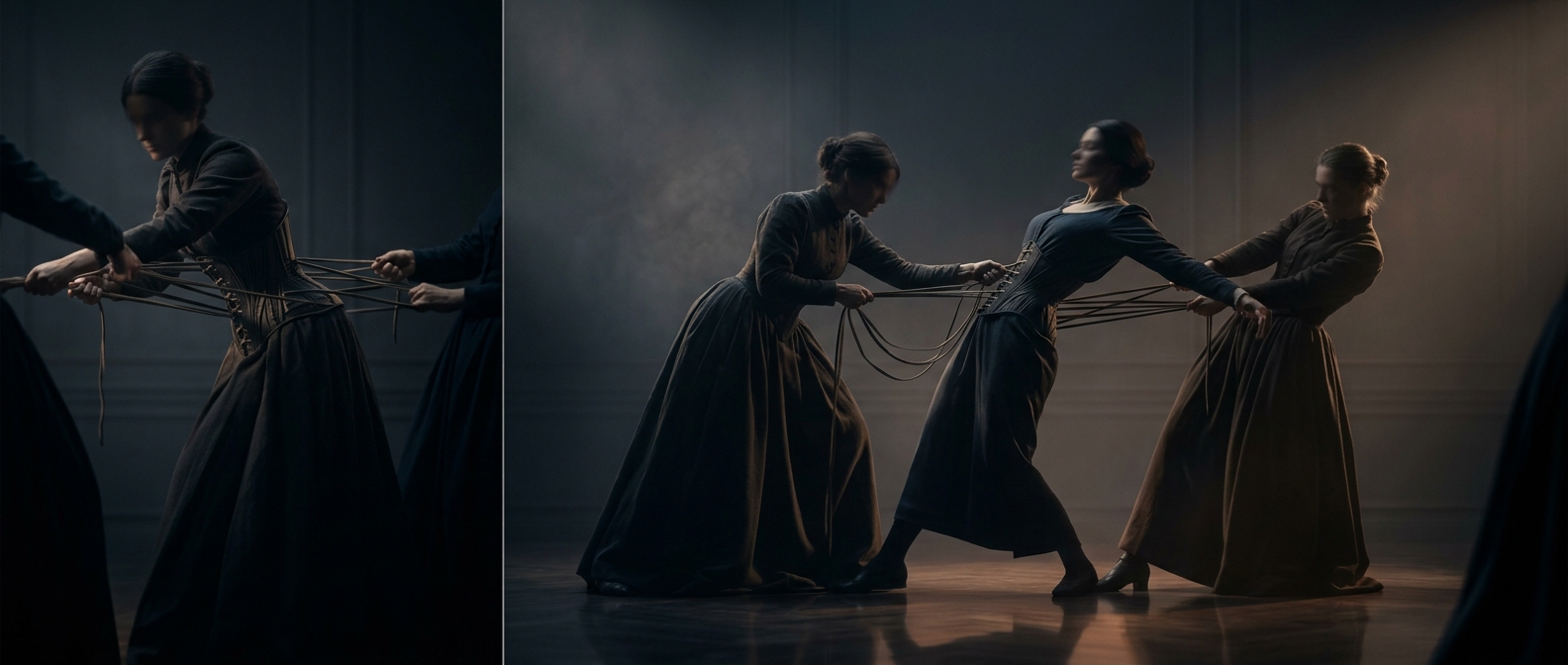
The corset was built to distribute the pull
A tightly laced corset worked through a system of eyelets and strong cords at the back. The wearer first fastened the front, then the laces were drawn tighter so the stiffened garment could gather the waist and hold its shape. Its structure mattered: firm panels and supporting strips spread the tension across the torso instead of leaving the cords to do all the work.
Pulling the laces was only part of getting dressed. The garment had to sit in the right position, and its tension had to be adjusted across the back. A dramatic silhouette was therefore a result of both the corset’s construction and the time and effort spent fitting it—not a quick change made by one sharp tug.
A fashionable shape came with practical limits
The corset shaped the outline beneath a person’s clothes; it did not permanently transform the body into the narrow silhouette shown in a dressed portrait. The appearance also depended on the garments worn over it and how the wearer stood. Tightening could make bending and moving less comfortable, which helps explain why achieving the desired look could demand assistance rather than simply more force.
That effort reveals the tradeoff behind the silhouette: the narrower the intended waist, the more carefully the garment had to be fitted—and the more the wearer’s comfort and freedom of movement could be constrained.