A captured moon moving against the current
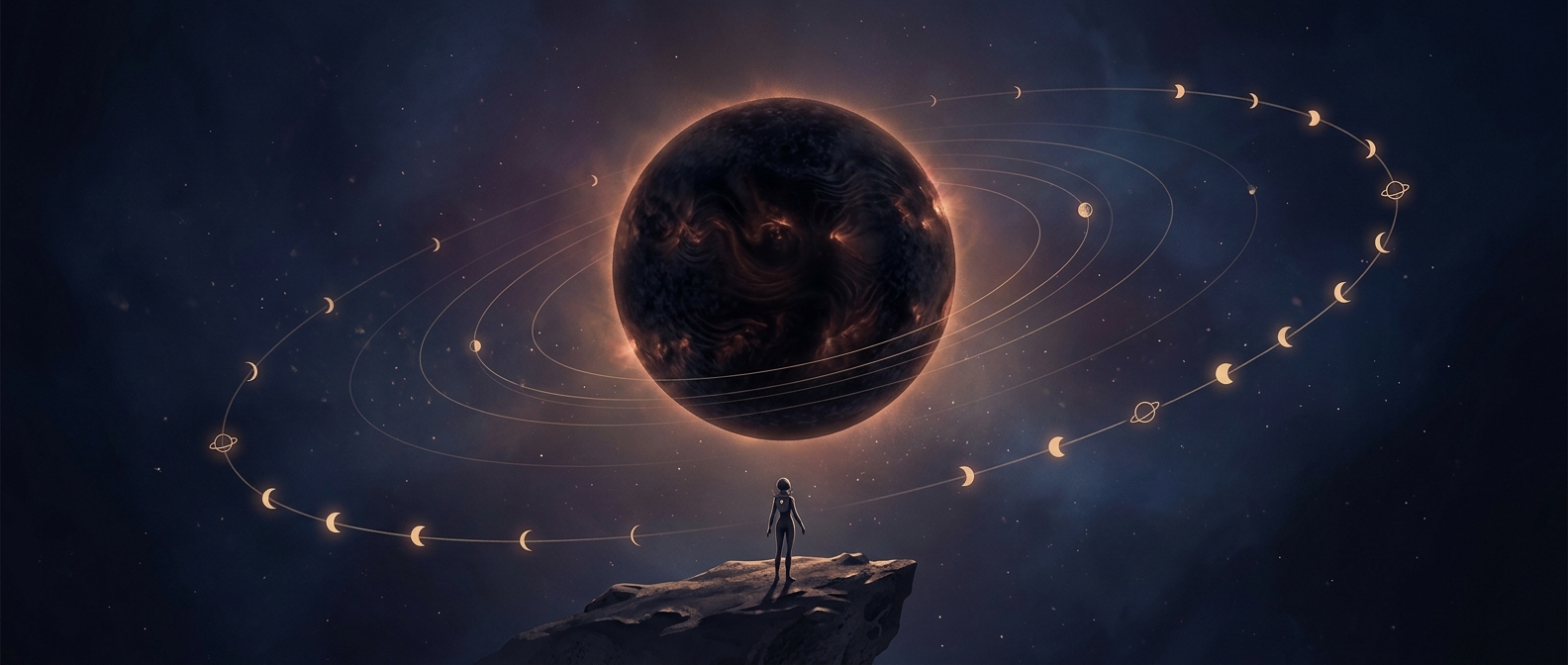
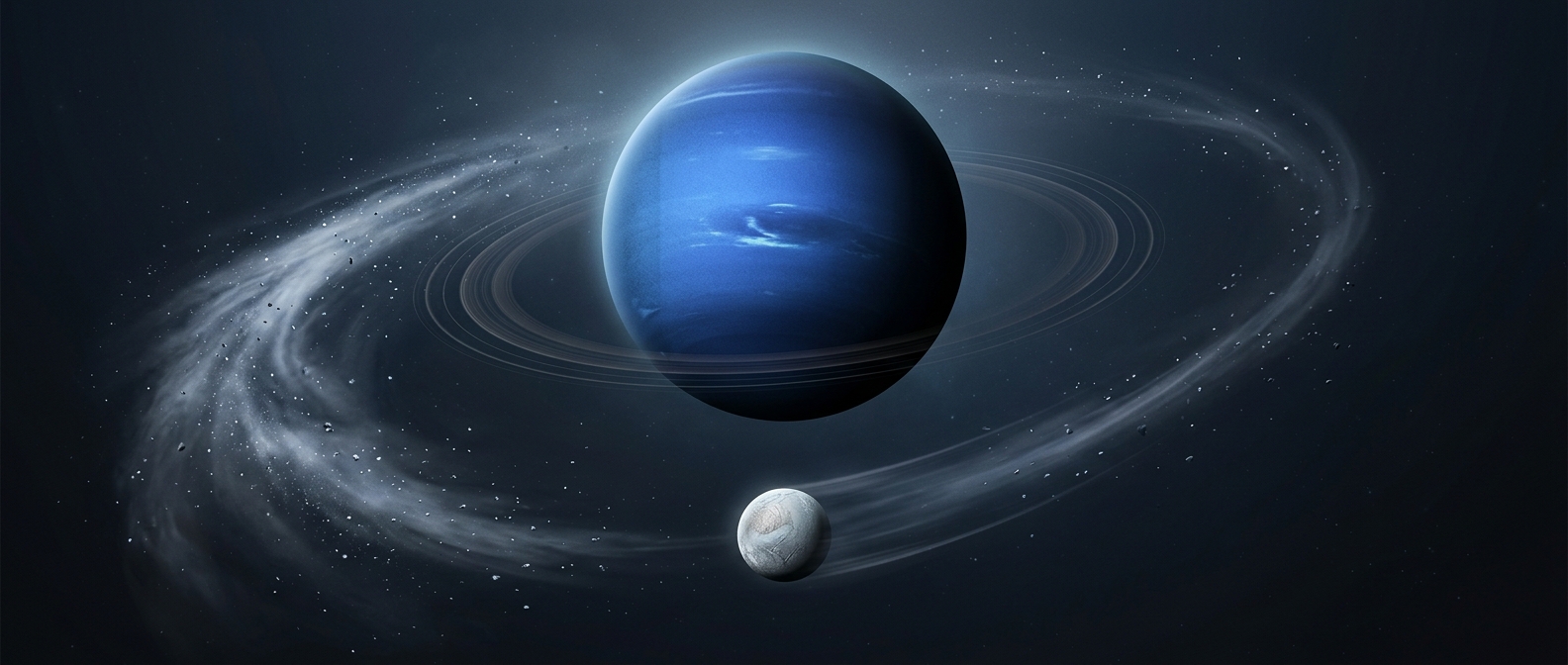
Most large moons travel around their planets in the same direction the planets spin. Triton goes the other way: its orbit is retrograde, or backward relative to Neptune’s rotation. That unusual path is a clue that Triton probably formed elsewhere and was later captured by Neptune, rather than assembling alongside the planet.
Capture would have left Triton on a stretched, unstable orbit. Tidal forces gradually reshaped it into the nearly circular path it follows today, but the interaction did not simply settle the moon into a permanent home.
Why backward motion leads inward
Neptune’s gravity pulls more strongly on the side of Triton nearest the planet than on the far side. That difference raises tides—deformations—in both bodies. Because neither body responds perfectly instantly, friction makes the tidal bulges lag behind the changing pull of gravity. The lag converts orbital motion into heat and changes the orbit’s angular momentum, the quantity that helps determine how far the moon travels from Neptune.
For a moon moving forward with its planet’s spin, tidal interactions can push the moon outward. With Triton’s backward motion, the effect is inward: its orbit loses the angular momentum that keeps it at a greater distance. The gradual change is extremely slow, but it continues over immense spans of time.
A possible ring-making end
If Triton eventually comes close enough, Neptune’s uneven gravity could pull harder on its near side than its own gravity can hold together. The moon could break apart, and some of its debris might spread into an orbiting ring. That outcome is not a certainty, but it follows from the same unusual feature that makes Triton stand out now: a captured moon still moving against Neptune’s rotation.