Why a race used a soldier’s equipment
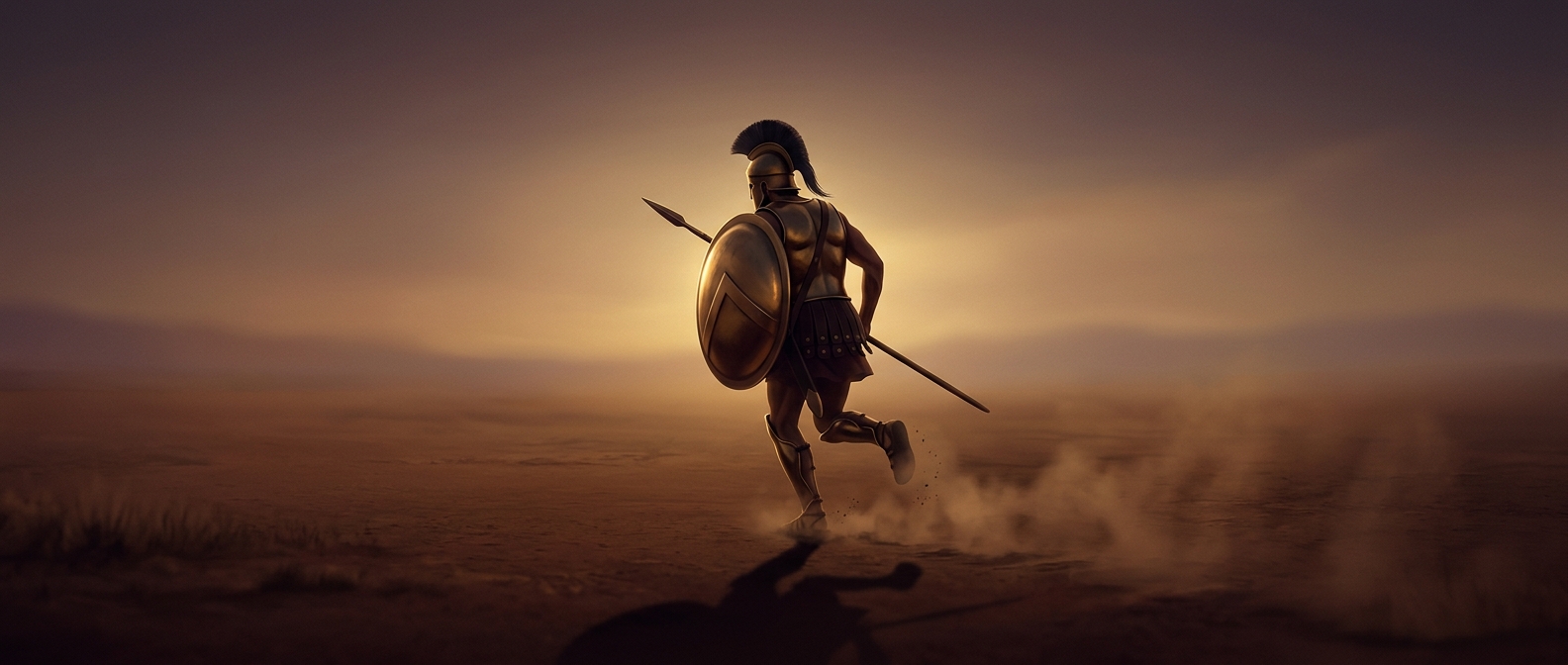
The hoplitodromos was a footrace in which competitors ran wearing pieces of a hoplite’s battle gear: a helmet, greaves (shin guards), and a large shield. The equipment turned a familiar athletic test—covering ground quickly—into a test of moving under the burdens and restrictions of combat.
A hoplite’s shield was not a light accessory. Held on the arm, it pulled the runner off balance and made each change of direction more demanding. A helmet could narrow a competitor’s view and muffle sound, while greaves added weight around the lower legs. Running in that kit required more than raw speed: athletes had to keep their footing and manage their effort while encumbered.
From the track to the battlefield
The military purpose was practical. Soldiers might need to move quickly in armor to reach a position, respond to danger, or keep pace with their comrades. Training in gear let them feel how it affected their stride before the pressure of battle. The race’s finish therefore offered a visible demonstration of who could still move fast after carrying equipment over the course.
But a race was not a battle rehearsal in every respect. Competitors ran individually toward a finish, whereas hoplites often fought in a close formation, where holding position and coordinating with neighbors mattered as much as speed. The event tested one useful part of military readiness—not the whole of it. Its striking premise was that the same shield that protected a soldier could also make a simple sprint a test of control.