Why Armies Put Soldiers on Bicycles
A bicycle offered an army a middle ground between marching and using horses or motor vehicles. A rider could cover ground faster than a foot soldier, while needing no fuel and little more than food, water, and repairs. In 1914, military planners in several countries saw that combination as useful for moving small groups quickly without the expense or noise of engines.
The advantage depended on the road—or at least a reasonably passable track. A bicycle could carry a soldier and some equipment, but it was poorly suited to deep mud, steep ground, or broken terrain. When wheels bogged down or roads came under fire, riders had to dismount and push, or abandon the speed that made the bicycle valuable in the first place.
Speed Without Protection
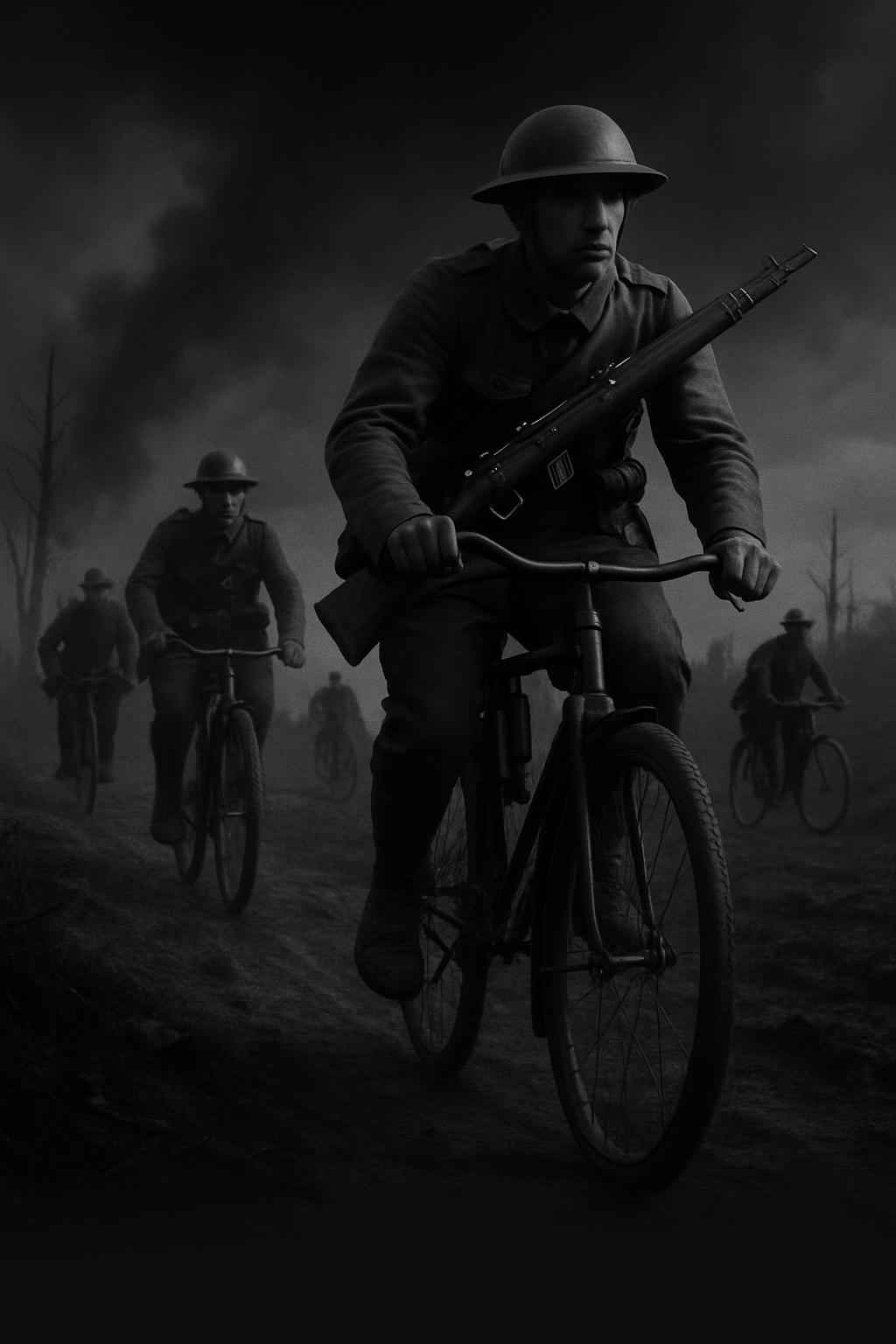
Bicycle troops were mobile infantry, not armored cavalry. They could pedal toward a position, scout routes, carry messages, or reinforce a threatened point, then fight on foot. The bicycle did not shield its rider from bullets or shrapnel; rifles and other equipment added weight without solving that vulnerability.
That distinction mattered on a battlefield increasingly shaped by machine guns and artillery. A bicycle could help a unit arrive sooner, but it could not make the journey safe. Its usefulness lay in moving soldiers between danger zones, not charging through them with protection.
Folding Frames and Quiet Movement
A folding bicycle could be made more compact for transport, including when a soldier needed to carry it rather than ride. Bicycles also moved more quietly than motor vehicles and did not depend on a horse’s feed and care. Those traits made them attractive for discreet movement, though they did not make a column invisible: riders still needed suitable routes and could be detected once exposed.
The bicycle’s military promise was therefore practical, not miraculous. It extended an infantryman’s reach when roads allowed, while leaving him exposed when the fighting began—a tradeoff that helps explain why armies experimented with two wheels but never mistook them for a substitute for protection.