How a Toothbrush Charges Through Its Case
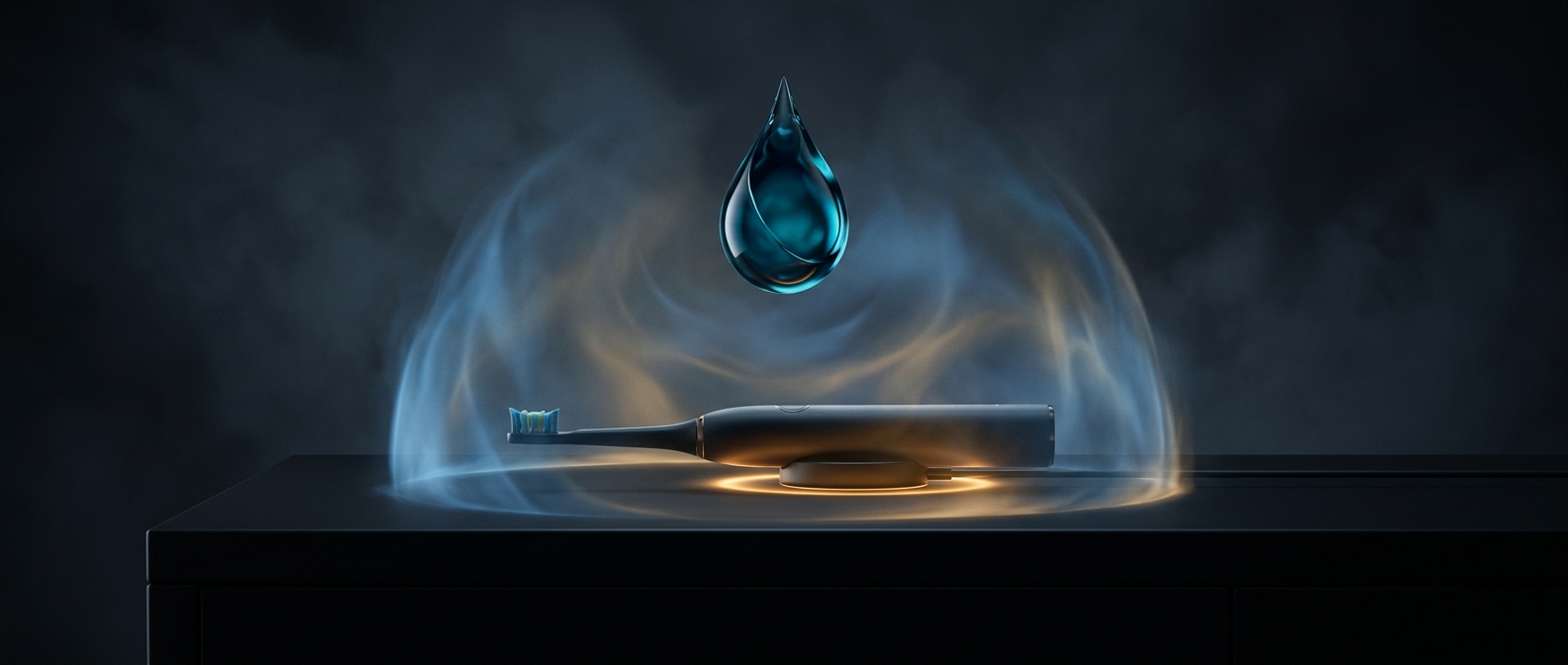
Inside the charging base is a coil of wire. When electricity in that coil repeatedly changes direction, it creates a changing magnetic field. A second coil inside the toothbrush picks up that field, producing an electric current that charges the battery. This is inductive charging: energy crosses the small gap between the base and the brush without a metal-to-metal connection.
The alternating current matters because a steady magnetic field would not keep inducing current in the toothbrush’s coil. The charger’s electronics switch the current rapidly, making the magnetic field change in step; the brush then converts the received energy into the form its battery can store.
Why the Missing Contacts Matter
A conventional plug needs exposed conductive surfaces to meet. In a bathroom, those contacts would be repeatedly exposed to water, toothpaste and residue. Moisture can encourage corrosion, while deposits can interfere with a reliable electrical connection. With inductive charging, the coils sit behind the plastic shell, so the brush can be designed without charging contacts exposed on its outside.
The transfer works only when the brush is placed close to the base, and the energy does not pass through the plastic as though the plastic itself were a wire. The magnetic field crosses the gap; the coils do the electrical work on either side. That arrangement turns charging into a simple placement task—and leaves the surface the user handles free of metal charging points.