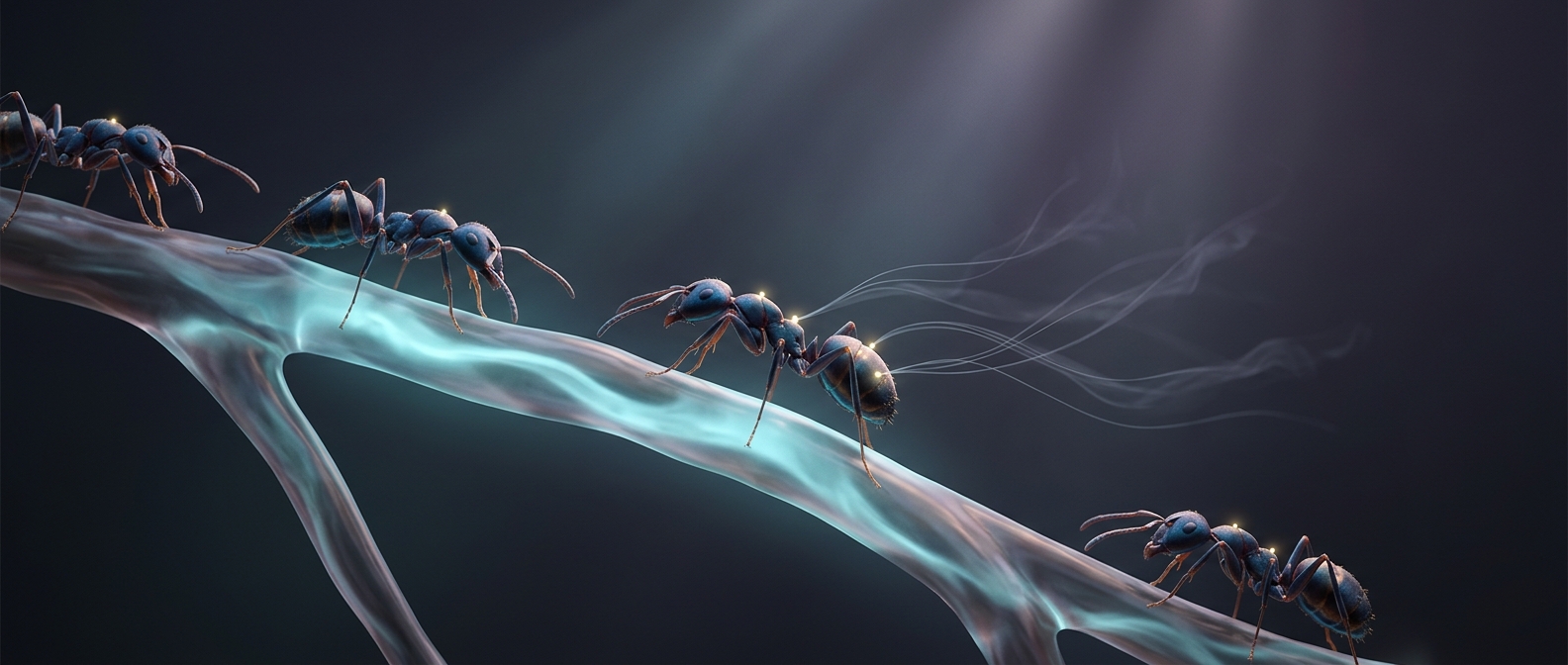
A branching network brings air close to living cells
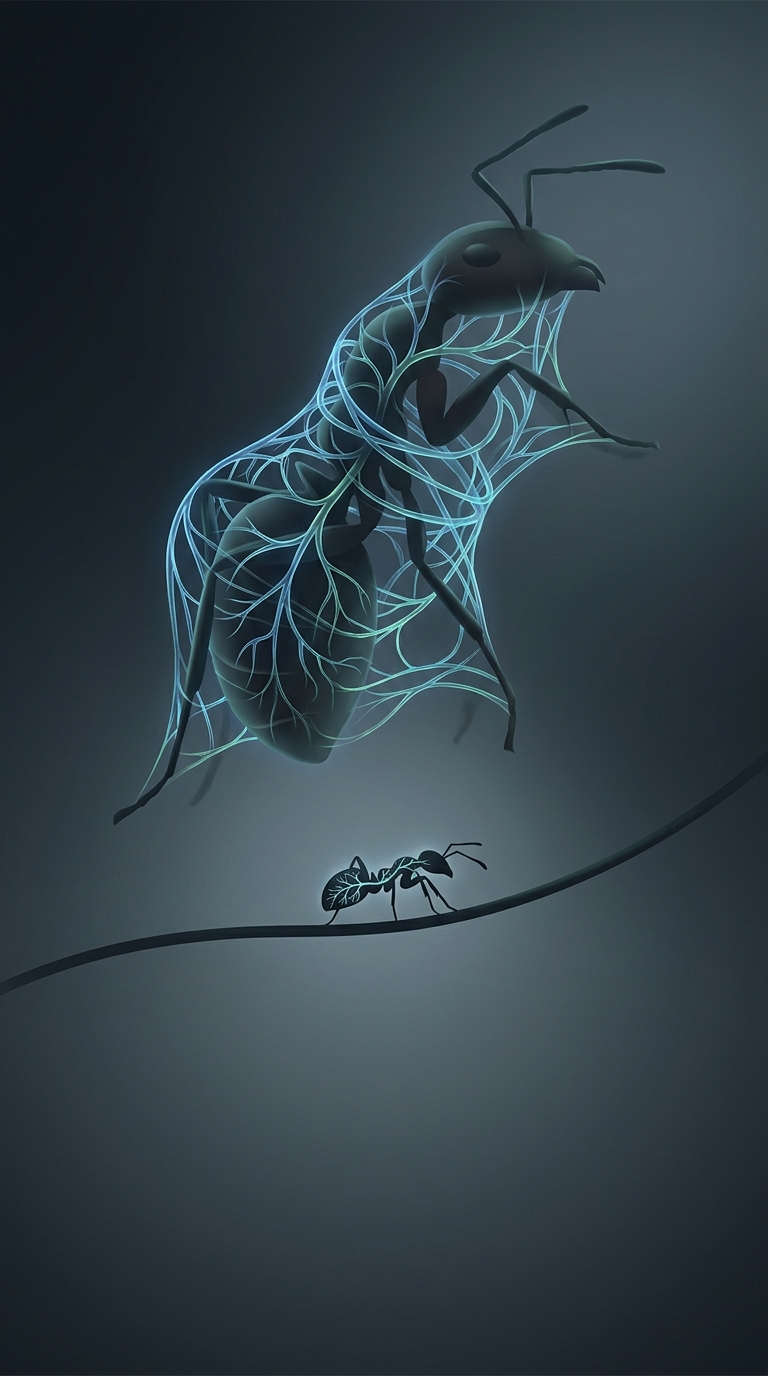
An ant’s breathing system begins at spiracles—small openings along the sides of its body. Each opening leads into a larger air tube, which branches into narrower tubes that reach through the tissues. The finest branches end near cells, so oxygen does not have to travel far through liquid or tissue before it can be used.
Oxygen moves down a concentration gradient: in plain terms, it spreads from places where there is more of it to places where there is less. As cells use oxygen, its concentration near them falls, drawing more oxygen inward through the tubes. Carbon dioxide, a waste product of cell activity, moves in the opposite direction and leaves through the same network.
Small openings also help limit water loss
The spiracles are not simply permanent open vents. An ant can close them for periods, helping reduce the escape of water vapor from its body. That creates a tradeoff: closing an opening conserves moisture, but it also limits the exchange of oxygen and carbon dioxide. The branching tubes let the ant deliver air internally without relying on a large lung, while the openings provide a way to regulate that exchange.
The system’s short routes matter. In a tiny body, oxygen can diffuse from the air tubes to nearby cells over small distances. A much larger body would have farther-to-reach tissues, making diffusion alone less effective at moving oxygen quickly through the whole organism. The ant’s network works in part because its scale keeps the final leg of the journey remarkably short.