The First “Legs” Become a Built-In Weapon
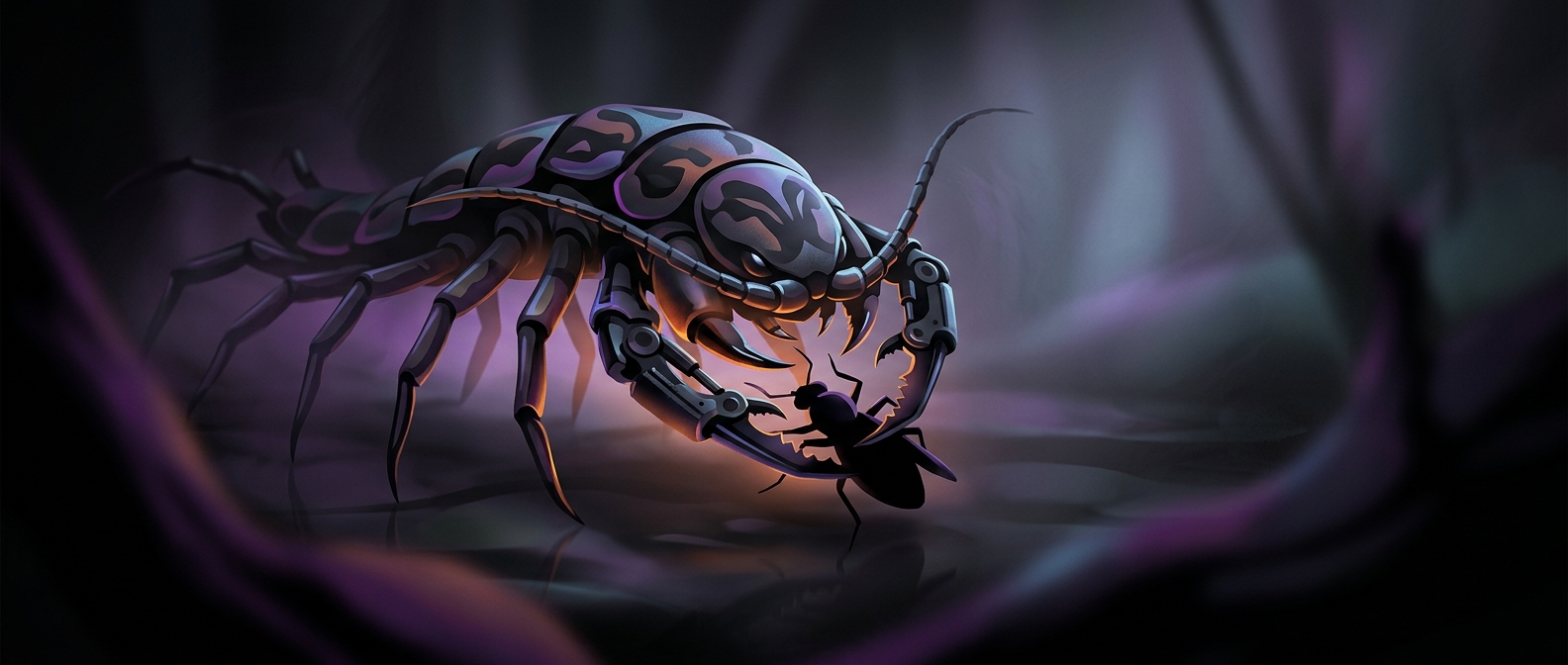
A centipede’s venomous front appendages are called forcipules. They began as a pair of walking legs, but over evolutionary time they shifted forward beneath the head and changed shape: each ends in a curved, clawlike tip that can pierce prey. The animal’s true legs start behind them.
Inside each forcipule is a venom gland connected to the tip. When the centipede seizes an insect or other small animal, the sharp tips puncture it and deliver venom. The venom helps subdue prey, which the centipede can then hold and eat. The forcipules are not ordinary legs that happen to be sharp; they are specialized appendages with a direct role in capturing food.
A Trap at the Front of a Moving Body
The arrangement lets a centipede combine pursuit and attack. Its many legs carry it over the ground, while the forward-pointing forcipules reach toward prey without requiring the walking legs to do the stabbing. Because the weapon sits just beneath the head, the centipede can bring captured prey close to its mouthparts.
That division of labor is visible in the animal’s anatomy: the first pair of appendages handles the strike, and the legs behind it provide locomotion. What looks like a row of similar steps is therefore not uniform. At the very front, a pair of former legs has become a venom-delivering hunting tool.